Platform Migrations Give Enterprises A Rare Window To Redesign For AI Readiness
Jason Andrews, VP of Strategy and Planning for Engineering Operations at Cisco, on why platform migrations work best when teams leave process debt behind.

Most platform consolidation efforts promise to simplify operations and prepare the enterprise for AI. What they typically deliver is the same fragmented workflows, process debt, and inconsistent data models running on newer software. The last mile of AI transformation is not a model problem or a tooling problem. It is an operating model problem, and migrations that skip the redesign just carry it forward.
Jason Andrews is VP of Strategy and Planning for Engineering Operations at Cisco, where he leads technical program management, business operations, and tooling strategy for the Networking division, supporting 22,000 employees across global functions. He also oversees Global Lab Services, managing over one million square feet of lab space across 300 labs worldwide.
He previously told CIOnews that AI readiness at engineering scale required standardized workflows and clean data foundations before any model could produce reliable results. His latest argument goes further: the rare window of a major platform migration is the best opportunity most organizations will get to fix those foundations, and most are wasting it.
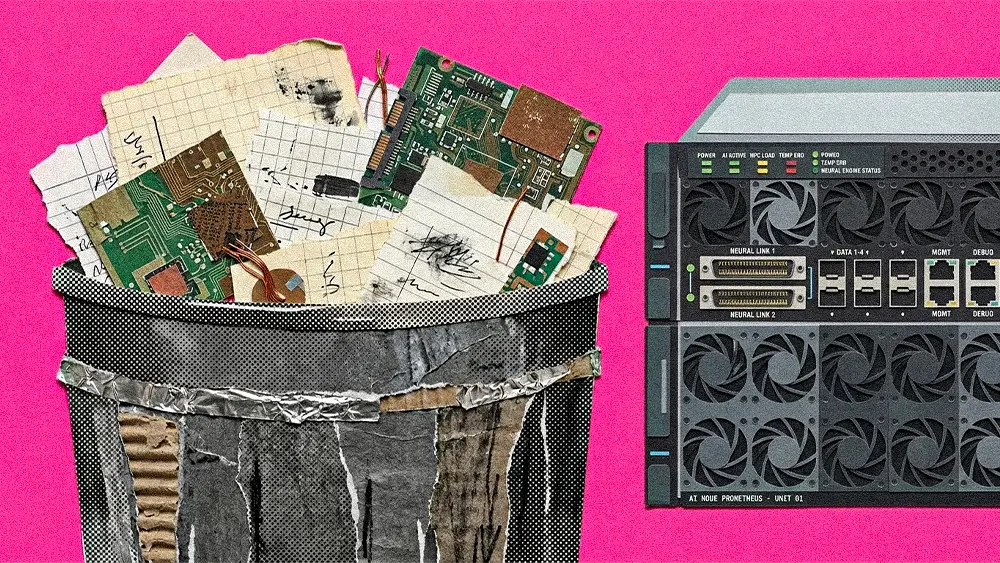
"You get an opportunity once a decade to do one of these big migrations," Andrews said. "If you’re going to shift over the way your teams are working, you really have to rethink how you fundamentally operate, and build the process and technology together." Andrews drew the lesson from Cisco's own Atlassian migration, which moved 22,000 users to a new environment. The instinct from teams was predictable: move all the data, keep all the workflows, change nothing. Andrews pushed back. He compared it to moving houses: why carry the garbage cans, the attic clutter, and the newspapers into a new space?
Start clean, add back selectively: Cisco set up the new environment fresh with new business processes and moved 20 years of historical data into an offline store rather than migrating it. The results confirmed the thesis. "Of the 20,000 people who could access it, we may have seen less than 50 or 100 checks in the first couple of months," Andrews said. "The data is not as valuable as you sometimes think it is."
AI exposes data chaos: Andrews said AI needs proper context and a common data model to deliver reliable answers. Connecting models to two or three clean data sources through integrations or MCP produces directed, useful outputs. Connecting to 25 disparate sources with inconsistent fields produces guesswork. "With proper context, you can generally cut your compute cost by 50 percent if not more and get an actual answer to the problem you're asking," he said. "But if you're hooking up to 25 data sources with disparate data models, you're guessing."
Process debt, not technical debt: The deeper bottleneck in most migrations is not the technology. It is the accumulated process debt that teams refuse to question. Andrews compared it to scar tissue in an athlete's knee: old processes that restrict movement until someone cleans them out. During the Cisco migration, his team uncovered a homegrown release application that had been part of a critical business process for a decade. When it went down during an offsite, the team discovered it ran on a departed developer's personal credentials. "These little straggler, low-value-add things are what will cause you the most trouble," Andrews said.
Andrews said the most persistent obstacle is the belief that every team's workflow is unique. In practice, nearly every software team, cloud, on-prem, or embedded, runs the same code-test-release cycle with different labels. Getting teams to accept shared workflows requires showing them 2x the value for every piece of data the standardized process asks them to enter. It also requires inviting them into the governance body that controls workflow changes. "If you don't bring them to the table as part of the solution design and how you govern it, they're going to go do their own thing," he said.
The conclusion is not that organizations need fewer tools. They need consistent operations across whatever tools they run. If teams share common fields, common conversation, and common workflows, AI can pull from multiple sources effectively. Future consolidation or orchestration becomes easier because the process work is already done. Hitting teams with a new tool and a new operating model simultaneously, Andrews argued, is the formula for resistance and failure.
"If you can get your operating model where everybody's using the same fields and workflows, you don't need to consolidate," Andrews said. "The process part is usually the hardest part. If you go through the business process transformation first and set the stage for how you want to work, you'll be in a much better place."

If this caught your attention, that’s not accidental.

The best editorial systems don’t happen by accident. Outlever builds them.