



Enterprise AI
Agentic AI, AI Agents & Strategy for CIOs and Technology Leaders

Oren Hizkiya, Co-Founder and Chief Technology Officer of Four, on why one shared repository of institutional and process knowledge, not more tools, is what lets AI run autonomous work and keeps headcount flat.

Scott Schemmel, Strategic Advisor at OAKS Advisory Group and former CIO at Construction Resources, on how AI returns show up when companies rebuild work from end-to-end, cut the handoffs, and govern the data their agents act on.

AI has shifted from a post-deal integration chore to a make-or-break factor in M&A. CIO Jason James shares how deal teams can spot AI-washing in target companies, use AI to speed up due diligence and post-close integration, and keep human judgment at

Massimo Pezzini, former distinguished VP analyst at Gartner, says AI agents start changing the business once they can act in the systems they run on, and explains how business skills make that execution secure, reliable, and affordable.

Vinod Kartha, Chief Operating Officer at CyberProof, on how policy-bound agents empty the queues that slow enterprise IT without widening the risk surface.

Nithya Subramanian, an independent Chief Data, AI & Digital Transformation Executive, on how modular modernization delivers incremental returns while preparing enterprises for connected AI workflows.

Prafulla Patil, Founder and CEO of OneSolve, and JP Mehlhaff, Partner at OneSolve, outlined an integration-first approach to choosing where automation and AI belong.

Gopal Parthasarathy, a technology and AI-enablement leader with recent roles at Zscaler, NetApp, and Oracle, described how enterprises move AI from employee experiments into production without flooding operations with unproven agents.


Rizwan Jan, Chief Information Officer at CNA Corporation, on how orchestration, centralized governance, and business-owned agents decide whether enterprise AI reduces fragmentation or feeds it.
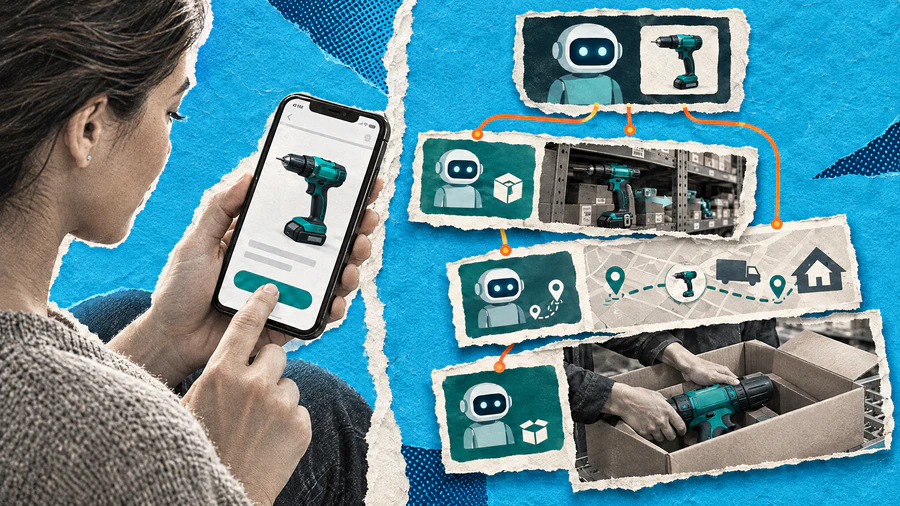

Christian Spannbauer, Vice President of Aviation Commerce at Lufthansa Industry Solutions, on the scoped access and trade-off rules airline AI agents need before they pay off.

Volker Szabo, Head of IT Production Solution Analysis and Strategy Execution at ZF Group, on why enterprise AI stalls in manufacturing until a governed integration layer connects factory-floor controllers to enterprise systems.

Nate Busa, a Chief Technology Officer specializing in AI and automation and most recently of NEOM, on why the falling cost of building software rests on orchestration of systems, people, and agents.

Patricia Clay, AVP for Information Technology and CIO at Hudson County Community College, on how unified data definitions and consolidated systems have to come before autonomous agents.

Itay Kozuch, Chief Information Security Officer at Navan, on why he ties each agent to an employee and reviews what it can reach.
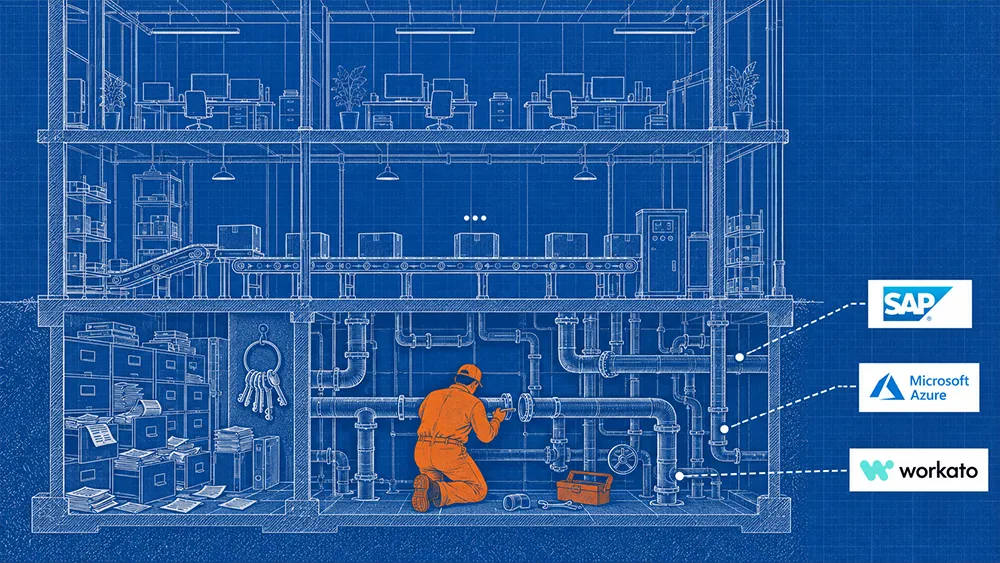
TalentXM Founder Suman Gummudala on the sequencing CIOs often skip: settle the foundations, scope the data, then decide whether a workflow even needs AI.