
Benchmarks, Cost Ceilings, And An Off Switch: What CIOs Need To Scale AI
Aaron Rallo, Co-Founder and CEO of Trovia, on why the last stretch of an AI project is the hardest and what it takes to clear security review.

An AI pilot only becomes an enterprise system when CIOs build in the controls needed for the team to trust AI output. These controls are benchmarks, permissions, source attribution, cost controls, and ongoing monitoring. Without these controls, nobody can tell whether an answer is right or where it came from. And, therefore, no one can truly trust the output generated by AI. People stop using a system they cannot verify, and a system nobody uses doesn’t do anything for the bottom line.
Aaron Rallo is the Co-Founder and CEO of Trovia, a layer between a company’s content and its AI tools that ensures the AI tools produce accurate results. He founded TSO Logic, a cloud cost analytics company acquired by Amazon Web Services in 2019, then spent several years at AWS running migration services and helping build agentic systems inside the company. He has worked in agentic AI for five years and has advised hundreds of companies on AI projects, from the mid-market to the Fortune 100.
"If you can't have high confidence, you're not going to get it past security, you're not going to get it past stakeholders, you're not going to get it past quality control," Rallo said. It’s easy to get a proof-of-concept up and running. The real effort goes into ensuring it can scale. Here are traps he sees most often on every project.
Testing with one user: "When AI goes from a single-user pilot to an enterprise system, you need controls that let many people use it and trust it at scale," Rallo said. The person who built the pilot also wrote or read the source documents, so they spot a wrong answer immediately. Any subsequent user is reading answers drawn from documents they have never seen. Those users can’t tell a good answer from a bad one without being shown where it came from. The system needs to cite its sources every time, and it needs permissions controlling who can actually add content and who can only read it. This works best when it’s part of the system’s architecture rather than enforced via policy.
Skipping the benchmark: "I constantly get this question: ‘Is this model good enough?’ If you don't have a benchmark that says, 'Here are the thresholds of an acceptable quality of an answer,' how can you say where ‘good enough’ fits on that spectrum?" Rallo explained. Benchmarking services provide an objective measure against which you can assess your system's performance. A benchmark is a number that determines how often the system has to return a correct answer—correct according to a set of criteria like relevant, accurate, consistent—for it to be acceptable for your needs. Without it, “good enough” can’t be determined objectively and is subject to change depending on who is conducting the review.
"You build a system using one model and a certain set of content. The model can change and so can the underlying content. If you don't have a way to see the quality of the answers, you can end up with a system making different decisions than it made previously, with no way to know why," Rallo said. Logging output quality is essential to be able to track the long-term performance of your AI system. This way, the effect of any changes you make, testing a different model or uploading new documentation, are captured so you can react to any drop in system performance.
Losing track of cost: "It's important to have visibility on all of your inference costs, which can rack up quickly behind the scenes. In a set it and forget it world, you could be surprised by a really big bill," Rallo said. Every question the system answers costs money, and a wrong answer costs more, because someone asks again. A pilot dashboard will not show any of this, so the spending has to be tracked on its own from the start.
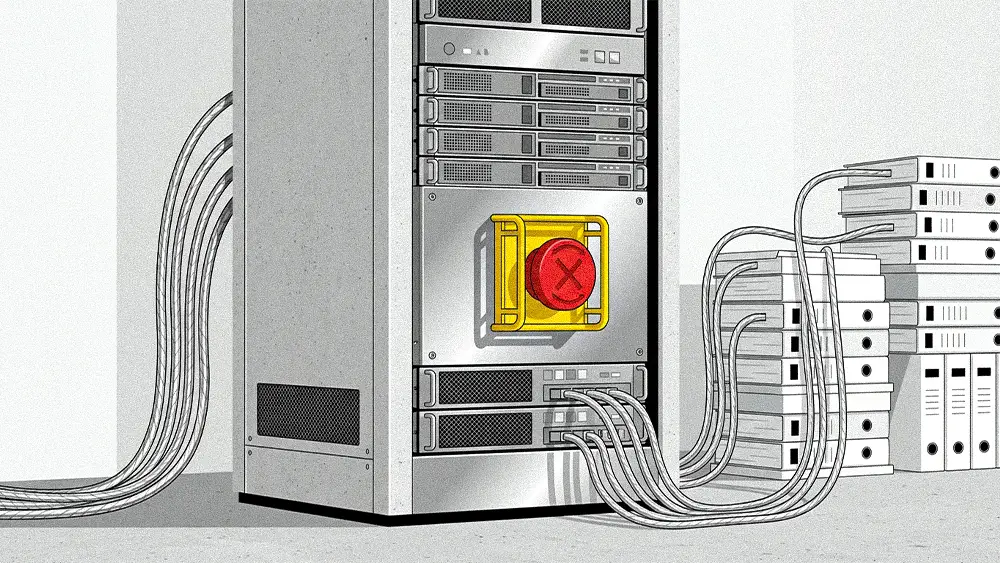
No off switch: "If you walk into a factory, every assembly line has an andon cord that a person could pull at any point to shut down the entire line. Agentic systems need those too," Rallo said. The harder question, continued Rallo, is determining who pulls it. For a system producing outputs in milliseconds, a person reacting to an alert is too slow. A fail-safe has to be built in. Crucially, an agent can’t determine the off-ramp on its own, but requires detailed instructions from the experts who know the business.. Enterprises are consolidating those limits into a single control plane, so the same techniques apply to every system.
These are points to bear in mind when you’re ready to move from pilot to implementation. To get started, give an experiment a budget, a few weeks, and a written list of what the team wants to learn from it. Part of the setup is ensuring that your documents, systems, and security setup can support it. Once you’re ready to take your project from pilot to production, then follow the practices above. "Speed matters. We need to go fast, and you can still go fast. None of this is meant to slow things down; bringing discipline to the process helps you increase your likelihood of success and not get stalled later," Rallo said.

If this caught your attention, that’s not accidental.

The best editorial systems don’t happen by accident. Outlever builds them.