
How CommonSpirit Governs Data Before It Scales AI Into Care
Bindu Chanagala, Vice President of Performance Insights at CommonSpirit Health, on why AI in healthcare moves only as fast as the governance around the data and the clinicians who act on it allow.

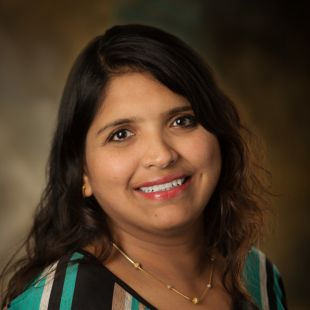
In healthcare, the AI model is rarely what sets how fast it can work. Two forces outside the model set the pace: the governance wrapped around highly sensitive data, and the clinicians who have to accept a finding before it changes anything. Get both right and a model scales into real care decisions. Get either wrong and a fast, accurate system stalls, held back by an approval queue or by a room of doctors who haven't bought in. The speed of AI in a health system tracks those two constraints more than it tracks the technology.
Bindu Chanagala is Vice President of Performance Insights for the Population Health Services Organization at CommonSpirit Health, one of the largest health systems in the country. She spent 13 years leading engineering teams at Intermountain Health and SelectHealth, work that ran the full arc from issuing a member ID card to closing out a claim, then earned a mid-career MBA at MIT Sloan and co-founded a maternal mental health startup before returning to population health. Her view of AI starts from what the technology can and can't fix on its own.
"The data we deal with is the most sensitive there is, so the guardrails have to be tight. The real job is setting them without falling behind on innovation," Chanagala said. That tension defines the work. Under value-based care, a health system owns the cost and the quality of a whole patient population at once, so it can't move recklessly on data that becomes a target the moment it exists, and it can't let caution freeze a technology that's finally useful.
Governance at scale: New tools crawl through approval because a system this size draws scrutiny from every direction, and Chanagala's push is to compress that review without loosening the caution, keep the models contained, and hold a governance voice in the room when the decisions get made. Provider data is the hardest case: a credentialed, contracted, in-network status can flip somewhere across 23 states at any moment, and merging it cleanly, tracking who created each record and who requested it, is a daily governance problem. "Sometimes it looks and smells like red tape, and you have to have red tape with governance. If not, it's really hard to control what's happening," she said.
Data quality baseline: None of that control matters if the inputs are wrong. Chanagala spends little energy on whether AI will replace her analysts and a lot on what feeds the model, and she points other data leaders to the data feeding it before they buy anything. "If you have a broken process, AI will also be broken," she said. "Garbage in, garbage out."
Governed, clean data still doesn't change anything on its own. That's the second constraint, and it's the one no amount of engineering removes. A finding can clear every control and still die on the table if the people who deliver care don't accept it. So the same discipline Chanagala applies to data, she applies to adoption.
The adoption loop: When the data shows an outlier, it doesn't travel straight to a directive. Chanagala co-chairs a medical expense management committee that reviews the numbers and hands them to the physicians who own the change. "What clinicians love is bedside care. They want a patient well taken care of and, hopefully, healthier than when they walked in," she said. Agreement there buys a test, not a rollout. The health system runs the change in a few locations and watches whether spend comes down and whether gaps in care close. "If the answer is yes to both, then we look at how to implement it across the board," Chanagala said. A pilot that saves money while care slips, or improves care while cost climbs, stays a pilot.
The loop is human-heavy by design, which shapes what Chanagala wants from the technology itself: the systems should absorb the work that never needed a person. "Why are we still reading contracts?" she said. The delegated agreements between payers and providers run long and mostly boilerplate, with occasional exceptions that carry real money, and an internal model now flags those exceptions for her team to analyze. She's given the same instruction on a large system migration: stop hand-comparing extracts and reports, and let the software do it. Clearing that work is what frees people for the higher-value job. "Everyone should be data storytellers."
Chanagala treats all of it, the governance, the data, the clinician buy-in, as the parts of the job that outlast any single model. The technology will keep getting faster. Her attention stays on the constraints around it, and on keeping pace with change that only accelerates. "When change comes at 100 miles an hour, I want to go 120," she said.

If this caught your attention, that’s not accidental.

The best editorial systems don’t happen by accident. Outlever builds them.