Northwest Bank's CIO On Why Hands-On Engineering Is The Key To Responsible AI

“You learn by building better than by buying because you have to understand at the core the business problem and be thoughtful about performance and resilience."

Every financial institution is trying to figure out how to best balance AI adoption and impact with security and control. For Northwest Bank CIO Chad Ballard, hands-on engineering is the ultimate risk mitigation tool.
“You learn by building better than by buying because you have to understand at the core the business problem and be thoughtful about performance and resilience,” he told CIOnews.
At Northwest Bank, the decision to build or buy comes down to the desired goal: utility and speed, or differentiation and problem-solving? Buying off-the-shelf tools for core functionalities, like storing customer information, frees internal teams to focus time and energy on projects that make use of the company’s unique datasets or solve targeted operational inefficiencies.
“At the end of the day, it’s about creating the best experiences for our customers,” Chad said.
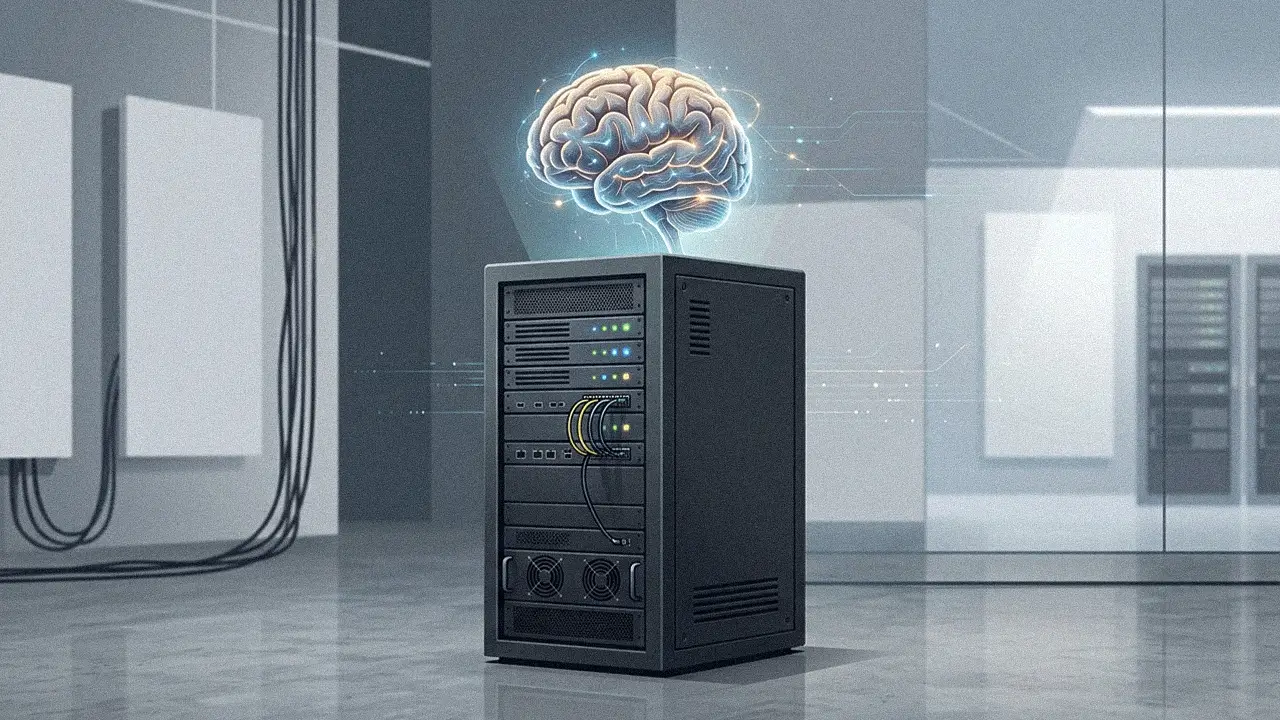
This focus on the end-user experience extends directly to the infrastructure powering new AI applications. The use case dictates the architecture. It’s why Northwest Bank uses a blend of both proprietary and open-weight models, choosing open LLMs when customization is a priority and commercial models when turnkey support and maintenance are critical.
“We have to manage security, data, and customer experience regardless of what we use,” said Chad, who joined Northwest Bank in May.
An Embedded Part
Chad’s insights were honed over decades of spearheading internal tech initiatives at Wells Fargo, JPMorgan Chase, and other major financial institutions, where he built everything from digital banking applications to early AI chatbots in the 2010s. At Northwest Bank, his focus is applying that enterprise experience in an agile environment closely connected to daily operations.
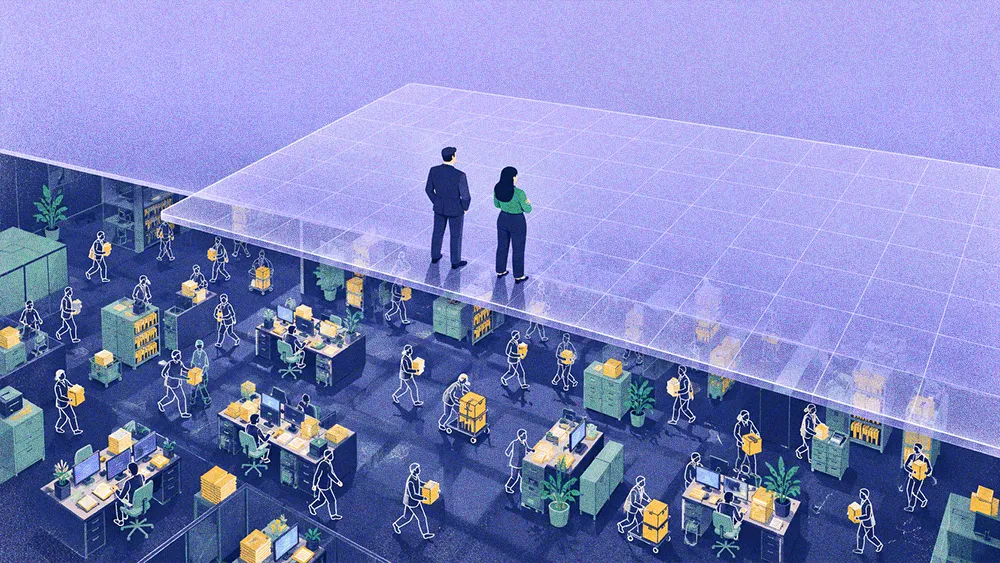
“I have learned the business as much as I have learned the technology,” Chad said. “The closer the technology is to the business, the better you understand strategies, problems, and the experience customers go through—and the better you can build technology.”
As technologists and domain experts partner to scale customized AI solutions, the new challenge is preventing fresh IT silos from forming across business lines. CIOs must balance a division’s push for independence with the need to maintain efficiency across investment, commercial, and consumer banking arms.
Northwest Bank addresses this by prioritizing reusable, scalable architectures. This keeps the environment streamlined while preserving capital for specialized investments when appropriate. Simplicity is quickly becoming a key competitive advantage, especially as banks compete on delivering frictionless omni-channel journeys.
The battle ultimately comes down to data integration and architectural modernization, according to Chad.
“We have customers that use all of our channels,” he said. “When we design technology, we are thinking across all of those experiences.”
To balance scale with security, Northwest Bank employs a risk-based approach to evaluate control frameworks against data protection, privacy, and access requirements.
“AI is an additional capability that can create a great customer experience, optimize back-office processes, and bring more intelligence into decision-making at a faster rate,” he said. “We need to make sure we use it in a responsible way.”
Ultimately, navigating the next era of banking won't depend solely on choosing between open-weight or proprietary models, or deciding whether to build or buy. The future market leaders will be those that keep the focus squarely on the end-user experience—uniting domain experts directly with the engineers that can translate business goals into usable software.
“In the early days of my career, there was always this separation between technology and the business,” Chad said. “Today, technology is just an embedded part of the business.”

If this caught your attention, that’s not accidental.

The best editorial systems don’t happen by accident. Outlever builds them.