
“We are constantly leaning into: What are those friction points and how can we make them better? And increasingly, the answer is by incorporating AI into that journey.”

Many companies rushed to launch the AI experience layer before building the infrastructure to support it. At The Home Depot, investments in re-architecting data stores, building common APIs, and developing agent-to-agent protocols are paying dividends.
One of the continent’s largest e-commerce businesses, Home Depot also runs over 2,300 stores. AI is permeating the company’s operations, from Magic Apron, its AI assistant, to AI-assisted customer support, pricing, and logistics.
“Technology, when you look at our strategy for the company, it underpins everything we are investing,” EVP and CIO Angie Brown told VentureBeat’s “Beyond the Pilot” podcast. “The friction points of a customer when they are shopping with us, we are constantly leaning into: What are those friction points and how can we make them better? And increasingly, the answer is by incorporating AI into that journey.”
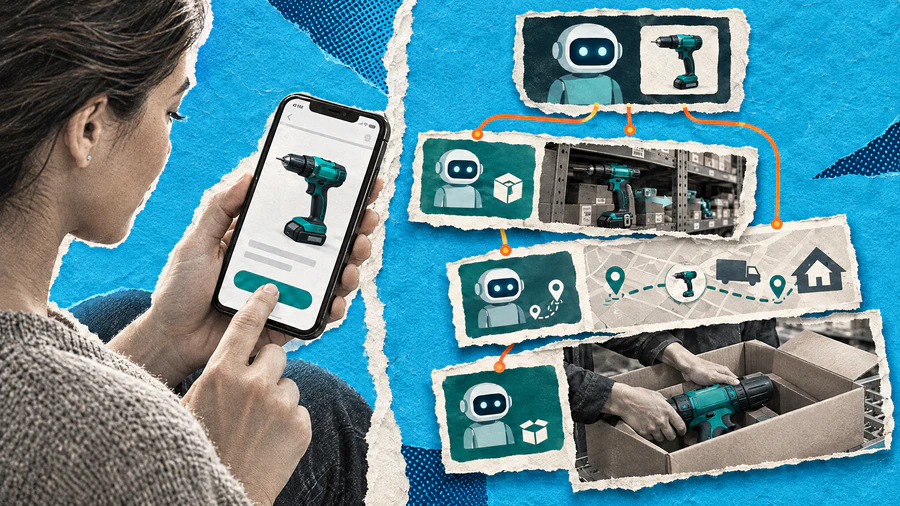
For example, hidden underneath the estimated arrival data customers see is a “tremendous amount of fulfillment logic,” Angie said. The system analyzes geospatial, weather, and customer preference data,taking into account factors like road conditions on the delivery route, potential inclement weather that could slow transit, and many other variables. Among the most significant results: in the Chicago market, Home Depot was able to reduce its delivery failure rate from 5.3% to below 3%.
Building The AI Spine
Supporting these use cases meant re-architecting the IT foundation: “We had to put a lot of time and energy into what our spine was going to look like,” Angie said.
The result is a layered technology stack. Hidden beneath the experience layer that most users interact with—whether that’s the website or a digital application—is a “client planner” that determines inference and connects tasks to high-level agents. These agents then delegate workloads to domain-specific agents, such as selling, post-purchase, and delivery agents. Each of these has its own subagents underneath that specialize in specific categories, like paint or power tools. There are also layers dedicated to MCP enablement, agent-to-agent enablement, LLM evaluation and observability, and prompt management,among others.
“A lot of this takes advantage of tools, common APIs and our data stores,” Angie said. The subagent architecture “lets us take advantage of the client-specific context of what it was trying to achieve, get it to the right place as quickly as possible, but still allow for reuse across different experiences.”
This architecture is unlocking the next level of customer support. Beyond just helping customers winnow down their choice of ceiling fans based on personalized factors like the fan's location, desired speed, and lighting requirements, Magic Apron is turning into a key assistant for DIYers and others pursuing their own home improvement projects.
“It’s not just about getting you the one item you came to look for,” Angie said. “It’s getting you the things you need to get the project done and the confidence and the know-how to actually go and execute that project.”

If this caught your attention, that’s not accidental.

The best editorial systems don’t happen by accident. Outlever builds them.