A Living Knowledge Layer Keeps Agents And Developers On The Same Truth As Fleets Scale
With hundreds of AI agents in production, Richard Teachout, Chief Technology Officer at Ashley Furniture, is replacing the central knowledge base with a self-correcting layer that flags when reality drifts from documented process.


The views and opinions expressed are those of Richard Teachout and do not represent the official policy or position of any organization.
The single source of truth was always more aspiration than fact. Enterprise knowledge bases fill with stale entries, documented processes drift from how the work actually happens, and that gap stays survivable while humans are the only ones reading from it. And now, fleets of AI agents remove the slack. When hundreds of agents and the developers beside them all act on the same written knowledge, a repository that's out of date becomes a liability that scales, and the answer is a living layer that captures what's true as it changes and calls out when reality and documentation drift apart.
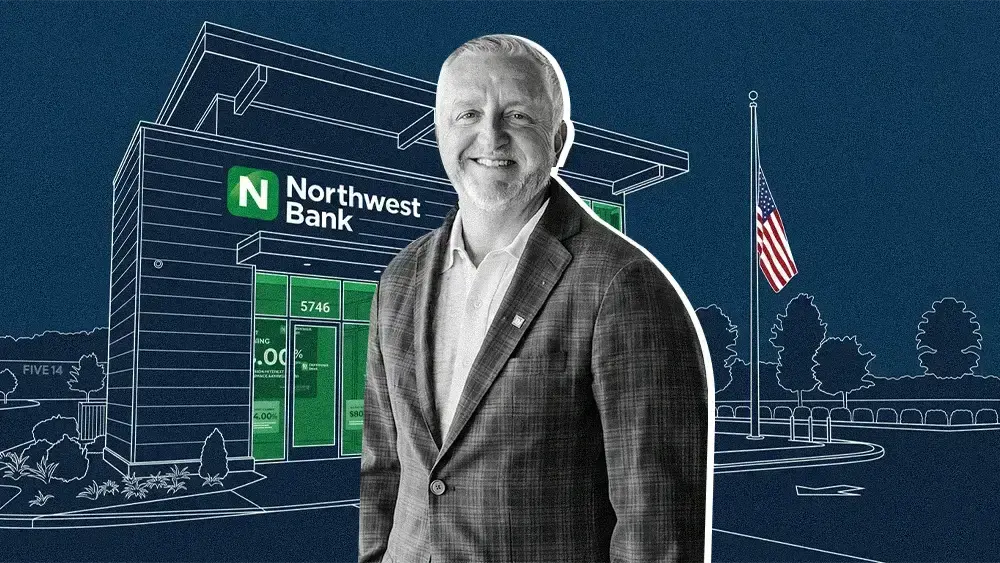
Richard Teachout is Chief Technology Officer at Ashley Furniture Industries, where he leads a global technology organization spanning AI, data, platforms, and architecture across manufacturing, supply chain, retail, and customer experience. Before that he was Chief Technology Officer at El Toro, where his team built patented, cookie-free advertising technologies including IP Targeting. A self-described ex-developer with more than thirty years writing code, he writes prolifically on AI, engineering, and leadership, and he leads Ashley's AI program from inside the code, runs agents in production and still reviews code alongside his engineers.
"There is no central source of truth. You build a system around decentralization," Teachout said. With hundreds of agents already running and more on the way, he treats the knowledge they depend on as something to engineer rather than assume. The durable asset is the surrounding system that keeps every agent and every engineer working from the same current picture of how the business runs, and that's where his attention goes.
No single source of truth: The mechanism Teachout builds in its place is continuous rather than curated. His team uses machine-readable standards, logging, and workflows to capture institutional knowledge as it's created and to surface the moment documented process and real process pull apart, a layer both developers and their agents read from through managed standards. "I can manage all of the same thing through an MCP and logging," he said. "It can call out when things are different." The payoff is that knowledge stops leaking through the organizational telephone game and starts getting controlled by the same automation people feared, available to a developer and the agent working beside them at the same moment and in the same form.
Judgment doesn't scale. It compounds: For all the automation, Teachout's interns are not allowed to touch AI coding tools. He makes them write HTML, C#, and Python by hand and learn subnetting the slow way, because supervision depends on comprehension. "Feel the pain. Understand what this does. If not, you're never going to have the judgment you need to use AI effectively, and you won't know what it does," he said. Someone who has never worked underneath the abstraction can't tell when an agent is confidently wrong or troubleshoot the code it produced, and that judgment becomes more valuable as hands-on coding recedes. He compares it to knowing what a starter does and how to check the oil even though he still pays someone to change it. That base of understanding decides whether the tools accelerate the work or corrupt it.
Build the differentiator, buy the rest: The clarifying question for Teachout is whether a given piece of the stack sets the business apart. The model never does. "Which foundation model it is, I don't really care. It's a commodity, I can buy it," he said. "Should I host it in Azure or GCP? Doesn't matter, that's a commodity." An agent is the opposite, because it runs on the company's proprietary processes and data. "An agent is differentiating. I'm giving it my intellectual property, I'm giving it my business processes, I'm giving it to run the company," he said. "I need to build that." That split keeps engineering effort pointed at the layer worth owning instead of reinventing commodities, and reframes an agent program as an exercise in owning workflow and knowledge rather than picking a frontier model.
Governance goes at the start, not the end: Teachout draws a hard line between two things that look similar from the outside. Anyone can generate a working app from a prompt; he built a production-grade application through agents, which is a different act because the value was never the app. "You have to build the governance, the logging, the centralization, the observability around it," he said, and doing that alongside the build rather than after it inverts the usual sequence. Treating controls as first-class from the start is what separates something that can run the company from something that merely demos well, and it's the discipline most teams defer until it's too expensive to add.
Skipping that discipline has always been a bet that the reckoning arrives later than the payoff, and for decades the bet mostly paid, because the tech debt behind a rushed system took years to compound into a failure. Fleets of production agents invert the odds. A cut corner now cascades through interdependent systems in weeks rather than years, which turns the logging, tracing, and controls that teams treat as overhead into the difference between a system that can run a company and a liability nobody can untangle. It's the same lesson enterprise technology has relearned every decade, arriving faster than it ever has.
This happens in 60 days, not five years: Teachout has watched this pattern before, in the era of unpatched SQL Server boxes hidden behind websites and the outages that followed. The mechanism is identical now, a foundation nobody hardened giving way under load, except the damage now propagates through a fleet of interdependent agents where one failure can cascade into ninety-nine. The data underneath his worry is visible in the codebases piling up across the industry, where technical debt is climbing as AI-assisted commits multiply and code reuse falls away. Without the controls to catch a failing agent, that debt turns into a custom, unrecoverable mess. "This is not a new problem. We've seen it before. The only difference is this is going to happen in 60 days instead of five years," Teachout said.
"AI-first is also about people-first, or you lose your institutional knowledge and you're in trouble," Teachout said. The engineers who understand how the business actually runs carry context that no logging layer fully replaces, and a company that stops investing in them watches that context walk out the door. That risk is what gives weight to the number he shares with every IT person in the organization. He expects AI to take on roughly 70% of their current work, and he treats that as freed capacity for higher-value output and for stewarding the agents now handling the routine load. Output is the measure he keeps returning to, which is why an agent-heavy program still starts with its people. The agents need stewards, and investing in those stewards is what builds the governance that makes any of it last.

If this caught your attention, that’s not accidental.

The best editorial systems don’t happen by accident. Outlever builds them.