Why More CRM Data Makes Your RevOps Agent Worse
Eli Potter argues RevOps AI agents get worse with more CRM data unless paired with a 'context graph'—a narrow set of live deal facts assembled at decision time, distinct from the stable knowledge graph most teams mistake for the full solution.

"A governed knowledge graph and a useful decision are two different deliverables. Most teams buy the first one, hoping it will automatically produce the second."

Say you’ve rolled out a RevOps AI agent to help reps figure out what to do next on a deal. It’s tempting to give the agent access to everything in your CRM, so it has context for its actions. But too much information is just as bad as not enough. Most RevOps AI underperforms because you’re forcing your agent to use similarity search across thousands of records instead of reasoning over a narrow, correctly-scoped subset of facts assembled at the moment of decision.
If you present your next-best-action agent with a stalled opportunity, your agent needs two types of information to best guide your sales reps forward: what’s permanently true about the account, product, and deal structure, and what’s true right now. The handful of live signals tied to this opportunity when you are following MEDDPICC, like its deal health, economic buyer engagement, timing concerns, and competitive signals.
Two graphs, not one
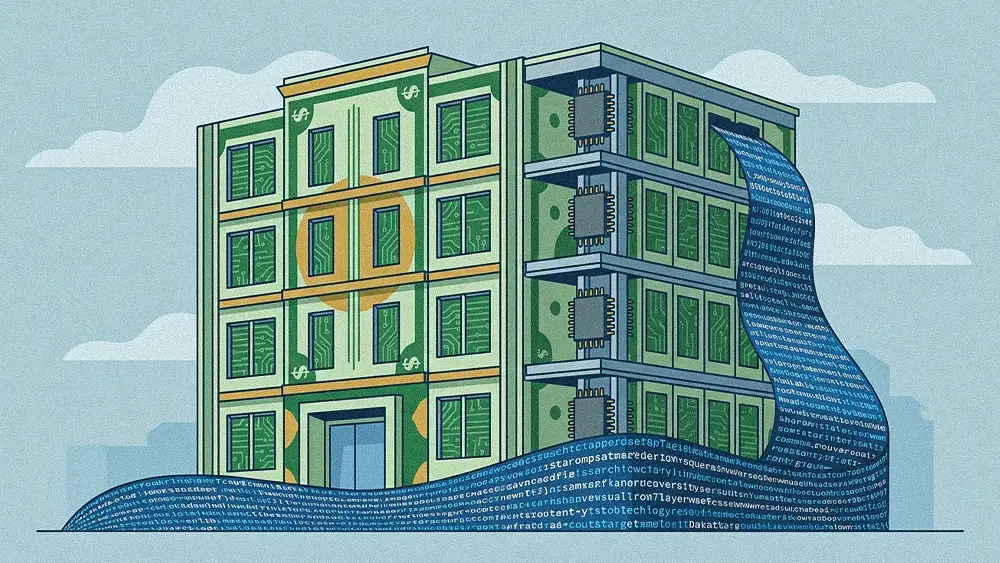
A knowledge graph is an architecture. It captures what's permanently true across the revenue org: accounts, products, territories, reps, and the relationships between them. It's stable, built once, and centrally governed by RevOps as the system of record. It's also exactly what most teams mean when they say they've "built a knowledge graph" for their AI initiative.
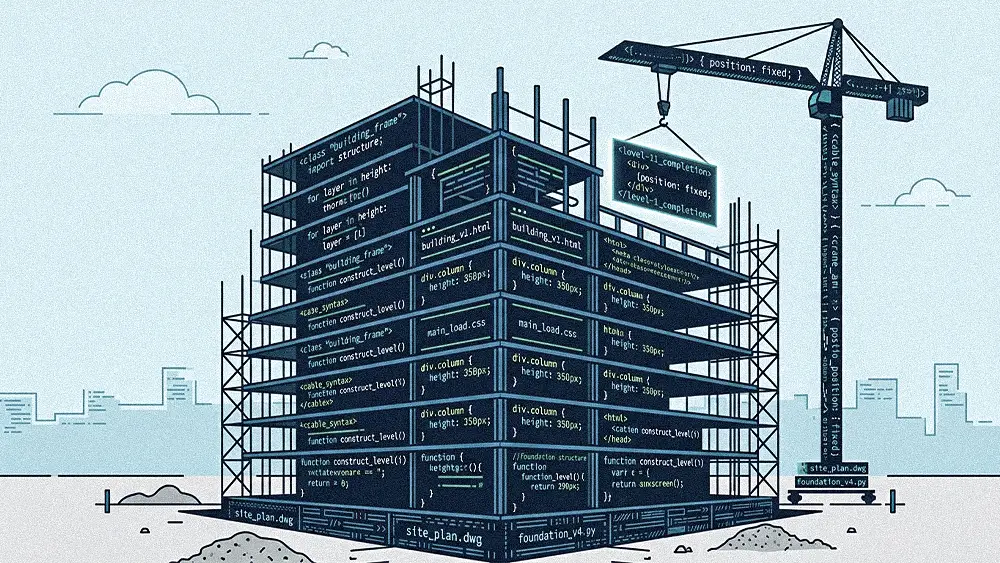
A context graph holds the opposite: what’s true for one decision, right now. It’s assembled the moment a rep opens a deal or an agent is asked for a recommendation, then discarded right after.
This distinction is showing up in how analysts and investors describe agentic AI infrastructure. Gartner's 2026 Hype Cycle for Agentic AI identifies context graphs, alongside newer practices such as the agent development life cycle, as signs that agentic AI requires operational and governance models that traditional automation never required. Foundation Capital goes further, framing a context graph as a living record of decision traces stitched across entities and time, so precedent becomes searchable. In their understanding, a context graph isn’t just a snapshot of the deal-health facts above. It’s a trace of the decisions made about them.
Why "the agent is broken" is usually the wrong diagnosis
A RevOps team can do the data work right: accounts, contacts, opportunities, products, and territories all mapped, every relationship declared and enforced, tens of thousands of records fully governed in Salesforce and HubSpot. Then the AI sales agent goes live, and it performs worse than the simple scoring model it replaced. Nothing broke. The data is more complete than it's ever been. The agent just has more to search, and no scoped way to reason across it: it’s left running similarity search across thousands of records instead of weighing the handful of facts that actually matter for this deal, right now.
When an AI agent underperforms, the instinct is to blame the model or the data. That instinct shows up outside RevOps, too. When Carnegie Mellon researchers built a fake software company staffed entirely by AI agents and set them loose on real day-to-day work, the results were poor. The best-performing agent finished only a quarter of its assigned tasks. The results were widely interpreted to mean that AI agents simply aren't ready for complex work.
But these agents were set up to fail. They failed the same way a room full of new hires would fail, if not given roles, governance, or a way to reconcile context across systems. They were given access to everything without a semantic spine.
The lesson applies directly to RevOps. A governed knowledge graph and a useful decision are two different deliverables. Most teams buy the first one, hoping it will automatically produce the second.
You built the CRM, then you guessed
This same pattern shows up elsewhere:
- Renewal risk. A customer success agent doesn't need the entire product taxonomy. It needs usage trends, support ticket sentiment, and days until renewal.
- Lead routing. A routing agent doesn't need every rep's full quota history. It needs current capacity, territory fit, and recent win rate on similar deals.
In both cases, the knowledge graph supplies the vocabulary. The context graph supplies the handful of facts that matter for this decision, this hour.
Applying the semantic spine to revenue operations
Enterprise architecture already has a name for the layer that connects all of this: a semantic spine. A semantic spine is a shared, stable ontology that anchors the meaning of data and metrics across systems and tools.
Mapped to revenue operations, that's four dependent layers: ontology, knowledge graph, context graph, and agent. Knowledge graph and context graph, you already know. Ontology is the layer underneath both of them: what a stage means, what counts as a qualified opportunity, what "closed-won" actually is. An agent is what acts on all of it.
The ontology gets built once and baked into the system before anything else can work correctly. Every knowledge graph record and every context graph fact gets interpreted through it.
At the moment of decision, the order flips. The agent doesn't query the ontology; it queries the context graph, the handful of live facts scoped to this deal, this rep and this hour. That context graph gets assembled by pulling from the knowledge graph and filtering through ontology's definitions, but the agent itself only ever reasons directly across the context graph.
Remove a layer, and everything stops paying off. Skip context, and your beautifully governed CRM becomes an expensive haystack that the agent has to search on every call. Skip the ontology, and even a perfect context graph has no shared vocabulary to reason with, so "closed-won" means something different in every region's dashboard.
Most RevOps AI failures stem from a lack of runtime discipline. A team spends eighteen months on data governance and zero minutes on what the agent is handed at the moment of decision.
The deliverable was never the graph
RevOps leaders have been sold graphs, copilots, and unified data layers. All useful. None of them is the deliverable. The deliverable is the right subgraph, assembled at the right moment for the right decision. Everything else is infrastructure in service of that one moment.
So the question worth asking your RevOps team is this: when your agent has to act on a stalled deal or a renewal at risk, is it reasoning only from the relevant facts, or searching the entire CRM hoping something relevant turns up?
Ask whoever's building or buying your next RevOps agent one question: what facts does it use to make a recommendation, and where do those facts come from? If the answer is "the CRM," you have a knowledge graph and a guess. If the answer names specific, current signals, like the days since last contact with the champion or the stage the deal is stuck in, you have a context graph and an agent worth trusting with a deal.
Eli Potter is a Silicon Valley technology executive who has advised more than 150 companies on human values and converting technology into economic value. Her book, Role Modelship: Multiply Your Impact to Influence AI, a #1 Amazon best-seller, explores how the behaviors leaders model shape the AI systems their organizations build.

If this caught your attention, that’s not accidental.

The best editorial systems don’t happen by accident. Outlever builds them.