As Sovereign Capital Enters The AI Stack, CIOs Should Plan Like Long-Horizon Investors
Winston Ma, Co-Founder of Dragon Global and former head of North America for China's sovereign wealth fund, on what CIOs building AI stacks can borrow from sovereign investors.
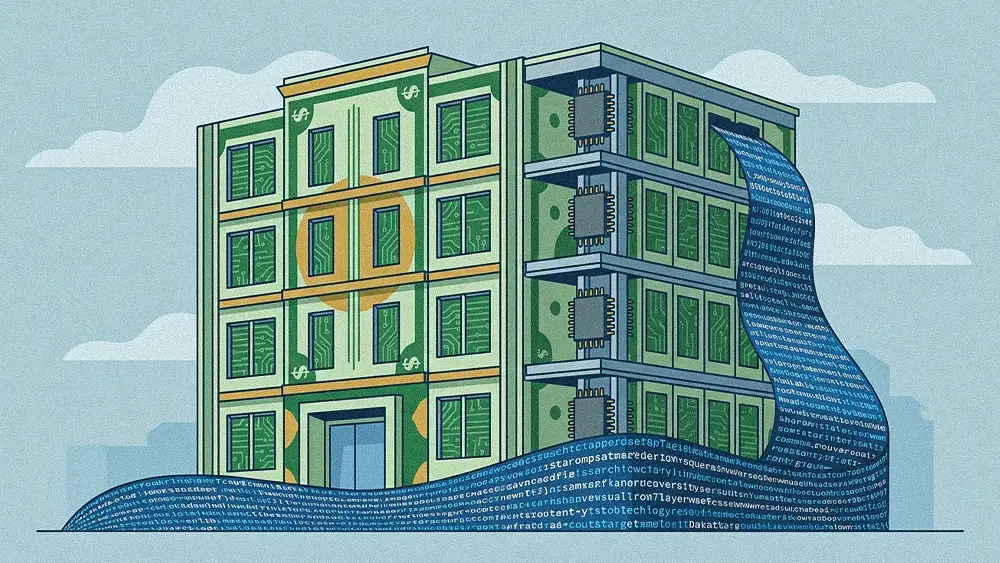
Geopolitics has moved inside the tech stack. Governments are taking equity in chipmakers, sanctions are rewriting vendor contracts, and sovereignty has become a design constraint rather than a policy abstraction. For CIOs, that shifts the terms of an architecture decision, because the efficient choice and the durable one are drifting apart, and the discipline for closing that gap looks a lot like the one sovereign wealth funds have run for decades. A government pulling a model offline is no longer hypothetical, and the same forces now reach into procurement, cloud, and silicon.
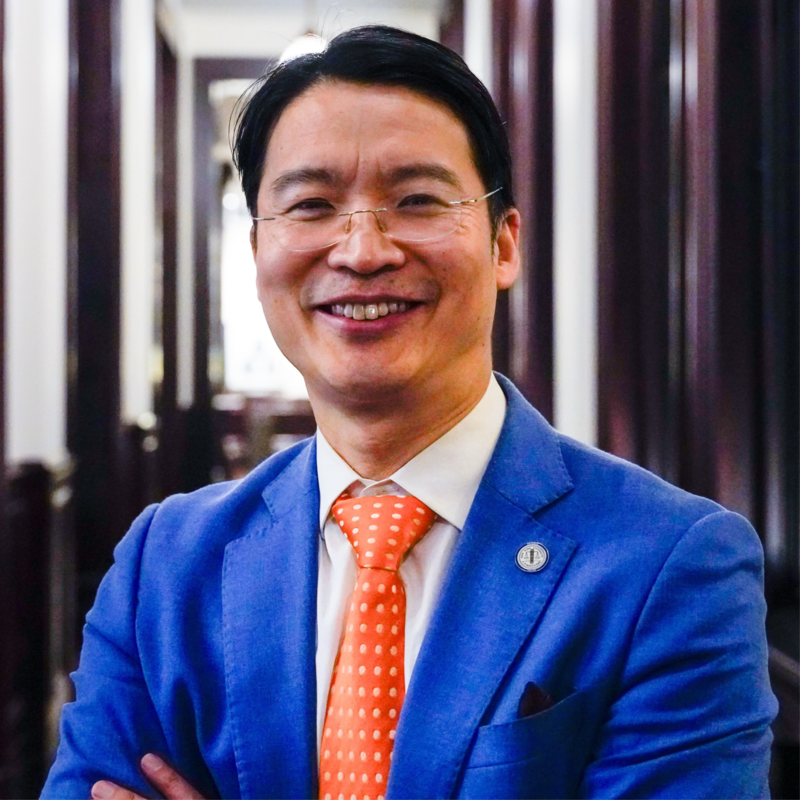
Winston Ma is an Investment Partner and Co-Founder of Dragon Global, a tech-focused single-family office, an adjunct professor at NYU School of Law, and Executive Director of the Global Public Investment Funds Forum (GPIFF). For a decade he was managing director and head of the North America office for China Investment Corporation, China's sovereign wealth fund, and earlier held roles at J.P. Morgan and Barclays and practiced capital-markets law at Davis Polk & Wardwell. He has written more than ten books on the data economy and sovereign investing, including the forthcoming Who Owns AI? (October 2026), and writes the "SWF Sovereign AI" Substack newsletter series. That vantage point, a sovereign-fund investor who watches capital and geopolitics move together, shapes how he reads the current stack.
"The private market needs to incorporate all the new factors of sovereign participation in the AI stack," Ma said. Sovereign capital is now taking equity across that stack, from chips and minerals to energy and quantum computing, while sanctions reprice deals that market logic alone would have settled differently. The upshot for a technology leader is a geopolitical variable in architecture choices that wasn't there a few years ago, and a case for borrowing the habits of investors who plan in decades.
Bet on the horizon, not the quarter: The clearest example is the U.S. government's equity stake in Intel, an $8.9 billion position taken last August against the grain of conventional finance, what Ma has called an "Unconventional U.S. Sovereign Wealth Fund (SWF)," assembling itself deal by deal rather than through a single legislated fund. The state took the opposite view and treated domestic manufacturing capacity as an asset worth keeping alive, with terms designed to discourage a spin-off and to pull in private capital behind it, yielding what Ma terms "Sovereign Alpha." "When you look at this, it's very long-term thinking," Ma said. For CIOs the translation is a sorting problem: which dependencies to optimize around and live with, and which to actively reduce, judged on a horizon longer than the current budget cycle rather than the pressure to replace whatever looks dated.
Efficiency gives way to resilience: The offsetting cost of that horizon is efficiency, and Ma sees the tradeoff landing directly on enterprise architecture. The old model, where a company concentrated on its strengths and outsourced the rest for maximum global efficiency, assumed supply chains that stayed open. "In the past you may have had a supply chain based on Adam Smith, but now you have to add in geopolitical considerations," Ma said. "Localization and redundancy clearly reduce efficiency, but they make you more resilient." A resilient architecture now competes with the efficient one on equal footing, and de-risking the stack means accepting duplication that a pure cost model would have engineered out.
Resilience and concentration are two sides of the same ledger, and by that measure the AI stack is one of the most exposed a company runs. Every layer leans on a short list of dominant suppliers, and each one a team adds deepens its dependence on the others. What looks like a best-of-breed assembly on paper is, underneath, a chain of single points of failure that a sovereign investor would flag on sight.
Concentration as exposure: An enterprise can now depend on one provider for models, another for GPUs, another for cloud, and yet another for the software that ties them together, each layer interlocked with the next. "If you have multiple tech stacks, it's a lot more complicated to make them all work together across every layer." That interdependence is where vendor lock-in turns from a procurement footnote into a structural risk, and it reframes the diversification question. Spreading spend across models and vendors is one answer; the sturdier one, in Ma's framing, is owning the underlying assets that hold value across whichever vendor is ascendant, the proprietary data, the infrastructure, and the talent.
Price in the sovereign: The variable that most CIOs haven't fully absorbed is that state action can override the market on any given contract. Ma pointed to the chip market, where export controls erased a revenue line overnight. "Nvidia used to have large sales to China, but now it has zero revenue from China. That's not the company's choice, it's the sanction's choice," he said. The same logic is spreading: a proposed move in Congress to close a loophole around Chinese firms training models on U.S. cloud would force the hyperscalers to reprice contracts of their own. Meanwhile sovereign and private capital keeps stacking into the same names, with Nvidia's own $5 billion stake in Intel landing weeks after the government's, tightening a knot of ownership and policy around a single supplier.
For a CIO, the practical takeaway is closer to a board conversation than a tooling one. Sovereign funds make long bets on the infrastructure that economies will run on, and the enterprise version of that question is which capabilities to build or own now, and which to control five and ten years out, rather than reaching for whatever solves this quarter's problem. The stack a company assembles today carries assumptions about capital, policy, and supply that can shift under it.
"Lots of transactions need to be repriced," said Ma. The stack that looks optimal on cost alone is increasingly the one most exposed to forces no architecture diagram captures, and reading it the way a sovereign investor would, for horizon, concentration, and the reach of the state, is how a technology leader stays ahead of the repricing rather than behind it.

If this caught your attention, that’s not accidental.

The best editorial systems don’t happen by accident. Outlever builds them.