
The Org Chart Is Lying To You: A Systems Theory Case For Rethinking EA
Christoph Wargitsch, CEO of Wargitsch Transformation Engineers, on why the boundaries between business and IT exist on paper but collapse in practice.
"System theory is very anti-disciplinary. It doesn't matter from which angle you touch this thing, it's always very universal."
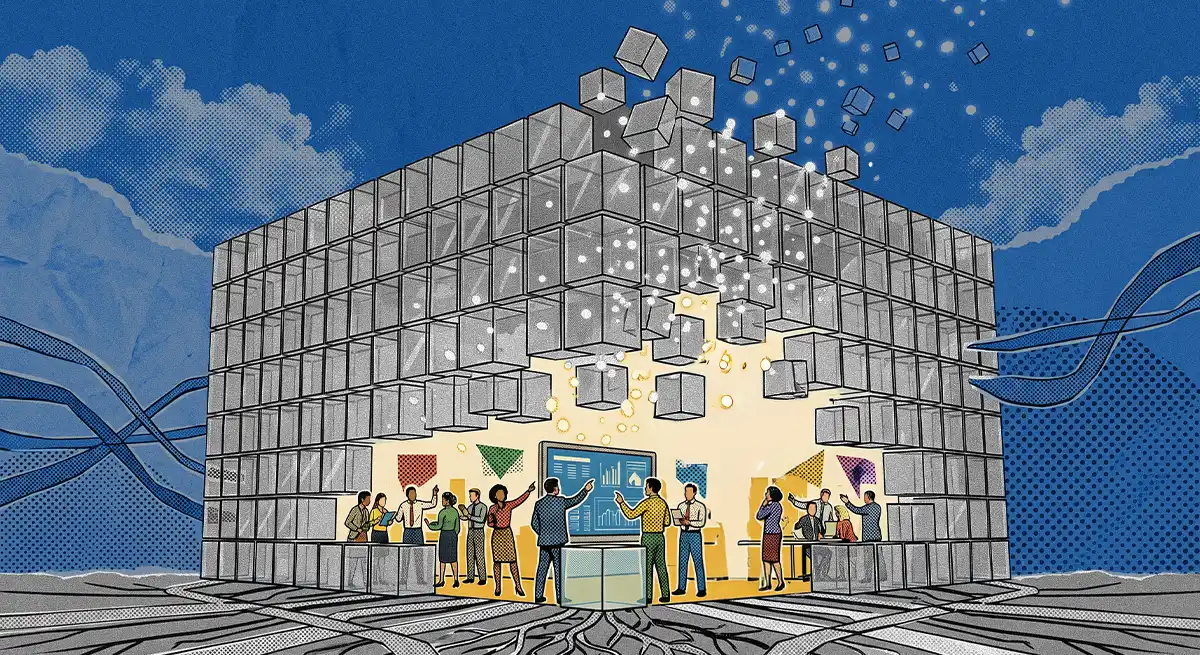
Enterprise architecture is moving away from static technical ownership toward a fluid system of coordination. For CIOs under pressure to turn EA into a long-term strategic lever, tackling one software variable at a time is a losing battle. By applying the principles of systems theory, practitioners are beginning to look past isolated technology silos to focus on the human and systemic communication streams that actually dictate how an enterprise functions.
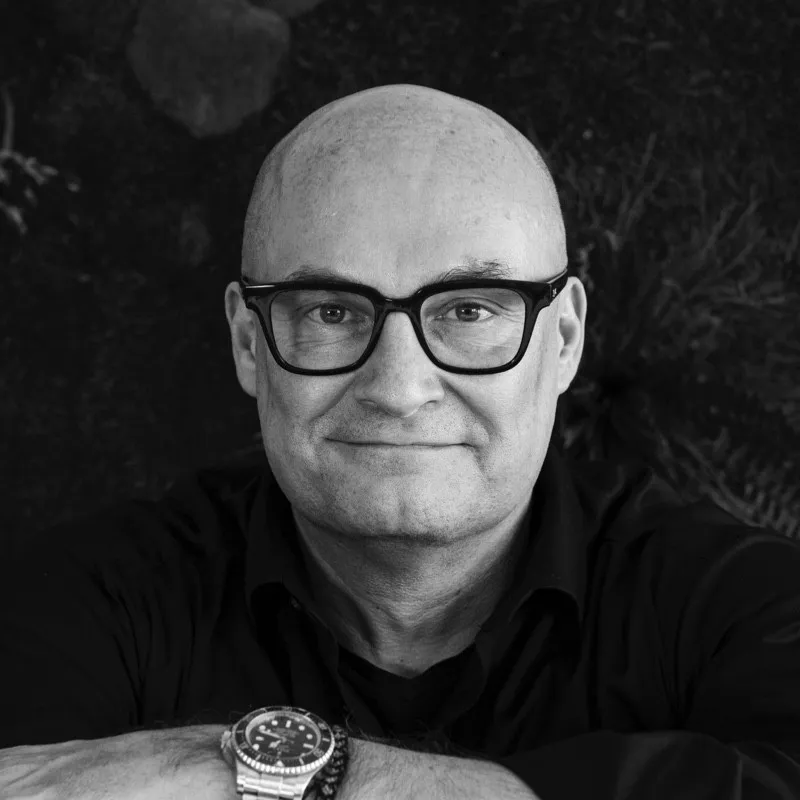
Christoph Wargitsch is the CEO of Wargitsch Transformation Engineers, a transformation consultancy with operations in Germany and Malaysia that has guided multinational corporations through major organizational overhauls for over 18 years. His background crossing physics and global automotive manufacturing equips him to bridge the artificial divides between business and IT, and his consulting practice is built around treating organizational, human, and technology change as parts of a single interconnected system.
"Systems theory is very anti-disciplinary. It doesn't matter from which angle you touch this thing, it's always very universal," said Wargitsch. His framework pairs the Viable Systems Model (VSM), which describes what every viable organization needs in functional terms—operations, coordination, intelligence, strategy, and shared values—with enterprise architecture frameworks like TOGAF. The VSM gives leaders a powerful diagnostic for understanding where those functions break down, but it stays abstract on its own. Translating its insights into things an organization can actually change requires enterprise architecture management, and drawing a clear line between the two is something few practitioners have done well.
- Abstract to action: "If you deal with systems theory, it's a very functional view on the world," Wargitsch said. "But a function is nothing that you can change directly in itself. You need to break it down into elements that you can touch, such as a process, a structure, or a human behavior, to make the subsystems work." In other words, the model reveals the dysfunction. Enterprise architecture gives you the objects to redesign.
- The iPhone effect: "If you combine a telephone, a calendar, a mail system, and a navigation system, the end result is an iPhone," he said. "It combined existing elements perfectly, leading to a huge market success." The same logic applies to management frameworks. Combining a systems-level diagnostic with architecture-level design tools creates a method far more actionable than either one in isolation.
The anti-disciplinary mindset is already playing out across global manufacturing. Many automakers are navigating their current transformation by blending mechanical, electrical, and software engineering. Connecting physical factories to the digital realm through real-time simulation and predictive modeling forces leaders to rip up the old blueprints, a reality reflected in the industry's full-stack pivot from hardware-first to software-first development.
The same boundary-crossing logic is accelerating with AI. As the distance grows between organizations acting on AI and those still planning, EA is maturing into a discipline built around connecting modular systems rather than governing monolithic ones. The rise of autonomous agents will likely require models to learn directly from their environments, bridging the physical and digital worlds as researchers pursue machine perception trained on real-world physics rather than internet text.
- From text to terrain: "They're starting from System 0, treating the customer as the core system, and the car as a mobility system used by that customer," Wargitsch explained. "They aren't doing it the other way around by starting with the hood, the powertrain, the wheels, or the suspension." The move from components to systems has implications beyond product design. "Right now, we teach AI using the internet and human language. Leaving out that layer and connecting the physical world with the learning in the computer chips within robots is the next step."
But merging hardware and software is the easy part. The real challenge is tearing down corporate walls. Wargitsch pointed to epidemiological research tracking the spread of COVID-19 to illustrate the principle, as shown by Dirk Brockmann, Professor at the Technical University of Dresden and Founding Director of the Center Synergy of Systems, and his team. When modeled by physical distance between cities, the spread appeared chaotic. When modeled by the number of hops between airports, it resolved into concentric circles. "The flight distance does not make a difference. It is only the hops," Wargitsch said. The parallel to corporate architecture is direct: the health of an organization depends on its information pathways, and the boundaries drawn on org charts often obscure where those pathways actually run.
- Communication is the architecture: "The Viable Systems Model is all about communication streams. The functions and different subsystems are one thing, but having enough proper communication lines between all these systems is the key," said Wargitsch. That reframes the CIO's job. The question isn't which department owns a given function, but whether the function exists at all and whether anything connects it to the rest of the system. "It doesn't matter whether a certain function sits in production, product development, a digital unit, or IT infrastructure. You just have to make sure the function exists and that it is communicating. If people don't talk to each other and if they don't share information, then this doesn't work."
- Lost in translation: Before a CIO can orchestrate any of this, they usually hit a foundational roadblock: human vocabulary. When departments operate in silos for years, they develop their own distinct dialects. "It's astonishing that organizations still have to define basic terms. What is a product? What is a customer? What is a domain?" Wargitsch said. "Don't pack too much content into that initial workshop, because you will need a significant amount of time at the beginning just for language harmonization to ensure everybody understands how the terms are being used. People are often working entirely within their own little worlds."
- Press start on EA: If architecture relies this heavily on communication, the tools used to convey it need to evolve as well. Languages like ArchiMate exist for enterprise architecture modeling today, but Wargitsch sees them as just a starting point. "I'm thinking of how we can use gaming engines like Unreal or Unity to make architecture visible, so that a process is not just a line between two points on a PowerPoint slide," he said. "You should be able to walk through your new process in virtual reality, hitting the hurdles, seeing the elements, and meeting others in the virtual world. It's lively, it's colorful, it's with motion. Having this playful, gamification element helps a lot."
The throughline across all of Wargitsch's arguments is that complexity doesn't get solved by subdividing it into smaller technical problems. It gets solved by building the communication infrastructure, shared language, and cross-functional visibility that allow an organization to operate as a single coherent system. The frameworks exist. The modeling languages exist. What most enterprises still lack is the willingness to stop respecting boundaries that were never real in the first place.

If this caught your attention, that’s not accidental.

The best editorial systems don’t happen by accident. Outlever builds them.