Beyond the Upgrade: Why Agentic AI Forces A New Enterprise Operating Model
Milind Sathe, Vice President of Strategic Accounts at WinWire Technologies, on why treating agentic AI like a GenAI upgrade is a structural mistake and what CIOs must do differently.


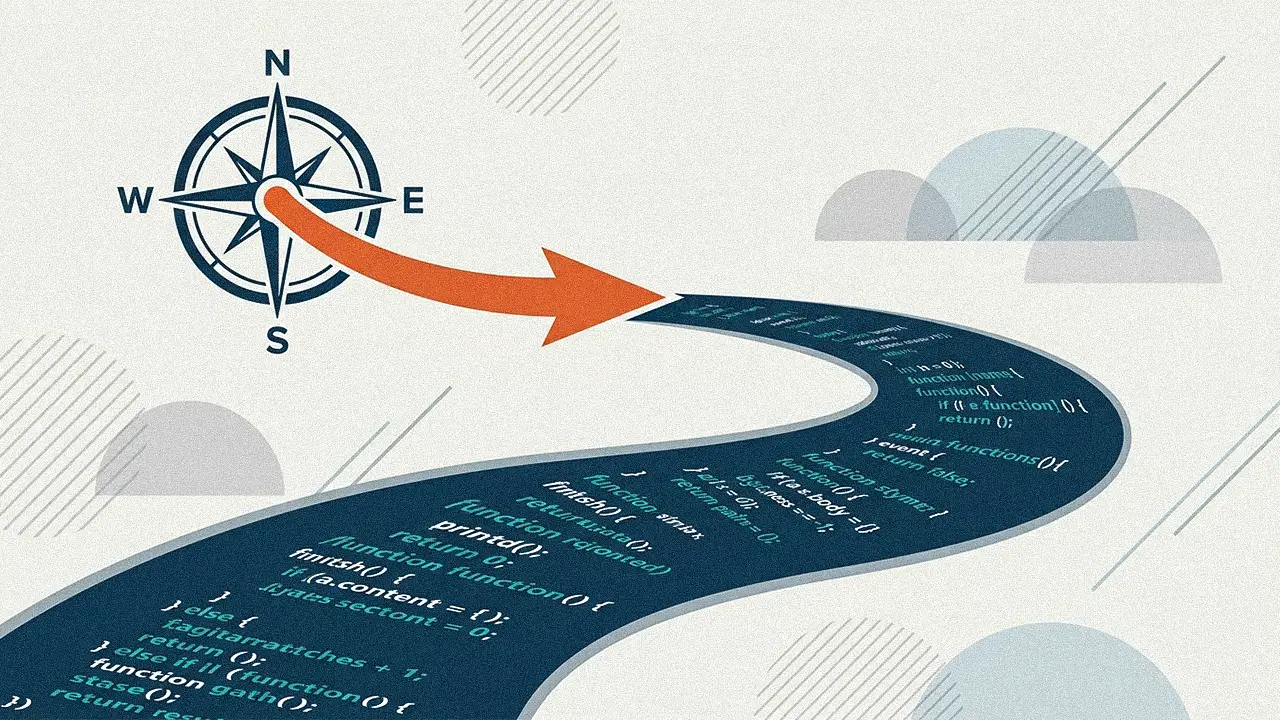
Most enterprises are treating agentic AI as an upgrade to what they already have, applying the same playbook they used for GenAI and expecting similar results. But that's the wrong frame entirely. Agentic AI does not retrieve and summarize; it coordinates, decides, and acts. The work it is built to absorb is exactly the work that fills most corporate management layers: setting context, routing approvals, aggregating information across functions. Recent data suggests most organizations have not made that distinction. The ones that do are going beyond the tech stack and rethinking their org charts.
Milind Sathe is Vice President of Strategic Accounts at WinWire Technologies, which builds agentic AI systems for enterprise clients, where he drives transformation programs for Fortune 500 clients across Life Sciences and Digital Platforms. Before WinWire, he owned the P&L for insurance verticals at Birlasoft, MindTree, and Mphasis, leading teams across software engineering, consulting, transformation and strategy. He holds degrees in theoretical mathematics and computer applications, and has spent the last two years getting back into the technical weeds on AI specifically because he believes leaders who stay conceptual will not be able to judge what is actually coming. His view is that most enterprises are treating agentic AI the way they treated every prior wave, by plugging it into what already exists.
"Most organizations are looking at agentic AI as just the next improved version of GenAI. Now that it has arrived, they're doing the same thing they did before. But it is not like GenAI," said Milind. The distinction matters because the two technologies operate on fundamentally different logic. GenAI retrieves and generates. Agentic AI coordinates, decides, and acts, and the organizational implications of that difference are not incremental.
That difference has direct consequences for how enterprises are organized. In most corporate hierarchies, a significant share of management work is coordinating context: setting context, shepherding approvals, aggregating information up and down the chain. As agentic organizations take shape, that coordination work is exactly what software agents are built to absorb.
Risking the wait: The instinct to slow down and validate before committing is the default posture for most technology leaders. Milind believes it is the wrong one for this moment. "I was just talking to a CIO the other night over dinner, and he told me his concern was not being careful enough. I told him this time around, I would completely disagree," said Milind. "The risk is that you are not aggressive enough."
Squeezing the middle: "If you look at traditional management structures, it doesn't matter the industry, there is this huge middle management layer that is just doing context setting and content summarization or re-articulation. Agentic AI will force closure of that layer," noted Milind. Block offered an early illustration, collapsing its job architecture into three roles: individual contributors, directly responsible individuals, and player-coaches, eliminating many traditional middle-management positions whose primary function was coordination and oversight.
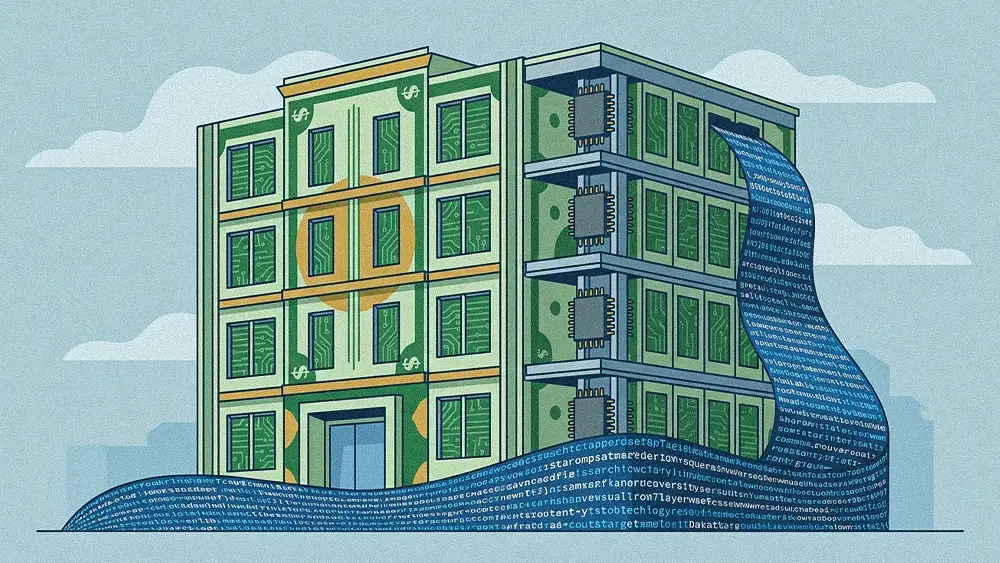
The restructuring pressure is not confined to org charts. It is spilling into how companies buy and build software. The parallel Milind drew came from a Starbucks visit with his son. Dubai Chocolate, the viral confection that originated in a single shop in Dubai, spread across Cold Stone, Trader Joe's, and Starbucks because nothing about it was patentable: not the city name, not the ingredients, not the assembly. The same logic has long governed enterprise software: a specialized healthcare company buys a generic CRM not because it fits, but because building one that does is prohibitively expensive. When business users can remove traditional bottlenecks and assemble agents around their own data to bypass monolithic platforms, the cost justification that kept them buying generic software disappears.
Breaching the moat: "If any business can take their customer data, their unique sales and customer support propositions, and just take best-of-breed agents that do marketing and everything else, and build something on their own, you don't need Salesforce anymore. Because there is nothing patentable inside it," explained Milind. The point was not about Salesforce in particular. The enterprise SaaS model itself assumes that the cost of building bespoke is always higher than the cost of compromising on fit. That assumption is eroding.
The economics shifted again with autonomous coding. Milind pointed to a recent Anthropic demonstration: a set of agents worked continuously for more than a week and rebuilt an intricate Unix C compiler, fully tested and ready to deploy. A task of that size would typically occupy a small development team for months. He also noted that Anthropic leadership has publicly suggested end-to-end software engineering is one to two quarters away. The claim goes well beyond vibe coding or spec-driven programming with co-pilots.
Prompting to production: "A business user can get up one day and decide they need a system to do something. They're going to go into some version of Claude Code and ask it to build a mobile app, deploy it, and make sure it's secure," said Milind. "Within a week or so it gets deployed and there's not going to be a human touch to it." When business users can prompt custom tools into existence, the centralized IT organization loses one of its core functions. Milind framed the shift not as a defeat for IT leaders but as a graduation. Freed from managing software production, IT leaders could become outcome architects, managing workflows rather than just people. The shift was already visible in how forward-looking CIOs were approaching their integration strategies and governance models, moving from owning every build to orchestrating standards across the organization.
The question Milind kept returning to was not how the CIO role would adapt, but whether the role itself was the right organizing unit. Outcomes like governance currently live partly in IT, partly in finance, and partly in audit and regulatory functions. As agentic systems take on coordination across those functions, the case for organizing around outcomes rather than departments grows harder to ignore.
Title track: "If you re-look at your organization, do you need a Chief Information Officer, or do you flatten the structure and create outcomes? Governance is an outcome," said Milind. "The wrong way to think about it is to ask, 'Will these aspects of being a CIO remain so I can still keep the title?' Instead, you re-look at the company itself, redefine the structure and the role, and then figure out where your people can fit." The implication was clear: the leaders most at risk are those asking how to preserve their current role rather than how to redesign their organization. The same pressure reaches further down the org chart. AI is absorbing the foundational tasks that knowledge workers have historically used to build expertise. Junior employees are pushed toward AI for every task. The risk is that workers who skip the manual grind never build the judgment required to validate what AI produces at scale.
For CIOs, the validation problem is personal. When AI sits in front of critical systems, trusting it requires technical fluency, not just oversight authority. Leaders who retreat to conceptual oversight lose the fluency required to judge what the tools are doing. To make the point, Milind made a bet with a fellow senior executive, a skeptic who believed current tools were not ready for real, end-to-end work. The next day, they sketched out a specific challenge: the friend's mother, an 80-year-old student of the Bhagavad Gita, wanted an app that would let her recite verses while seeing aligned meanings in English and her local language, and hearing the recitation pronounced correctly. They could not find an existing app that did all of that in one place.
From lunch to launch: "I haven't written code in 15 years. I don't know what it takes to build a mobile app apart from a conceptual base, and I don't have an Apple developer account," said Milind. "We had lunch, sat down, and went from an idea to a fully developed, tested app. In six and a half hours it was submitted to Apple for production release." The app, called Gita Amrit, is now live in Apple's App Store under Milind's developer name. The project was not a novelty. It was a proof point: a non-practicing technologist, coding for the first time in 15 years, shipped a production-ready app in a single afternoon. That compression of timeline has a direct implication for how leaders think about validation cycles.
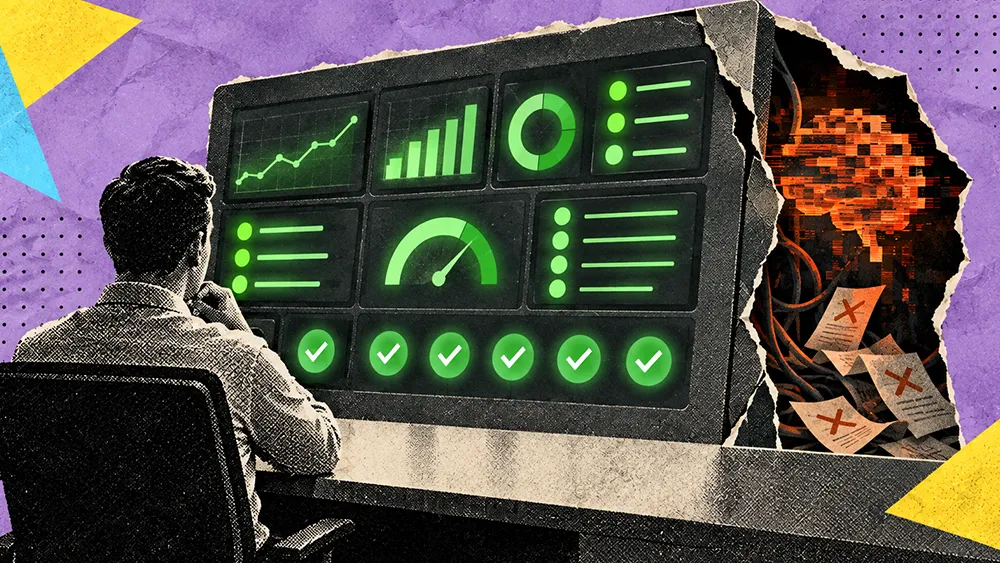
Skipping pilot purgatory: "Don't get stuck in proof of concepts and MVPs. We used to do proof of value because we didn't want to commit resources before validating the concept," noted Milind. "Now the resource cost is so low that in the time you're taking to validate, you can finish it." When the cost of building drops below the cost of validating, the pilot phase becomes the bottleneck, not the safeguard.
The executives most exposed, Milind said, are not the ones moving too fast. They are the ones waiting for the right moment to start, running pilots, building business cases, and managing AI at arm's length while the tools themselves keep compressing timelines. The question is no longer whether the shift is coming but whether leaders are positioned to see it clearly when it arrives.
"You can't stay at a conceptual level anymore. You have to get into the weeds. You have to know what agentic AI is, what GenAI is, and how to use the tools," said Milind. "If you don't, you won't grasp the potential, the disruption, the size and scale of what's coming, so people have to get down and dirty."

If this caught your attention, that’s not accidental.

The best editorial systems don’t happen by accident. Outlever builds them.