
Why JPMorganChase’s Payments CIO Gets His Hands Dirty With AI To Inspire His Teams
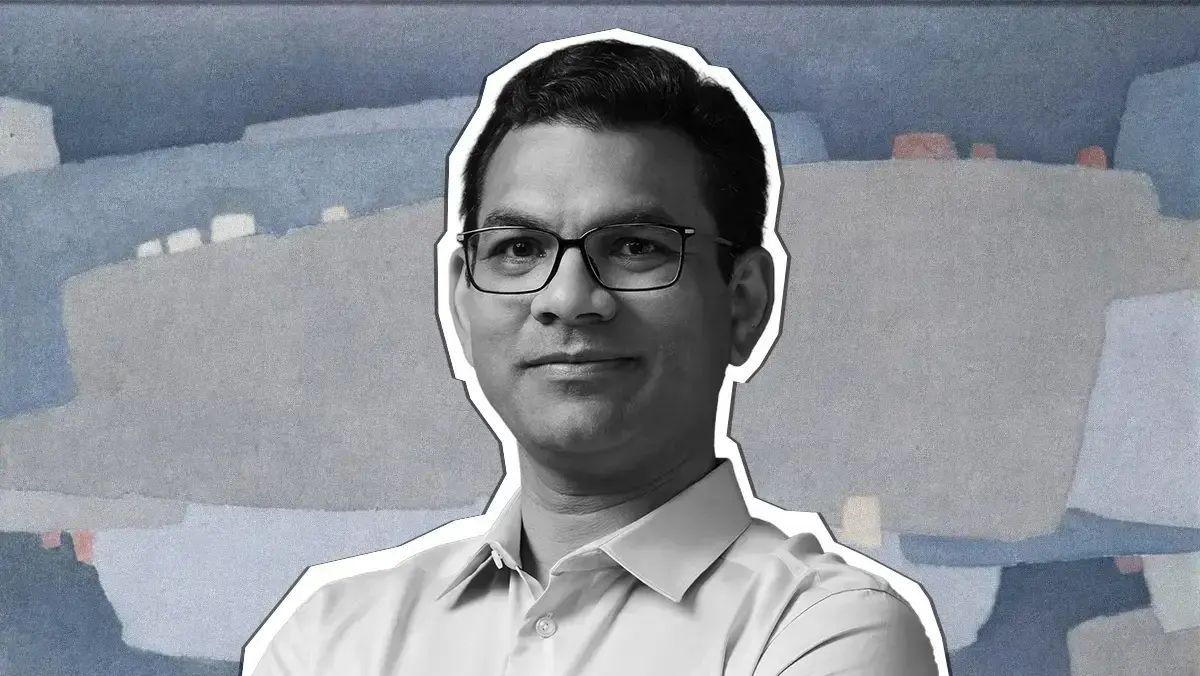
“What matters most is the mindset shift. Think the way you did in the past and you will never transform."

As AI unlocks the art of the possible, the roadblock for many CIOs is turning internal anxiety over the technology into excitement and momentum for the business.
Company leaders might be eager to implement AI, but employees aren’t necessarily on-board. In many businesses, it’s not the technical issues holding them back, but internal distrust and fear.
That’s not the case at JPMorganChase. The financial titan is making significant investments in AI. And employees are eagerly embracing it, from writing code to soliciting proxy voting advice. The company is already generating $2 billion in value a year from using AI.
The fast progress is a result of a workforce that’s immensely proud of the 225-year-old institution’s accomplishments but never satisfied, according to Sri Shivananda, CIO of J.P. Morgan Payments.
“What matters most is the mindset shift. Think the way you did in the past and you will never transform,” Sri said in an interview with CIO News. “Intellectual humility and curiosity are the biggest ingredients for success.”
CIO News talked to Sri about J.P. Morgan Payments’ early lead on AI, how the firm has galvanized employees around the technology, and why modern CIOs must remain relevant through technical acumen.
‘I just want to do this’
Born in India, Sri moved to the U.S. in 1996 for higher education and eventually went to work for Ford Motor Co. But the cold weather in Michigan proved too formidable of a foe. He eventually made his way to the San Francisco Bay area by way of Austin, TX. (“I finally found the perfect weather,” he said.)
There, Sri worked at eBay, going from first-level engineer to various senior roles in technology before the PayPal split from eBay in 2015. After spending the next nine years at PayPal, Sri technically “retired” — aside from several public board seats and advisory roles. But he couldn’t pass up the opportunity to work at JPMorganChase, a company with the scale, complexity, and opportunity to challenge an industry veteran like Sri.
Sri and his team are responsible for the more than $10 trillion J.P. Morgan Payments handles in payments every day, where he capitalizes on a broad knowledge of the business, product, and technology space to keep innovation on the cutting edge. Over his 25-year career, Sri worked in product development, platform engineering, data, infrastructure, and cybersecurity, across the Internet, e-commerce, cloud, and mobile revolutions — the full “East, West, North, and South of the tech landscape,” he said.
“I'm a geek. I don’t want to run a business, I don't want to be a CEO. I just want to do this,” said Sri.
Act of commitment, not compliance
According to Sri, J.P. Morgan Payments’ AI strategy falls into three buckets: Business, Operations, and Technology.
Within AI for technology, efforts span giving every engineer access to the most powerful AI coding tools, to using AI to extract more intelligence out of documents and deploying agentic interfaces to eliminate friction for clients and employees.
Instead of mandating employees use the technology, Sri and other leaders opt to, explain the why, and use showcases like public demos to get the workforce inspired about how much AI can help in their daily lives - personally and professionally.
“We don’t treat it as an act of compliance. We figure out how to make it an act of commitment, and that commitment can only come from inspiration," Sri said. “We are turning what may exist as slight anxiety about change into energy, that then becomes momentum for the transformation."
Being the inspiration
CIOs are integral to this mindset shift. There’s a natural curiosity among the employees about how leaders use AI, Sri said. And it’s why they need to actively experiment with new AI tools.
“I’ve been tinkering three-to-six hours every weekend … then coming in and inspiring our teams to adopt the same mindset,” he added. “When you get them excited, we’ve seen teams do magic.”
Ultimately, for CIOs, it’s about keeping up with the rapid technical upheaval, but always with an eye on the business outcomes. That means excelling at the basics, while quickly embracing the most powerful technology available. And for CIOs like Sri, the moment is a chance to put decades of experience to use to transform their businesses for the future.
“The knowledge base allows me to think holistically and … create speed in execution towards the direction we are heading in, but also to make sure it is done in a way that it is secure, stable, subsidized properly, and continues to build on the trust the firm has created over centuries,” Sri said.
It’s this combination of “brilliant at the basics” with technical excellence that underpins Sri’s strategy for staying at the forefront of the payments industry — and making sure the company is ready to tackle opportunities in real-time.
“The same thing that applies to payments applies to technology: you’re more productive today because of the technology you have,” Sri said. “When I go visit a team in any location, they tell me they’re able to do things in three weeks that previously would have taken them three months.”

If this caught your attention, that’s not accidental.

The best editorial systems don’t happen by accident. Outlever builds them.