
Ex-CIO Of DOE And EPA Ann Dunkin On Why The Execution-To-Orchestration Shift Is A Workforce Architecture Problem
Ann Dunkin, former CIO of the U.S. DOE and EPA, on why the shift from code execution to AI orchestration demands that CIOs rethink the bar for entry-level technical talent.
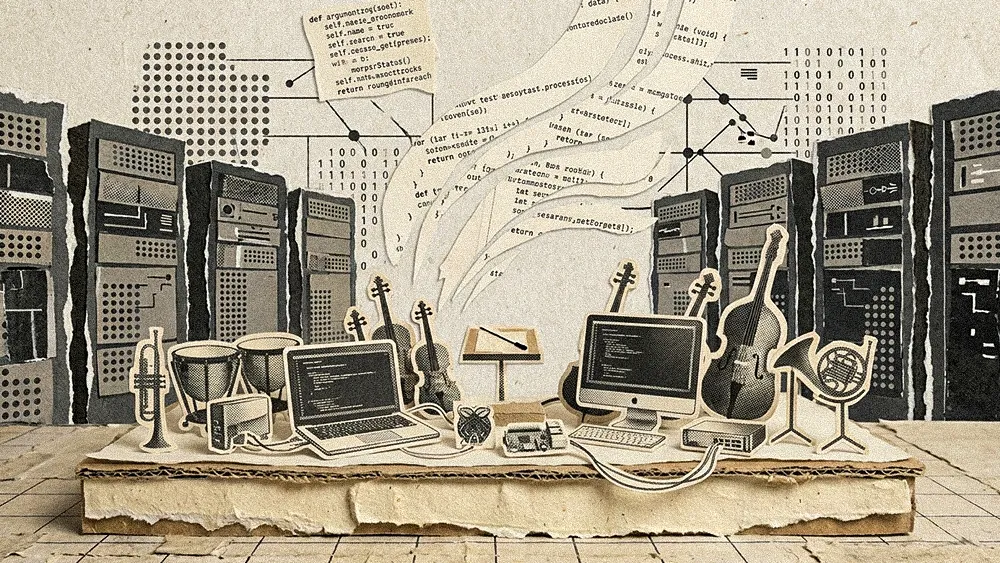

Enterprise employers say they want AI-ready talent, but few can define what that means beyond buzzwords like "data-driven thinkers." Universities are trying to build curricula that outlast a two-month model release cycle, without a clear signal from industry about what graduates should do on day one. That feedback loop works where both sides are AI-literate and breaks down where they are not. Underneath it is a more specific problem: the entry-level technical job has changed faster than job descriptions, hiring criteria, or curricula, and for CIOs, closing that gap requires rethinking how the workforce is designed from the ground up.
Ann Dunkin has held the CIO role across federal agencies, county government, and the private sector, including the U.S. Department of Energy, the EPA, Santa Clara County, and executive positions early in her career at Hewlett Packard and Dell. At the Department of Energy, she oversaw a $5 billion IT portfolio and a $1 billion high-performance computing budget spanning 17 national laboratories, nuclear security, and clean energy programs. Now a Distinguished Professor at Georgia Tech and the author of Industrial Digital Transformation, she also advises CGAI and serves on the board of the Global Interconnection Group. She brings that cross-sector vantage point to one of the more consequential questions facing technology leaders: whether the workforce is being built for the job AI actually requires.
"How do we make sure that junior developers build the right skills to manage the code that AI develops, and to build the right tools and tests, and understand what the AI is doing? I don't think we can let AI be a black box," Dunkin said. The challenge is no longer generating lines of code but understanding, testing, and taking ownership of what the AI builds, a distinction that sits at the center of how CIOs now need to think about workforce design.
Every major shift in how work gets done creates the same problem: job structures lag behind the technology. Computers, email, and video conferencing each arrived faster than organizations could redesign the roles around them. Dunkin sees AI following that pattern, with one difference: the gap between what the work requires and what most employees were hired to do is opening faster than before, and entry-level roles are already feeling it. The consequences now extend into security, governance, and how AI agents operate inside enterprise systems. The implication, as she put it, is direct: someone who uses AI better than you will take your job.
Ghosts of offices past: "We tend to be very slow at redesigning organizational structures and jobs to match new technological systems," Dunkin said. As recently as 2010, she encountered a public-sector role where her assistant's job description still opened with taking dictation, a task that had been obsolete for decades. "The gaps show up between what is needed in the new world and how we've historically been operating."
The shift is sharpest in technical roles, where the job description has changed faster than most curricula or hiring managers have caught up. Writing code is becoming a preparatory skill, not a primary deliverable. What the work now demands is the ability to design systems, specify architecture and security requirements, and direct AI agents through the build process, while maintaining the authentication and privilege controls that keep autonomous agents from acting outside their boundaries. Inside organizations, the picture is just as uneven: some workers have aggressively automated their workflows, while many others have barely begun experimenting. That gap, Dunkin said, is where the real competitive risk lives.
Orchestrators over operators: "We are not putting students out into the workforce to simply write code anymore," Dunkin said. "We are putting them out there to manage a set of tools, which happen to be AI agents, that will build the system for them. They still have to design the system itself, the security, and an effective architecture. And they will do all of that in conversation with an AI." That conversational dynamic, she noted, is already visible in how developers use vibe coding tools today, going back and forth with an AI in a process that demands governance as much as creativity.
Survival of the fluent: "The gap is going to be the difference between the people who figure out how to make their processes better and those who do not," Dunkin said. "What I tell students is that AI is not taking your job. Someone who uses AI will take your job if you don't. Or, someone who uses AI better than you do will take your job." That distinction between using AI and understanding how to direct it at scale runs through much of Dunkin's thinking, and on the enterprise side it shows up in how vendors are pushing architectural patterns such as AI gateways to centralize and control how models are used in production.
Communication between industry and academia often stalls when both sides are still early in their AI journey. A company with limited AI experience pairs with a school that has not yet built much AI depth, and neither can easily translate buzzwords into concrete requirements. Those misaligned expectations frequently reflect differences in maturity rather than bad intent. Dunkin describes both the enterprise and academic markets as a continuum, and she is candid about where she sits on it: comfortable using AI to accelerate small personal projects, but clear-eyed about the boundary between that and what enterprise-grade development actually requires.
Weekend warriors: "A senior leader at a Fortune 50 technology company, someone who reports directly to the CEO, went home for a three-day weekend and built half a million lines of code using AI," Dunkin said. "They came back to their team and made it clear that if they aren't doing this, they aren't doing it right, because this is our future." For organizations at that end of the spectrum, the question is no longer whether to adopt AI but how fast to scale it.
Failing the vibe check: "You have coders who are running armies of AI agents to do their jobs," Dunkin said, "but I can't do that. I can have my AI tools build a tiny application for my personal use, but I don't have the skills to design the architecture, select the tools, and have an AI build an enterprise-grade application. You still need people who understand how to do those things." The gap between personal productivity and enterprise-grade development, she noted, is exactly where organizations need to think carefully about what AI fluency actually means at each level of the workforce.
The same maturity continuum that divides industry plays out inside universities, classroom by classroom. Georgia Tech operates with institution-wide guardrails on AI tool use, but beyond those boundaries each professor sets their own rules. Some permit AI throughout. Others restrict it sharply. Dunkin treats that inconsistency as preparation rather than a problem, arguing that students who learn to operate under different expectations in different courses are better equipped for workplaces where AI governance is equally fragmented. Her clearest view of how far that fluency extends came from judging a recent hackathon, and despite the broader anxiety about AI displacing entry-level workers, the data she cited from the top of the market tells a different story.
The 40-hour hustle: Students had roughly 40 hours over a weekend hackathon to build something new. Some teams pursued deep technical ideas, including hardware interfaces that were less polished by the deadline. Others leaned hard on AI tools and produced strikingly complete solutions. "Students had built full-blown applications with gorgeous interfaces, recorded a video describing their work, and built a presentation, all in 40 hours," Dunkin said. "Those students were using AI left and right to get that work done. Some built applications that you could have taken to market tomorrow." The knee-jerk reaction in education was to ban AI entirely, she noted, but the more durable answer is teaching students to own the output. "The reality is you can't have AI do your homework for you, but you can absolutely have it help you. Ultimately, the product has to be yours." That capacity, she added, is precisely what hands-on AI infrastructure at universities is designed to build.
Defying the downturn: Despite the macro headwinds, Dunkin pointed to continued demand for graduates at the top of the market. "It's my understanding that the vast majority of our 2026 Computer Science graduates already have job offers," she said. "Georgia Tech is a top-tier school, so we are not reflective of the job market as a whole. That's kind of my point: it's a tough market. These students are getting jobs because companies still are hiring entry-level college students." That demand is visible at the highest levels of the industry, where leading employers are screening specifically for AI fluency rather than traditional coding credentials alone.
For Dunkin, the instinct driving students toward AI is familiar. It has always shaped how people adapt to new tools, from email to video conferencing to today's AI assistants. Students are not chasing trends. They are reducing rote work to spend more time thinking. "The primary focus for the vast majority of our students is figuring out how to make things happen faster so they can spend more time thinking and less time doing rote work," Dunkin said. "They are going to be absolutely all over AI, because finding easier ways to do things is how they survived high school, and finding easier ways to get tasks done is how they survive Georgia Tech." That same efficiency pressure is showing up inside enterprises, where developers with unconstrained access to powerful models can move fast and spend enormously, and where the CIO's job is to find the guardrails that make adoption sustainable rather than just fast.
"There is this paradox where big tech companies are laying people off to invest in AI, while data shows those investments haven't paid off yet," Dunkin said. "For most companies, AI isn't saving or making them any money. If you give a coder unlimited access to AI, it is very expensive. They can do a lot if they are really good, but they spend a lot of money," she added. "So there has to be a middle ground somewhere of where the money is going to be saved."

If this caught your attention, that’s not accidental.

The best editorial systems don’t happen by accident. Outlever builds them.