Three-Time CIO 100 Winner Reframes The CIO Role As 'The Operator With P&L Ownership'
Ryan J. Crosby, three-time CIO and Strategic Advisor at Zertain, on why owning P&L starts with mapping where revenue leaks across cross-functional workflows.


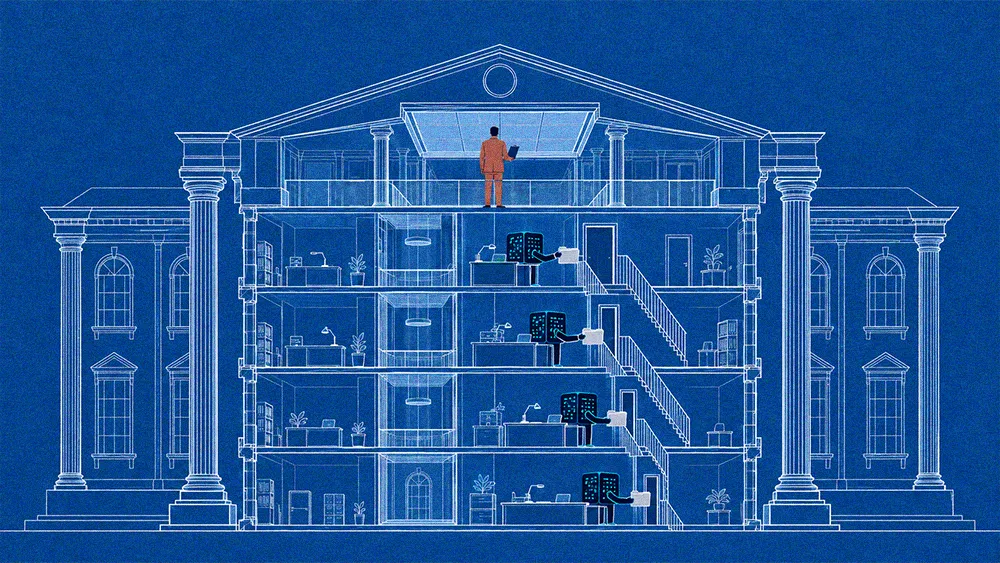
Most enterprise technology leaders are still being measured by the wrong number. Uptime, cost savings, and system stability are real, but they are support metrics, not growth metrics, and the gap between the two is where CIO credibility either builds or stalls. The technology leaders gaining ground with CEOs and boards have made a different calculation: every initiative maps to a business outcome, friction lives in the handoffs between teams, and the job is not to manage systems but to find where the revenue is leaking and stop it.
Ryan J. Crosby, Strategic Advisor at Zertain, served as CIO and Head of Technology at ICON International for nine years. During that tenure, technology-led initiatives he drove delivered more than $550 million in revenue. Previously, he held successive global leadership roles at Morgan Stanley, overseeing infrastructure spanning 45,000 servers and 4PB of storage across more than 30 sites. A three-time CIO 100 Award recipient, Crosby has spent years making the case that the CIO's job is not to manage systems but to drive enterprise value, an argument he is now codifying in his forthcoming book, Modern Day CIO Playbook. He said the role itself has undergone a fundamental redefinition.
"The CIO role has shifted from keeping the lights on to becoming a revenue catalyst, owning end-to-end workflows and directly driving business value and growth," Crosby said. The progression, in his telling, was neither sudden nor accidental. The role moved through distinct stages, from keeping systems running to owning end-to-end transformation, before arriving at the commercial accountability that now defines the best performers.
Crosby follows the money, but the path there starts long before any technology decision is made. His first move in any engagement is to sit with the business, map the full workflow, and find where the handoffs break down. In his experience, the friction is almost never inside a single team. It lives in the gaps between them, in the approvals that stall, the accountability that diffuses, and the revenue that quietly leaks out.
Business takes the wheel: "IT innovation doesn't drive business strategy. Business strategy drives IT innovation," Crosby said. The failure mode he sees most often is the reverse: IT teams chasing pilots, demos, and new tools without mapping them to a business outcome. "A lot of IT people try to drive pilots, demos, and flashy new toys, but it doesn't really go anywhere," he said. "All you're doing is basically kicking a can down the road."
Plugging the profit leak: "The first thing you should be focusing on is how value gets created within the business flow, and more importantly, where the revenue leakage is," he noted. For Crosby, that means ranking every initiative against a clear hierarchy: revenue generation and profit expansion at the top, operational efficiency in the middle, and workplace productivity tools at the bottom.
A workflow diagnosis only creates value if the C-suite acts on it. The obstacle Crosby encounters most often is not resistance to change but a translation problem: technology leaders presenting in a language their executive peers have stopped listening to.
Speaking dead languages: "It's basically like speaking Latin to people who don't understand Latin," Crosby noted. When the conversation stays anchored to system modernization, technical debt, or the mechanics of CapEx versus OpEx, most executive teams tune out entirely. The CIOs who have earned influence at the highest levels have learned to lead with business outcomes first.
Ghosts in the P&L: "If their P&L stays the same, it doesn't really matter," Crosby pointed out. "But if you make them $200 million by building a proprietary form or a customer portal or partner portal, that is incredibly impactful." Net-new revenue is what lands visibly on the income statement. It opens what Crosby calls the CEO's mental door in a way that cost savings never do.
Finding those opportunities starts with embedded listening. Crosby described the modern CIO as an "enterprise operator": someone who sits inside business units, maps the work that actually moves between departments, and takes accountability for outcomes that technically belong to someone else.
Curiosity over code: "I was able to even generate a brand new revenue stream because I was embedded in how the business was trying to achieve something that no one understood," Crosby recalled. "So I was like, walk me through this process so I can understand how to help you." When cross-functional workflows stall, IT leaders often retreat to their own lane. Crosby pushes back on that instinct. "Maybe it's not your job, but at the end of the day, who's going to get blamed for it? The CIO," he said. Once the friction is visible in a shared workflow, the dynamic shifts. Other C-suite leaders tend to get on board quickly when they see the CIO is trying to make the business better, not just protect IT's turf.
That shift in the boardroom only holds if it reaches the engineers and analysts doing the daily work. Crosby taught his teams the same end-to-end accountability principle he brought to the C-suite: understand what the business needs, own the outcome, and never let a request die at a departmental boundary. When a junior developer realizes their API connector powers a customer portal generating millions in revenue, he said, their relationship to the work changes entirely.
Killing the default 'no': "I know what you're doing, that's not my world, but I will connect you with that person," Crosby told his teams. The rule converts a potential dead end into an internal customer service moment and signals to the broader organization that IT is a connector, not a gatekeeper. "In a lot of places, people think you guys answer phones, you break computers," he said. "Leading by example, being aligned with your teams, being embedded in what your teams are doing, shows that we're all about trying to move the business ahead."
As the tech industry fixates on AI as a headcount lever, Crosby offers a counterargument. The CIOs who get this wrong, he said, are the ones who automate first and ask questions later, stripping out the junior roles and cross-functional judgment that the enterprise operator model depends on. The smarter move, in his view, is using AI to remove low-value work while redirecting human capital toward the judgment-intensive work that actually moves the business.
"The one thing AI does not do very well is human judgment," Crosby said. "Understanding a situation, knowing how to attack it, aligning with the business, understanding their nuances, their challenges, and their operational friction points. You're still going to need people, and a lot of them." Situational judgment, commercial instinct, and the ability to read a room are what Crosby has spent his career building. Those are not capabilities a model can replicate.

If this caught your attention, that’s not accidental.

The best editorial systems don’t happen by accident. Outlever builds them.