Why The CAIO Title Might Not Survive The Shift To Shared Data Architecture
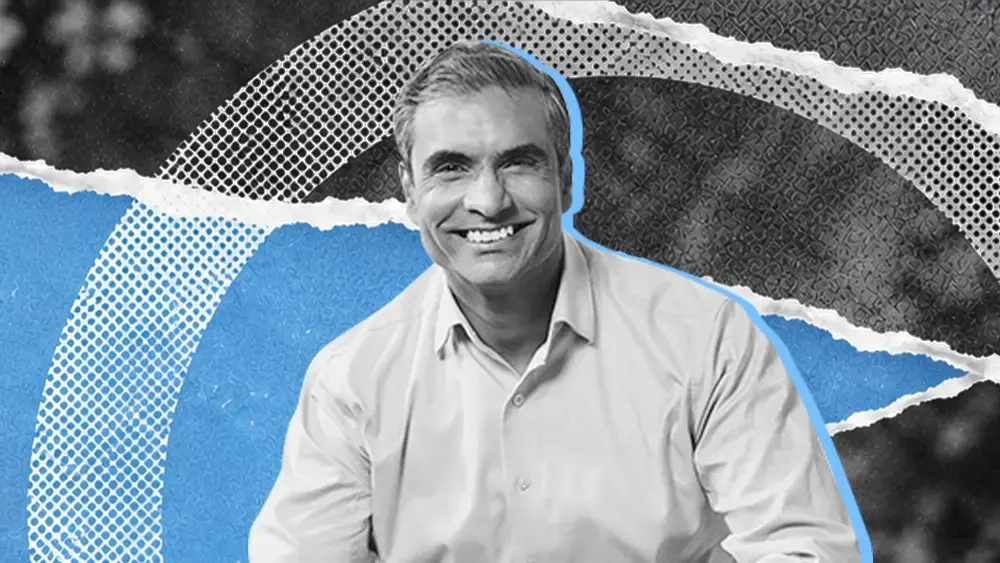
Wilf Russell, Chief Technology Officer at Livmor, on why the instinct to create new C-suite titles for AI repeats the same mistake enterprises made with data leadership.


Most enterprises are still paying to run two technology organizations when the underlying systems only require one. The split made sense when internal IT and external product ran on separate infrastructure. It no longer does, and AI is making that gap impossible to paper over: agents draw from both internal databases and external resources without regard for where the org chart draws the line. The organizations still running two separate stacks are paying twice for infrastructure they only need once.
Wilf Russell, Chief Technology Officer at Livmor, an AI-driven Medicare intelligence platform, spent the first half of his career building product: engineering at Microsoft, then leadership roles at MySpace, RealNetworks, Nike, and Volvo Cars, where he oversaw teams of more than 1,500 people worldwide. That background left him with a familiar bias: CIOs managed vendors and ran infrastructure. CTOs built the product. He came to see that distinction as a costly fiction. He said most enterprises were still trying to solve the problem by redrawing org charts rather than rethinking how their systems were built.
"Start with the data. Look at the way you can actually create a data platform that is leveragable by both sides, then you can start building everything else on top of that," said Russell. He was speaking from experience: at Nike, he had already started laying that foundation before the org chart caught up with the idea.
The skills that made a great CIO a decade ago were built for a different architecture: vendor management, data center oversight, large-scale project delivery. Cloud and SaaS have since collapsed the distinction between internal and external systems, and the leaders who thrived in the old model don't always see it. Russell's experience at Volvo put that gap in sharp relief.
Server room syndrome: The problem wasn't competence. It was frame of reference, a role optimized for stability in a world that had already moved on. At Volvo, where I also served as CTO, the CIO organization was operating from a more traditional enterprise IT perspective,” said Russell. “The focus was understandably on operational stability, whereas I was pushing more aggressively toward platform convergence and unified data strategies. It could have been beneficial to strategize in both directions at the same time."
Seeing double: The most visible symptom was duplication: separate identity systems, separate compliance frameworks, separate tooling built in parallel by teams with no structural reason to talk to each other. "Rather than having the same person running that organization, at least bringing them closer together through frameworks, platform methodologies, and compliance methodologies," said Russell. "You don't want your team building an identity management system for your external customers if they're not also serving your internal customers. That doesn't make sense. You're not gaining any leverage, so the cost becomes a problem."
The leader problem and the organizational problem are related but distinct. A CIO without platform vision is a hiring failure. A CEO who treats technology as a back-office cost center is a strategic one, and it tends to take a leadership change or an executive restructuring to shift it. Deloitte research confirms the pattern holds broadly. But waiting for the top to move isn't always an option. Russell felt the pain of this split firsthand as Consumer Technology Officer at Nike, where the CIO and CTO organizations sat in separate reporting chains, each building its own data platforms.
Just do IT: "We used to always have these battles with Nike's CEO at the time. I asked him to just call Nike a tech company, but he thought that would dilute the brand," said Russell. "I argued that it is a sportswear and an athletic brand, and a tech company. We were creating applications like Run, Golf, and Skate." Nike's next CEO gave technology a direct line to the top. The argument Russell couldn't win eventually made itself.
Crossing the aisle: That duplication increased cost and friction and made it harder to apply consistent controls. Foundational elements like identity, access, and compliance and risk management needed to be designed once and used everywhere. "I viewed that as a real problem because we were starting to build, especially around data, our own data platforms, and that made no sense whatsoever because data needs to be managed in consistent ways. You need to understand the lineage and provenance of the data," said Russell. "So I reached across the aisle to my CIO partner, and we started to come up with systems that we could start gluing together." The work didn't stop when he left. Nike eventually combined its information and data leadership under a CDIO role, correcting the fragmentation created when the company first added a Chief Data Officer alongside the CIO and CTO. It is part of a pattern: organizations that responded to digital pressure by adding vertical titles are now discovering that consolidating those functions into unified platforms is where the leverage actually lives.
That consolidation pressure is also reshaping the talent question. As enterprises move away from siloed titles and toward cross-functional leaders who can manage across the full technology stack, two pipelines are emerging: blended academic programs that combine computer science with management information systems, and startup environments where founders have no choice but to operate as both CIO and CTO from day one.
Survival of the generalist: Russell's current role at Livmor is a working example. "I am effectively the CIO at my company, even though I hold a CTO title. It's not really until you get to a medium-sized company or even a large enterprise like Coke, Nike, or Volvo that you have the room or even the wherewithal to think that there's different functions that need different levels of skills," noted Russell. "Startups already get it, but it's only really just a matter of an ability to hire a bunch of people with a specialized function." The startup pedigree travels. Leaders who built integrated systems under resource constraints tend to resist the reflex to re-silo when they move into larger organizations, and that instinct is increasingly valuable when the mandate is to modernize enterprise architecture and consolidate financial sector IT rather than slot into existing structures.
AI is accelerating the convergence pressure that org charts have been slow to resolve. As enterprises move from isolated AI pilots to enterprise-scale platforms, agents naturally draw from both internal databases and external resources, making the boundary between CIO and CTO territory not just inefficient but technically incoherent. The risk is that leadership sees this moment as a cost-cutting opportunity, rather than an architectural one.
The artificial adhesive: Russell sees AI as the force that makes the convergence argument undeniable. "What's starting to bridge that gap though is the introduction of AI, because now you've got agents that you can build that cross the bridge between internal systems as well as externally facing resources," explained Russell. "AI is becoming the glue to bring those together, and you need to be able to be sensing that first."
Quarterly blinkers: "Here's a challenge I think might occur: as leadership looks at AI as yet again another opportunity to lay people off, the answer is always yes. Because if they're a public company, they're trying to address their quarterly results and make sure Wall Street is happy," said Russell. "It'll take a strong individual to really understand the value of both IT systems people as well as engineering people, and how to combine those together in a way that's effective." Companies that use AI purely as an excuse to slash headcount risk gutting the very teams needed to build the shared platforms AI actually requires. The same logic that produced the CDO and the CAIO, isolating a capability in a single title rather than building it into the organization, is now being applied to headcount. The result is the same: more fragmentation, less leverage.
The fragmentation instinct runs deep. Russell has watched enterprises greet every new capability, from data to AI, with a new executive title rather than building it into existing leadership. "The argument behind bringing in the Chief Data Officer was to make sure data is used across all the functional parts of the business. Yeah, okay. I get it. Maybe the CIO didn't have strong partnership skills," said Russell. "But in the cases I've seen, it just fractured the environment even more. Now you're starting to see the emergence of a CAIO. I think that's a mistake, to be honest." The pattern is consistent: a new title signals commitment but diffuses accountability.
"I thought CDOs were also a mistake just because it further fractured the technical leadership. So my recommendation is don't add a CAIO, just make sure you've got a leader in place that understands AI," he concluded. The converged leader Russell describes sees internal and external systems as parts of the same stack, designs shared platforms for identity and data, and treats AI as connective tissue rather than a separate domain.

If this caught your attention, that’s not accidental.

The best editorial systems don’t happen by accident. Outlever builds them.