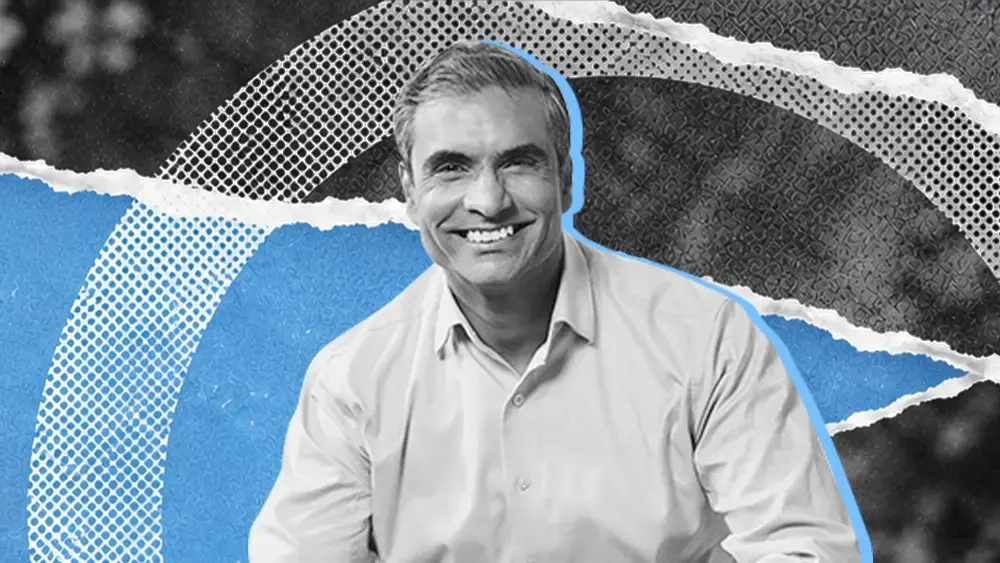
The Art Of AI Systems Planning And Execution Diagnostics: With Hershey's Head Of Enterprise Data & AI
Mir Ali, Head of Enterprise Data & AI Platforms at The Hershey Company, on why the gap between AI strategy and delivery comes down to execution discipline, not technology.

"To me, it’s really important to have the execution rigor. You need repeatable processes and systems so you can trust what the team is telling you."

Building an AI-ready enterprise requires more than a technology roadmap. It requires an operating model that can deliver on one, consistently and at scale. Agile frameworks like PI planning offer a clear set of ceremonies, and it is tempting to assume that faithfully following them will close that gap. But when teams gather to align every quarter, they reveal something no framework can manufacture: whether they truly understand their dependencies, own their commitments, and can make real trade-offs under pressure. That behavioral signal is where execution discipline is built or exposed.
For the last two decades, Mir Ali has lived in the gap between agile theory and enterprise reality. Now Head of Enterprise Data & Analytics at The Hershey Company, Mir previously led a global engineering organization at Kraft Heinz. There, he contributed to Kraft Heinz's $2B+ efficiency and growth agenda across 40 markets. At Hershey, his focus is on the foundations that let AI and analytics scale reliably across the enterprise.
"To me, it's really important to have the execution rigor. You need repeatable processes and systems so you can trust what the team is telling you," said Ali. For him, that confidence is earned through the planning process itself. The system reveals whether teams truly understand their dependencies, own their commitments, and can surface problems before they become surprises.
Mir treats PI planning as a behavioral diagnostic rather than a quarterly ritual. When leaders pause to align, the process reveals how teams actually think about commitments, dependencies, and ownership. That view across teams is exactly where planning turns into a functional operating model. The discipline of planning together also changes execution speed. Leaders who invest time upfront on dependencies find their teams move faster, not slower.
- Engines over islands: "When you put all of these planning elements together, that becomes your core ways of working, the core operating model," Mir said. "When you bring many teams together, you can clearly see which teams are working as an engine versus working in isolation." The difference is visible in real time: some teams surface blockers, negotiate scope, and coordinate across functions. Others arrive with plans that exist only on paper.
- Slow down, scale up: "If you ask my team, they'll tell you, my favorite line is: go slow to go fast," Mir said. A three-to-four-month planning window gives dependent teams time to prepare rather than scramble. "If you plan well, you're not going to have surprises. If you really map out dependencies, you're going to bring the entire teams that are working together along quicker." An early flag at the start of the quarter gives dependent teams time to plan and prepare, rather than react to a request they never saw coming.
Mir actively champions the use of generative AI across this operating model. When applied with discipline, standardized inputs make the entire delivery chain faster and more consistent. Speed, naturally, introduces new operational trade-offs. For some teams, when AI makes it trivial to spin up code, the sheer volume can mask whether those items are actually needed. Because AI removes technical friction, leaders must intentionally inject intellectual friction back into the process.
- Code on command: "You have a standard way of providing input to code generation, whether it's UI code, API code, or pipeline code," Mir said. "It's consistent input. The system knows the format. Then you can apply consistent logic and testing on that." Standardized user stories provide a highly consistent input for code assistants like GitHub Copilot, tightening the entire delivery chain. Cleaner inputs feed cleaner code generation, which in turn supports more reliable testing and faster release cycles.
- Automating the mess: "There's garbage in, garbage out. If you don't have the right checks and balances in place, you will end up creating churn," Mir noted. Unchecked, bloated inputs tend to produce improvised monolithic applications rather than the clean, modular code the system was meant to generate. "People sometimes get used to it and then they just assume a lot. There's a lot of assumption built in: 'oh, the system does it.'" Industry observers note that AI coding agents sometimes fuel a "productivity panic," pushing developers to ship more without accounting for maintainability. The discipline is not about discouraging AI use. It is about ensuring every story does one thing, the right thing, before it enters the pipeline.
For Ali, an operating model is not just a system and a process. It is also a mindset, and that mindset lives or dies on whether teams feel safe enough to push back. Mir designs operating models where challenging assumptions is a structural expectation, not an exception.. It is not about being difficult. Early pushback simply saves the company from expensive rework. That culture, Mir believes, has to flow from the top. Leaders who signal openness to being convinced create the conditions for teams to do the same.
- Partners, not passengers: "Sometimes the business adds something that on the surface sounds like a great idea, but here's often a simpler path to the same outcome — and finding it together leads to better results," he said. "We want to give the team the option to say: can we achieve that same outcome through a different approach?" For Ali, the instinct comes from experience. Having navigated those same constraints earlier in his career, he wants his teams to have the space he did not always have.
- Trickle-down trust: "The most effective leaders 'hold strong views loosely' — they're open to being convinced by better thinking.,'" Mir recalled. "I love that phrase. That means there's flexibility. That means acknowledging that I might be thinking in a way that may not be correct." That openness, compounded across a team and a planning cycle, is where better outcomes emerge. Not despite the pushback, but because of it.
For Ali, an operating model earns its name precisely because it is not a planning process. It is the mindset, the culture, and the system working together. For organizations that have not yet built that muscle, the path forward is practical: pick an area, run a real MVP, and iterate from there. The discipline compounds over time.
"Transformation is about what you can do repeatedly, consistently," Mir concluded. "The organizations that do well can really set themselves apart, can really drive adoption, can really drive trust in the team. At the end of the day, this is where strategy becomes real by executing this with excellence."

If this caught your attention, that’s not accidental.

The best editorial systems don’t happen by accident. Outlever builds them.