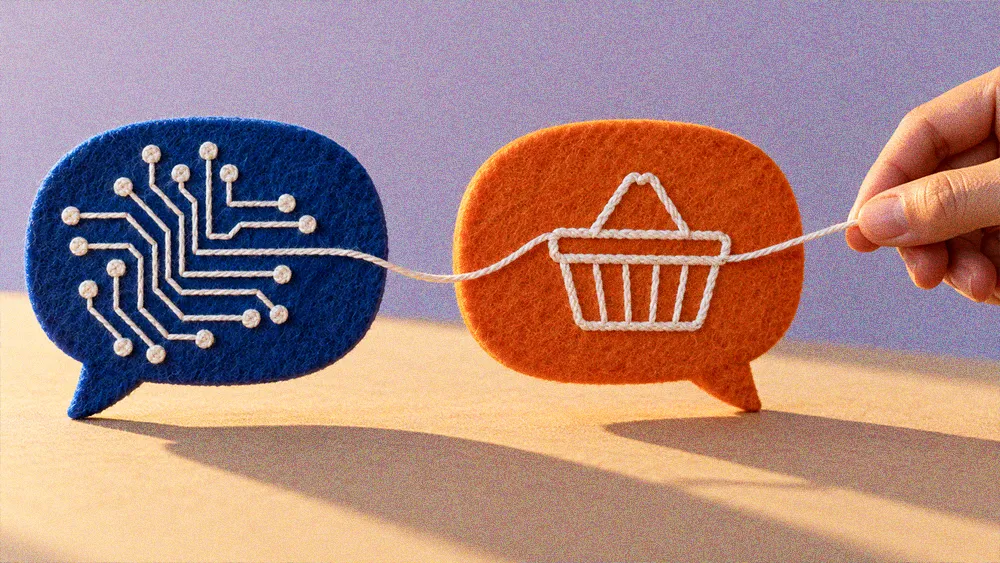
Wire 2 Model: Turn AI From Wildfire Into Electricity
Humans are part of the AI supply chain—our prompts, labels, and approvals shape how models behave. Learn the 5 layers where human behavior determines whether AI becomes reliable infrastructure.

"AI creates cultural debt, not just technical debt — and Role Modelship is what pays it down."

My last column was about the context layer. This one is about the five layers of socio-technical infrastructure around context.
For the first time, humans are becoming part of the infrastructure for AI systems. Humans are now part of the production AI “supply chain.”
We're not just users anymore. Our prompts, labels, and approvals feed directly back into how the model behaves. Role Modelship is data.
Humans don’t operate in clearly separated development, staging, and production environments. AI systems increasingly force us to behave as if we do. When humans become part of the AI stack, the absence of human dev/stage/prod boundaries becomes a failure mode.
Infrastructure used to mean servers and pipelines. Now it means decision rights, dissent mechanisms, and prompt design too. Humans are embedded inside those layers.
Modern society runs on electricity because people trust the infrastructure behind it. Human Role modelship does the same for AI: it creates transparency, consistency, and confidence so employees, customers, and regulators actually adopt AI rather than resist it.
There are five layers in the AI stack where human Role Modelship must be intentionally embedded, along with context.
1. Learn Layer: What AI is trained on
Someone chose what went into your training data. Someone else decided what to leave out. These decisions are “values” decisions, and the people making them are almost never thinking about it in those terms. This is the most upstream intervention and the most neglected.
IBM's AI Fairness 360 research has shown that bias introduced at the data labeling stage is substantially harder to correct later than bias that enters downstream. By the time it surfaces in a model output, you’re already doing damage control. The conversation about who shaped the labels and whose perspective was missing needs to happen at the front end.
Every time you add a hashtag to a social media post or comment, you are labeling data. Every time I find a LinkedIn post worth tagging, I add #RoleModelship. That is how AI knows what #RoleModelship looks like. It’s your turn!
2. Optimize Layer: What AI is told to reward
Most organizations write system prompts like engineering tickets. No named owner, no review cycle, no one asking what the prompt is actually rewarding. 75% of organizations report having AI usage policies, yet only 48% actively monitor AI systems for accuracy, misuse, or drift.
3. Reinforce layer: What is decided and approved with rollbacks
For the first time, human behavior is an input to production infrastructure at scale.
Software has dev, staging, and production. Engineers test software before it reaches users. Humans only have production (real world, with real consequences). There's no equivalent testing ground for human judgment. That mismatch is now an AI governance risk.
What "dev, staging, production" would look like for humans if we had it:
- Dev — A human tries out a new way of making decisions, giving feedback, or using a tool with zero real-world consequences. Like a flight simulator, but for human judgment.
- Staging — That behavior gets tested in a controlled environment that mimics reality before it touches anything real.
- Production — Only then does the human act in the real world, where it counts.
Organizations are essentially letting humans train AI in production with no review process, no rollback, and no testing protocol — things they would never allow for software. As people experiment with AI on the job, that gap is becoming an organizational blind spot. If you are setting up Claude Cowork, please make sure you have at least a Dev and Production environment.
Future decision factories will rely on AI agents, analytics, automation, and continuous data flows. Without reliable “electricity,” decisions become inconsistent, delayed, or dangerous. We have already seen AI jump the guardrails.
Human approval does not automatically remove liability.
If the human reviewer simply “rubber stamps” the AI recommendation without meaningful oversight, courts may view the human-in-the-lead as ineffective.
A human approving a flawed AI decision can actually strengthen the argument that the organization failed to supervise properly.
Every rating teaches the AI system what to do more of and what to bury. 77% of companies have bias-testing tools in place and still find bias in their systems. A major reason is that the people providing feedback are not a representative sample and do not carry stewardship accountability. Organizations need to build fellowship and sponsorship into who gives feedback and how they weigh it.
4. Stop layer: What can be blocked or challenged
We don’t fear electricity the way we fear wildfire. That’s what governance does for AI. We need to build systems around this power so we can use it.
Most AI governance frameworks center on risk, compliance and alignment.
72% of organizations say they have integrated and scaled AI, yet only one-third have the responsible AI controls in place to govern it.
Alignment isn’t enough. You need structured friction as part of the process with:
- mandatory dissent roles
- rotating “red team” authority
- stakeholders with skin in the outcome (not just compliance owners)
That matters, but it’s really not enough. A governance board without the ability to have genuine dissent is just a room full of people likely to rubber-stamp the majority's perspective. Governance documents don’t govern unless they are continuously enforced at AI runtime via the context layer, where AI can see them.
The most important quality in a person serving on a governance board is whether they have the most to lose from a bad AI decision and the standing to stop it.
5. Scale Layer: What becomes normal over time
This is where daily habits form and where organizations are the most hands-off. Every day, people are learning what to ask AI, what to trust, what to suppress, and what to route around.
Process optimization is out. Individual human habits are becoming organizational norms. Role Modelship is data.
AI creates cultural debt, not just technical debt — and Role Modelship is what pays it down.
Deloitte found that 80% of workers worry coworkers are using AI to fake productivity, while Gallup found that only 15% believe leadership has clearly communicated an AI strategy.
A lot of that starts in the small daily decisions nobody is closely watching.
6. Move from “AI usage” to “AI operations”
Treat AI like an operating layer, not a tool.
That means:
- monitoring like infrastructure (uptime, drift, failure modes)
- auditing like financial systems
- incident response, like security systems
Leaders who use AI visibly and are honest about when it gets things wrong will shape daily human-AI interaction habits much more effectively than a decorative policy rollout or other impersonal solution.
Anywhere a human shapes what AI sees, learns, or rewards, human Role Modelship has to be number one priority.
Eli Potter is a Silicon Valley technology executive and advisor to more than 150 companies on human values and converting technology into economic value. She is the author of Role Modelship: Multiply Your Impact to Influence AI.

If this caught your attention, that’s not accidental.

The best editorial systems don’t happen by accident. Outlever builds them.