Brandeis University's CIO On Why Higher Ed's Data Problem Is Cultural, Not Technical
Brandeis University CIO, Jim La Creta on how decades of cultural habits undermine data governance even when the right systems are already in place.

Enrollment pressures and retention challenges are forcing universities to rethink how technology supports institutional operations. The shifts remaking the CIO role, the challenges multiplying for IT leaders, and the top priorities for higher ed technology point to the same pattern: Deploying new software is the straightforward part. Getting fiercely independent academic departments to actually change how they work is the real hurdle.
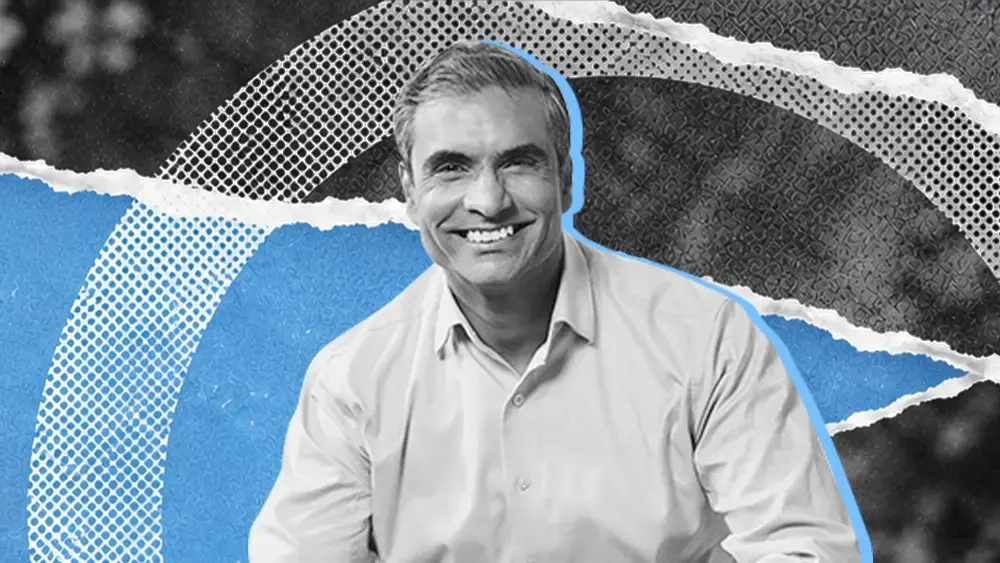
Jim La Creta, Ed.D., Chief Information Officer at Brandeis University, has spent nearly three decades at the same institution, arriving as a help desk worker and building IT operations for a fast-growing international business school before ascending to the institution's top technology role. That trajectory gave him a ground-level view of how decentralized academic departments develop their own systems, habits, and resistance to change. Today he oversees technology for roughly 7,500 students, faculty, and staff, and teaches leadership and strategy as an adjunct professor in Brandeis's graduate IT management program. He believes the hardest part of that work has never been the technology.
"Culture and change are the underpinnings of everything. That's the biggest issue in higher education, and it always has been," said La Creta. For most of the industry's recent history, that reality could be deferred: enrollment was stable, retention was reliable, and institutions could afford to move slowly. That calculus has shifted, and La Creta sees it pushing CIOs into a more active role than the function has traditionally held. Federal oversight of higher education has intensified sharply since 2025, with new compliance obligations spanning accreditation, civil rights enforcement, foreign gift reporting, and grant funding. Moody's downgraded its outlook for the entire sector to negative in March 2025, citing federal policy changes and rising costs. For CIOs, the operational burden of that scrutiny falls directly on data systems, reporting infrastructure, and the governance processes that connect them. The future La Creta describes is arriving faster than most institutions are prepared for, and the consequences of that lag are compounding.
By 2016, La Creta had stepped into the CIO role with a clear-eyed view of what needed fixing. The institution had long treated technology as a utility rather than a strategic asset, and the evidence was everywhere: aging servers, unpatched systems, and a team without authority. To address the familiar tasks of modernizing legacy infrastructure and rethinking higher ed IT strategy, he spent his first months cataloging technical debt and presenting a candid assessment to the board. That work secured a capital budget cycle to refresh core infrastructure, a foundation that allowed Brandeis to move to remote instruction without disruption when the pandemic hit.
Time for a change: For over a decade, La Creta had run IT for Brandeis's International Business School as a largely autonomous unit. He was close enough to the main IT operation to see its challenges clearly, but separate enough that he had never been responsible for fixing them. When Brandeis offered him the CIO role, he already had another job offer. He accepted on one condition: "Am I going to be minding the store, or do you need me to change things? The infrastructure was woeful, the security risks were serious, and the team had never been given a real mandate to lead," La Creta said. "They were good people. They just weren't empowered." The problems weren't the result of neglect by those before him. The university had simply treated IT as a cost center rather than a strategic investment, and nobody had made the case loudly enough to change that. Brandeis gave him that mandate.
That mandate mattered because of higher education's depth of departmental autonomy. Faculty senates, tenure systems, and decades of disciplinary self-governance produce a kind of institutional independence that most corporate IT leaders never encounter. Changing a business process in a university means negotiating with units that have their own budgets, their own hiring practices, and their own deeply held views on how things should work. The resistance La Creta faced was baked into the operating model of the university itself.
Once the infrastructure stabilized, La Creta turned to a harder problem: how the campus perceived IT. His group had earned a reputation as gatekeepers rather than partners, and changing that meant convincing faculty and staff that shared accountability between CIOs and CISOs and sound data lineage were not restrictions on their work but the conditions that made moving faster possible.
The Bond villain complex: "People complain about security, and there's this kind of image of me just sitting in my chair with a bunch of screens, stroking a cat like a Bond villain," La Creta said. "We're trying to stop the bad actors from doing what they're trying to do. We're trying to make life easier for you, and we're trying to work with you." However, the real paranoia ran in the other direction: faculty and staff who felt IT was watching their machines, doing things in secret rather than just asking for help.
Power brakes for progress: IT guardrails exist to make it safe for the organization to move quickly. "When they created power brakes on cars, they put them on the cars so the cars could go faster, not to slow them down," La Creta said. "We're creating the technology for you to move faster, not to make it more difficult for you." By the time that trust had taken hold, the question at Brandeis was no longer whether to allow AI. It was how to scale it responsibly, a shift playing out across higher education as security leaders move from gatekeepers to enablers.
That same enabling logic ran into a stubborn obstacle: across Brandeis, departments were still hoarding data in spreadsheets and local databases despite shared platforms already being in place. Some offices still preferred their own side systems. Those habits matter more now than ever: as AI and data demands converge in higher education, institutions grapple with the fragmented data and siloed systems that have plagued higher education for decades.
Spreadsheet silos: "We have Workday, we have Salesforce, and we've had them implemented for a number of years, but there's still this need for folks to keep their own spreadsheets or to keep their own little quiet databases," La Creta said. "If I need to know what the enrollments are, I don't need to know five different answers. I need to know one answer. I want to know what my truth is."
That fragmentation carries institutional risk that extends beyond inefficiency. AI, predictive enrollment models, and integrated analytics all depend on clean, centralized data. So do the compliance and reporting requirements that federal and state oversight increasingly demand. In 2025 alone, the Department of Education expanded its use of Title VI investigations, foreign gift reporting under Section 117 of the Higher Education Act, and Clery Act program reviews as enforcement mechanisms across the sector. When regulators ask a straightforward question and an institution has five conflicting answers, the data fragmentation becomes a liability.
Day one defaults: He views enterprise platforms as a basic toolkit for new hires. "When you get hired for a job, you're required to use Microsoft Office and this program, that program. Why isn't Workday on there? Why isn't it that when people show up, they are being trained on Workday and shown what it's capable of?" La Creta asked. The question came into sharper focus after an all-day Workday workshop at Brandeis drew strong participation from finance, HR, and other stakeholders, revealing that even engaged users still defaulted to unit-specific workarounds over automation governance across shared systems.
For CIOs navigating the same transition, La Creta's advice is to resist the urge to lead with technology. Speak the stakeholder's language, understand their business processes, and find the problem before proposing a solution, the foundation of any effective CIO agentic strategy. That approach took years to pay off at Brandeis, but IT is now embedded across the full student lifecycle, supporting enrollment before students arrive, student success while they are on campus, and alumni engagement after they graduate. As more campus functions rely on shared platforms, the cultural work around data, governance, and trust only becomes more valuable. "Sit with them. Listen. Don't talk. Listen. But ask the key questions. That's the first question I always ask: What's the problem you're trying to solve?" La Creta said. "Where are your biggest pain points? And they're always happy to tell you what those are. And then your job is to try to align what you can do for them."
That patience is increasingly non-negotiable. As technology accelerates, building trust, enforcing shared systems, and speaking the language of every department is what determines whether an institution will navigate change successfully. By late 2025, all three major credit rating agencies had issued negative outlooks for higher education, citing rising costs and federal policy shifts. The compliance perimeter around universities has expanded, and the reporting and data demands that come with it are only growing. For institutions still carrying cultural debt in how they manage data and govern shared systems, the margin for institutional slowness is shrinking. "The way I view my job now is that I'm responsible for helping the institution adapt to a future that's arriving faster than the organization is prepared for," La Creta concluded.

If this caught your attention, that’s not accidental.

The best editorial systems don’t happen by accident. Outlever builds them.