
A CIO's Guide To Architecting Campus-Wide IT Agility In Higher Education
Tom Armstrong, CIO at Southern Connecticut State University, spoke to CIO News about his new blueprint for strong governance and IT agility in higher education.

IT is a critical part of an enterprise's organizational infrastructure, and higher education is no different. The traditional monolithic, years-long ERP project for deploying and managing IT infrastructure is giving way to a new, agile model built on responsiveness to the needs of faculty and students. A growing number of IT leaders in higher education act as architects of these agile systems. This model of continuous iteration addresses many of the challenges facing CIOs by prioritizing a simple principle: get the fundamentals right before chasing innovations like AI.
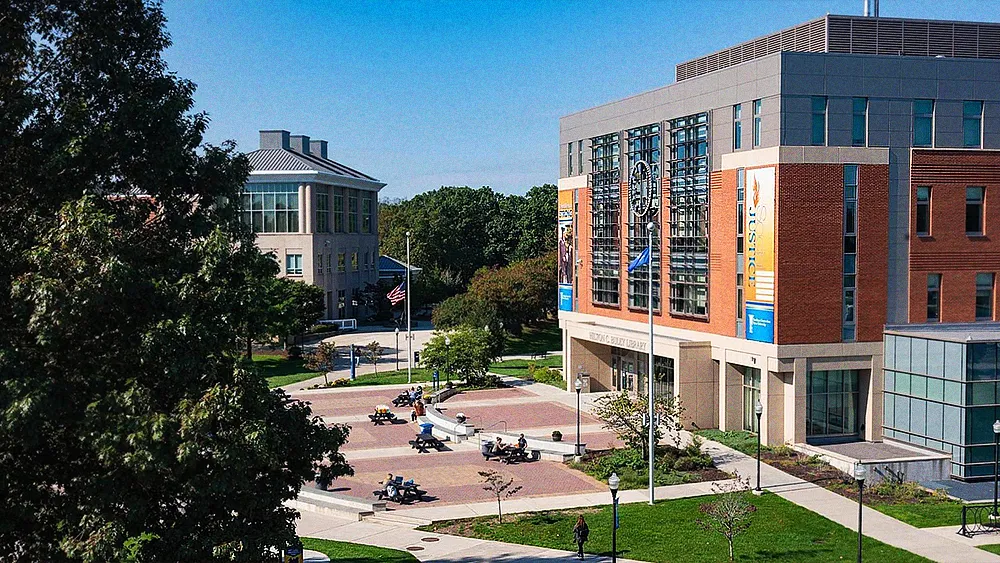
This is the reality for Tom Armstrong, an IT executive whose career spans years with major firms like PwC and IBM spearheading these kinds of transformations. As the current VP of Technology and Chief Information Officer at Southern Connecticut State University, Armstrong is on the front lines of the move to agile systems development in higher education. Drawing on his background as an enterprise architect, he is rebuilding campus technology at SCSU in this image, with a focus on consistent, dependable iteration and scalability. Accordingly, his approach to agile IT is rooted in fundamental best practices.
"Big bang transformation is dated at this point," Armstrong said. "We’re in an era of continuous modernization, building roadmaps with the assumption that capabilities are changing much faster than they used to." For Armstrong, agility is built, first and foremost, on rigor and stability.
Blueprint for agility: "I'm an enterprise architect by background and I believe architectural rigor is what allows us to be more flexible as new capabilities come out. That means having a flexible integration platform, governing our data so it’s not locked up in silos, and ensuring we have a stable and scalable infrastructure." Armstrong is creating a new approach to IT governance built on a participative model that borrows concepts from Agile methodology, like a story points-style scoring system, to evaluate initiatives and inform the development of modern higher-ed AI governance frameworks.
Green lights, not gates: Armstrong clarified that developing these governance architectures isn't just another hoop universities need to jump through. "While higher ed has a fantastic framework of shared governance to build from," he said, "the institutions that will succeed are those that treat governance as an enabling function, not as a roadblock or a compliance exercise."
According to Armstrong, this is a process that's tied to the specifics of a given university. It calls for a discipline similar to other public funding models for IT modernization where decisions are driven by how they support the university's strategic pillars. For example, his team prioritizes work that advances Southern Connecticut State University's mission, such as its recent designation as an R2 research institution. "We've had to be firm in telling departments that we are not going down a new procurement route when we already have three tools that do the same thing and no money to buy a fourth," said Armstrong. "Instead, we pivot and focus on onboarding that department onto one of the existing tools."
Campus calls the shots: More importantly, this approach is built in the community and the institution as a strategic imperative. Armstrong clarified that "IT governance needs to be a campus-wide process. We'll provide the framework, but we can't be the ones making the decision on what happens next. We're the strategic partner."
Underpinning this entire model is the financial pressure common in higher education. That pressure necessitates a disciplined, use-case-driven approach that focuses on moving from experimentation to impact. It is a powerful example of modernization that reflects a trend among CIOs who are redefining education with technology.
Plan over product: But for Armstrong, technical work is inseparable from cultural work, and CIOs can secure organizational buy-in by embracing radical transparency. Effective leadership and organizational learning empower participation across a university, which begins with listening tours and sharing early, imperfect roadmaps to foster genuine buy-in. "I think there's nothing worse for our partners on campus than being presented with a five-year plan as a finished product," said Armstrong. "We will take their feedback, improve it, and then show them as many successive drafts as it takes until we reach a consensus. Then, we have a process to review that roadmap periodically with the assumption that it needs to change."
According to Armstrong, the goal for CIOs is to understand how IT resources impact two important audiences: students and faculty. These audiences represent two different aspects of that impact: for students, CIOs must understand the short-term impact on learning experiences. For faculty, the emphasis on long-term change involves discussions of institutional legacy and stewardship of resources.
Ultimately, Armstrong's message is that the path forward begins not with chasing the next big thing, but with a disciplined return to fundamentals that can enable necessary agility to future-proof university IT. "For most institutions, baseline infrastructure, data governance, and architecture are the most valuable places to spend time. Taking the next 10-12 months to really get your house in order will allow you to adapt more quickly to the next wave of technology, whether it's AI or something not yet on our radar. Having that foundation in place is what will pay the biggest dividends," Armstrong concluded.

If this caught your attention, that’s not accidental.

The best editorial systems don’t happen by accident. Outlever builds them.