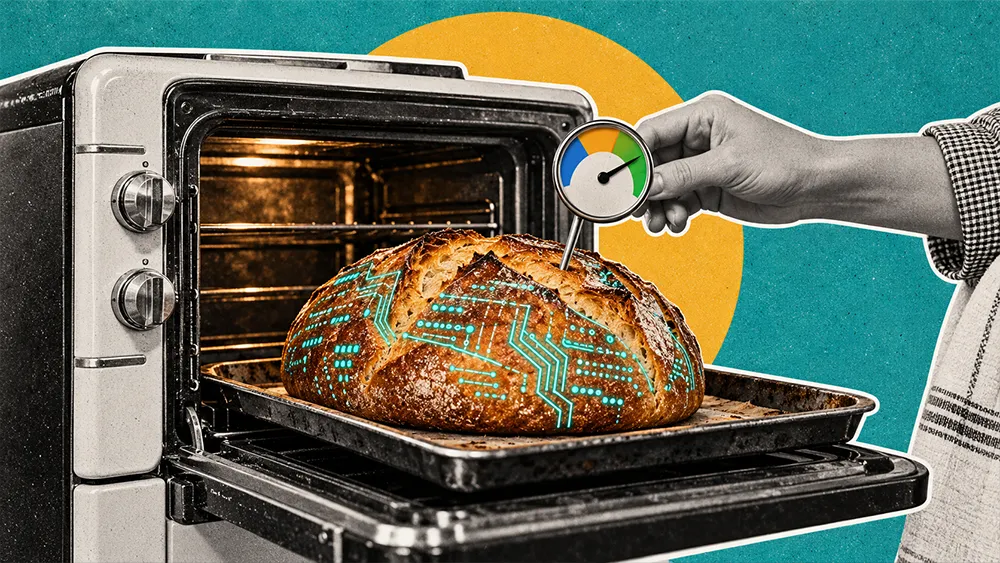
The CxO’s New Product: The Organization
AI agents learn from how your people work and what your data records. Eli Potter explains why organization design has become the C-suite’s AI job and how CxOs can treat the organization as a product.

“AI organization design is a C-suite challenge.”

AI works from the records, workflows, and decisions your people leave behind. When a leader skips an approval step, overrides a process without explaining why or makes a call nobody writes down, an agent has no way of knowing it was an exception. It treats what it sees as the way your organization operates.
As I argued in my first CIOnews column, that makes role modeling a hard input to AI strategy, and it changes who owns that strategy. Most companies still adopt AI from the bottom up: someone identifies a problem, IT finds a tool, a team runs a pilot, and the business scales whatever survives. That approach made sense when the main constraint was the cost of building and integrating software. With agents, the organization itself is becoming the new product that leaders have to design, and most companies are still adding agents to org charts built for a different era.
In advising more than 150 companies, I’ve seen leaders invest in technology before redesigning the work, decisions, delegated authority, and accountability needed to turn it into business value. Everyone knows that approach doesn’t work, yet they still argue with the apple as it falls from the tree.
Why does bottom-up AI adoption fail for enterprise agents?
That bottom-up sequence treats AI as a productivity layer atop an organization that remains the same. That works for tools, but agents change how work is divided and how decisions get made.
Gartner sees the same shift. It predicts that by 2029, 30% of organizations will form blended HR-IT teams to accelerate AI enablement. Mark Whittle, a VP analyst in Gartner’s HR practice, warns that without such coordination, CHROs may be left managing workforce consequences from AI deployments they didn’t help shape, while CIOs become “accidental owners of the workforce challenges created by AI.”
Leaders now have to decide how work gets divided between humans and AI, which skills their teams will need and who owns each decision.
What does an outcome-driven AI operating model look like?
The new playbook runs in the opposite direction: Outcome → Work → Human + AI Team → Memory → Decision Rights → Technology
Start with the outcome the business needs, then work out what it takes to get there and how people and AI should share that work. Technology comes last, once you know what it has to support.
Gartner reaches a similar conclusion. It advises organizations to define the value drivers that matter most, map the workflows behind them and pair AI with human direction to form the smallest effective team. As Gartner Group Vice President Anna Krasniewska Shahidi puts it, “Don’t retrofit AI into your old structure.”
Why does institutional memory matter for autonomous AI agents?
Organizations depend on institutional knowledge: what happened, what worked, what failed, and why decisions were made. Much of that knowledge has historically lived in people's heads. When someone left, some of it left with them, and the organization absorbed the loss.
AI makes that memory an explicit architectural requirement. Consider what happens when an executive messages IT to bypass an approval for a quarter-end rush: a human understands it was a one-time emergency, but an observing agent records it as standard policy. When their replacement arrives, the system replicates the exception as the rule.
In a recent CIOnews interview, Mueed Mohammed pointed out that AI models don't remember yesterday's work unless the organization deliberately builds the memory and handoff around them.
This is where the leader behavior described earlier becomes part of the system, through the context AI is given at the moment it acts. The question for the C-suite: is what does our organization need to remember so that the next human or AI can make a better decision than the last?
Who owns decision rights in human-AI workflows?
Decision rights matter just as much, and they belong in the human infrastructure around AI as much as servers and pipelines do. For every meaningful workflow, leaders should be able to say who recommends, who decides, who executes, who supervises, and who is accountable when something goes wrong.
Edward Cheng's work on earned autonomy offers a useful model. Agents should begin under human guidance and earn increasing autonomy through demonstrated performance rather than receiving it automatically.
I’ve seen this risk in revenue operations: when an automated workflow treats a discount-approval policy as absolute, it can block a deal that an experienced human would have escalated or approved as a justified exception.
How can CxOs treat the organization as a product?
If the organization is the product, C-suite leaders need to think like product leaders. Products have customers, roadmaps, and governance. Organizations increasingly need the same discipline, which requires abandoning legacy habits in favor of three core principles:
1. Design the new team around the work
Job descriptions bundle many tasks together, which makes AI integration clunky. Break the work into individual activities and decisions, and decide where you need human judgment. Build the team around the specific work, rather than bolting an AI agent onto an existing org chart.
2. Build performance-gated autonomy
Define precisely where AI can recommend or act, when it must escalate, and where it must stop for human judgment.
3. Create a memory and decision framework
Capture what the organization knows and why it made important decisions. Once this memory and decision framework is designed, you should then ask what technology architecture it requires.
Where should a CIO start if the organization already exists?
No CIO gets to redesign a company from a blank page. The org chart, systems, and habits are already in place, and the business can’t pause while leadership rethinks them. Start by picking one function and redesign it end-to-end before touching anything else.
Look for a workflow where the outcome is easy to measure, the work crosses at least two teams, and the cost of a mistake is manageable. Onboarding, procurement intake, and IT service requests often fit. Workflows involving sensitive judgments about customers or employees are better saved for later, once the organization has more practice setting decision rights.
Run the redesign with the people who do the work today, and bring HR in at the start instead of after the design is done. Document what changes in roles, decisions, and records along the way. That record becomes the template for the next function, and it provides other leaders with evidence that the approach works within your company.
Pilots are still useful in these cases. Piloting a redesigned function lets the organization learn without committing everything at once, which is a better use of that instinct than piloting another tool.
How does AI reshape the relationship between the CIO and CHRO?
The CIO’s core question is what organization the company should build and what technology will enable it. This shift brings the CIO and CHRO closer together. Gartner's guidance includes embedding HR and IT expertise within business teams through fusion teams, AI squads, or roles that bridge the two functions.
Eli Potter is a Silicon Valley technology executive who has advised more than 150 companies on human values and converting technology into economic value. Her book, Role Modelship: Multiply Your Impact to Influence AI, a #1 Amazon best-seller, explores how the behaviors leaders model shape the AI systems their organizations build.

If this caught your attention, that’s not accidental.

The best editorial systems don’t happen by accident. Outlever builds them.