As Frontier AI Model Capabilities Converge, Enterprise AI Wins Or Loses At The Orchestration Layer
Ashish Kulkarni, Principal Enterprise Architect on how frontier models have converged enough that the sole differentiation in enterprise AI is orchestration, governance, and surrounding data quality.


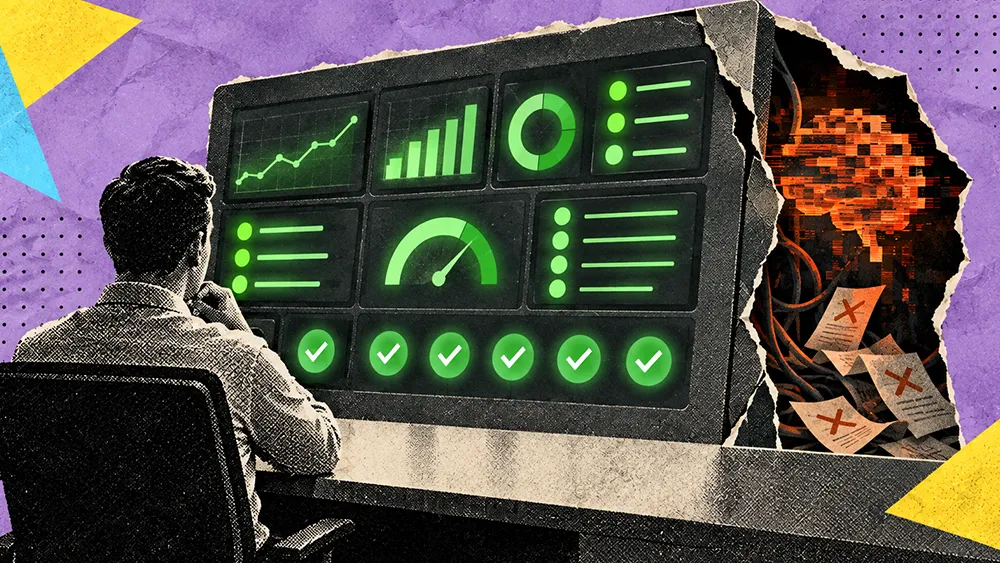
Most enterprises still frame AI transformation as a model selection problem. They benchmark OpenAI against Claude against Llama, optimize for capability, and invest accordingly. But the frontier models have largely converged. For the majority of enterprise use cases, they are all sufficient. That convergence forces a different question: if the intelligence layer is no longer the differentiator, what is?
Ashish Kulkarni is a Principal Enterprise Architect at a Fortune 500 technology company and PhD candidate researching AI ethics, governance, and the impact of algorithms on human labor. He brings 16 years of enterprise digital transformation experience across financial services, retail, telecom, and healthcare, with prior roles at Cognizant and DIRECTV. He also runs Data and Luck, an education platform with more than 50,000 YouTube subscribers focused on translating AI and architecture patterns for practitioners. He said the enterprise AI conversation needs to shift from what models can do to what organizations are actually prepared to control.
"The key differentiator is the data I use to train these models. When it comes to the intelligence layer, frontier models are increasingly at parity for most enterprise use cases," Kulkarni said. That framing reorders the priority stack. If the model is a commodity, then the governance, data, boundaries, and orchestration surrounding it are the architecture that matters. Kulkarni said the first requirement is often the one most teams skip: legal review before any technical design begins.
"Even before something comes to me as an architect, the legal review needs to be completed," he said. "Legalities and technical architecture are different things." As regulatory scrutiny around enterprise AI use intensifies, that sequencing becomes harder to justify deferring.
Boundaries over capability: Kulkarni argued that teaching an agent when to stop is more important than expanding what it can do. He cited a research paper where the design rule was explicit: if an uploaded image was blurred, the agent stopped rather than guessing at the content. He applied the same principle to a coffee-ordering chatbot that, without boundaries, would happily write Python code or disclose its training data if asked. "There will be very few use cases where defining boundaries reduces your output," he said. "But there could be many use cases where, if boundaries are not defined, the agent goes haywire." Defining those stop conditions within the architecture, rather than hoping the model would self-regulate, is the difference between a controlled deployment and an exposed one.
Complement, then expand: Kulkarni recommended starting with workflows where the risk is low and the validation is built in. He pointed to an insurance underwriting example: a task that requires reading a 20-page PDF and performing data entry is a strong candidate for automation because a human will review the output regardless. A task requiring FICO score analysis is not, because the sensitivity demands human ownership. "What are the bottlenecks? Where do you spend time most versus where the risk is less?" he said. "Pick those points first." The approach aligns with outcome-first AI strategies that prioritize measurable ROI over broad deployment, and it requires the kind of change management discipline that many organizations still treat as an afterthought.
Production breaks what demos never reveal: Kulkarni said the most common failure point comes not from the model but from scale. Moving AI from pilot to production changes the operating conditions overnight. In a development environment, ten users submit test data against known inputs. In production, volume shifts to thousands of concurrent requests. If a sequential agent workflow is slowed by even a few seconds per transaction, the downstream bottleneck could break the entire system at scale. "These are things you can expect, but you have to tackle them in real time because the system is in production," he said. Infrastructure readiness, compute capacity, and the team to maintain it all have to be in place before the transition, not after.
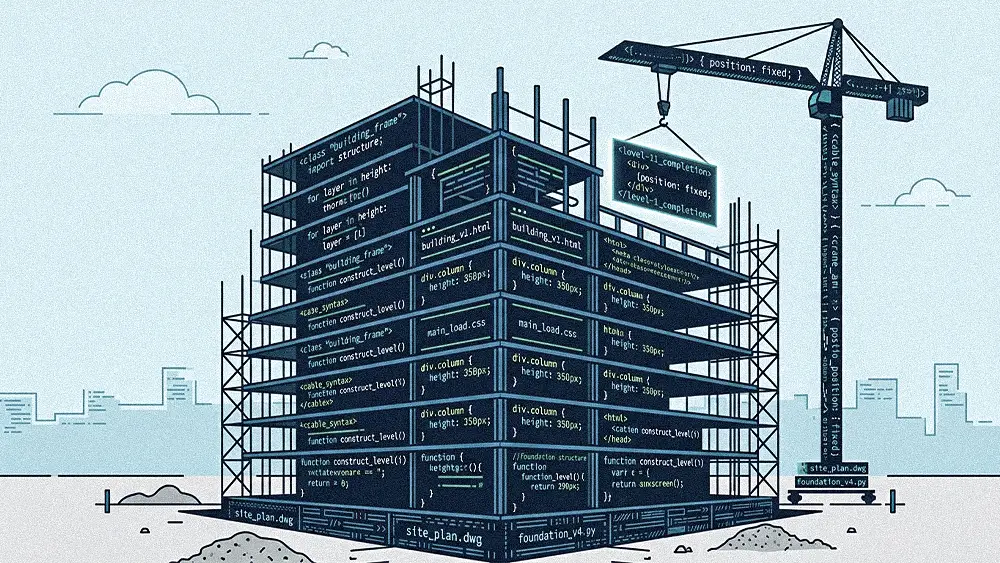
The orchestration layer is where all of it converges. Kulkarni described orchestration as the control plane that governs the workflow regardless of which model powers the intelligence beneath it. An enterprise could run Claude today, swap to OpenAI tomorrow, or migrate to a locally trained model after 18 months of data accumulation, all without rebuilding the process. That architectural decoupling is what makes enterprise-wide AI transformation sustainable rather than vendor-locked.
"I can replace the model tomorrow," Kulkarni said. "What matters is the orchestration layer that governs the workflow. Having that layer versus having individual agents working one after another is a make-or-break difference."
The views and opinions expressed are those of Ashish Kulkarni and do not represent the official policy or position of any organization.

If this caught your attention, that’s not accidental.

The best editorial systems don’t happen by accident. Outlever builds them.