As Mythos Collapses The Vulnerability Window, Security Workflows Must Bring Machine Speed To Human Decisions
Gineesh Madapparambath, Architect at Red Hat, on how Mythos has collapsed the vulnerability window and what security workflows must do to match the speed of exposure.
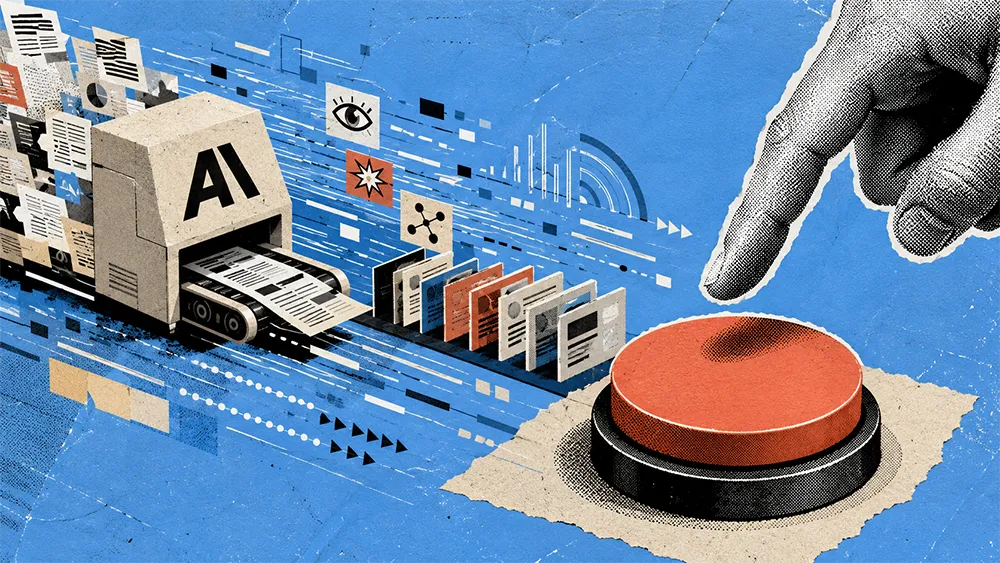

Anthropic's Mythos has collapsed the timeline for enterprise vulnerability discovery. Where finding a critical flaw once took days or months of manual review, AI-driven tools now surface unknown weaknesses across entire stacks in seconds, making them visible to everyone at once. The informal buffer that "security through obscurity" once provided is gone. For security teams still running on manual ticket triage and standard patch cycles, the window to respond has never been smaller.
Gineesh Madapparambath, Architect at Red Hat, brings more than 20 years of enterprise IT experience to automation and containerization strategy, with field deployments spanning cloud, container, and hybrid infrastructure environments. Earlier in his career, he worked at multiple organizations where he built and maintained security management systems across cloud and bare-metal platforms. He is the author of Ansible for Real-Life Automation, co-author of The Kubernetes Bible, Second Edition, and the Founder of techbeatly, a technical community platform for IT and DevOps practitioners. Gineesh said the central question driving his work is deceptively simple: When AI can expose a vulnerability in seconds, what does enterprise security actually need to look like?
"It used to be that nobody knew there was an issue, or it took a month to find. Now, there is a tool to expose it in seconds," Gineesh said. But knowing a vulnerability exists and knowing where to find it are not the same thing. As AI-driven tools surface vulnerabilities across entire stacks simultaneously, organizations without a clear map of their own environments cannot act on what is being found.
Double exposure: The same tools available to defenders are equally available to attackers. "We have thousands of checks to ensure a platform is safe, but with AI, we now have a lot of new information," Gineesh said. "The bad thing is everyone knows there is a hole, an opportunity to exploit."
Map it to manage it: For many organizations, the more immediate obstacle is not knowing what they have. "Many places do not have proper visibility into their enterprise architecture," Gineesh explained. "Not all organizations are using Infrastructure as Code, so they lack full visibility. They are still using manual methods to provision their infrastructure."
Even organizations with strong infrastructure visibility hit a second wall at the process level. Attackers operate without enterprise governance constraints and can adopt new tools immediately. Defenders are often waiting on approvals from legacy compliance frameworks. The answer starts with infrastructure: Gineesh pointed to the "4Cs" (cloud, cluster, container, and code) as the foundation, and teams with standardized asset inventories are better positioned to plug those views into AI-assisted tooling.
The chatbot ceiling: Many security teams want to deploy AI capabilities for detection and response, but adoption across the industry remains uneven. "A lot of companies are not even into AI. They only know AI as a chatbot, or as features in their products," Gineesh said. "They do not have a proper AI system to use for this kind of process, like security or vulnerability scanning."
Waiting on the ladder: Even where the intent exists, governance frameworks are slowing deployment. Some teams are working toward automating parts of that governance, embedding standards like CIS benchmarks, STIG, and DISA directly into architecture pipelines so approved changes can roll out without delay. "Security operations center teams like the idea of using AI, but they cannot fully trust it, mostly for policy reasons rather than technical reasons," he explained. "Even to implement basic rules, they have to go through several approvals up the ladder."
The pace of AI-driven discovery is outrunning the workflows built to respond to it. Many organizations are still working through AI governance, ownership, and shared accountability questions while the threat environment moves faster. The practical response is a new class of remediation workflow: context-aware agents that ingest the enterprise topology, identify root causes, and propose targeted fixes before a human ever touches the problem. Gineesh was clear that humans stay in the role of final approvers. AI prepares the action, the engineer authorizes it.
Ditching the deterministic: The operational model is shifting from scripted, predictive automation toward systems that can reason about unknowns. "Previously, when you wrote a playbook, such as for Ansible, script, or API-based automation, it was mostly predictive," Gineesh said. "Now, agents use incident details and model knowledge to propose fixes. It's not just troubleshooting. It is also for security."
The 'press yes' workflow: In practice, that means AI does the heavy lifting before a human ever sees the ticket. "By the time I receive a ticket, within five minutes, it is already enriched. I can see the root cause," he said. "The system asks, 'Do you want to block it?' You press yes. That is the only thing you need to do."
Human in the loop: Gineesh described what that looks like in practice with enterprise customers. "It will assess your full environment and tell you: everything looks covered. But it will also flag the gaps, the ABCD reasons an attacker could still get inside," he said. "Then it will ask you, 'Do you want me to update the Terraform code and adjust the security group settings in the cloud?' The AI surfaces the fix. You decide whether to apply it." That approach directly addresses concerns about AI agents as nonhuman insider threats, and organizations require explicit approval before anything commits to the environment. "It is not fully controlled by AI. Mostly, it will ask for permission or approval before it commits something to the environment," he noted. "So in case AI goes wrong, they know how to roll it back."
Policy environments are beginning to catch up. Gineesh expects internal processes and government-level requirements to tighten, pointing to Singapore's cloud security guidance as one example of stricter compliance frameworks taking shape. His view aligns with emerging shared CIO/CISO accountability models, which hold that AI usage in security cannot remain a decision made in isolation.
The organizations best positioned to move at this pace, he said, are those already dismantling the information silos that slow response. "We are encouraging initiatives like a Community of Practice, where you share everything, and a Center of Excellence, where expert groups provide best practices from their field," Gineesh said. "With that kind of approach, more participants are coming forward to share knowledge," he added. "It is like a give-and-take. And I think that will work far better than siloed teams where nobody knows what the other is doing."

If this caught your attention, that’s not accidental.

The best editorial systems don’t happen by accident. Outlever builds them.