The Federal Government Wants a Seat at the Frontier AI Model Launch Table
Ann Dunkin breaks down how the GPT-5.6 launch and the Fable/Mythos suspension show Washington now shapes when and to whom frontier AI models ship, and what that means for CIOs.

"The U.S. Government has appointed itself as an active gatekeeper in deciding who gets access to frontier AI capabilities developed by U.S. companies, and when."
When OpenAI previewed GPT-5.6, its Sol, Terra, and Luna model family, on June 26, 2026, the announcement contained a surprising statement that would have been unimaginable just months before. Early access was limited to "a small group of trusted partners whose participation has been shared with the government," and this was happening "at their request." The U.S. government, not OpenAI, asked for a limited release, and OpenAI complied. OpenAI’s statement confirmed what many had feared, and others had championed: the U.S. Government has appointed itself as an active gatekeeper in deciding who gets access to frontier AI capabilities developed by U.S. companies, and when.
This was the second time in a month that a frontier lab has had its rollout schedule dictated by Washington. The federal government exerting this level of control over frontier AI models was unheard of before this year. Fully understanding this action requires an understanding of a series of events stretching back to 2023.
In an October 2023 executive order, President Biden invoked the Defense Production Act to require that developers of frontier models inform the U.S. Government and provide safety testing results to the Department of Commerce for models above 10^26 flops or 10^23 flops if trained primarily on biological data. In August 2024, NIST signed voluntary pre-release MOUs with both OpenAI and Anthropic, ensuring government early access to their models. In January 2025, the Bureau of Industry and Security issued a rule that imposed export controls on AI model weights. On January 20, 2025, the new administration rescinded all AI EOs and directives, and in May 2025, the administration announced it would not enforce export controls on model weights.
While there was ongoing debate at all levels of government about AI regulation, after the rescission of the Biden administration's rules, it appeared that the current administration would take a much more relaxed approach to regulating American AI than the previous administration had. On June 2, 2026, the president signed EO 14409, which established a voluntary pre-release government access program and gave a group of departments and agencies 60 days (August 1, 2026) to develop a classified process to define a “covered frontier model.” However, the EO specifically ruled out any mandatory review requirements, reinforcing what appeared to be a softer approach than the Biden administration's.
However, that all changed on June 12, 2026, when the administration invoked the deemed export rule, which treats the release of controlled information to any foreign national as an export to that national's home country, thereby forcing Anthropic to disable its Claude Fable 5 and Mythos 5 models worldwide. The administration cited a reported jailbreak that could enable the extraction of cybersecurity vulnerability analysis from the model. Anthropic pushed back publicly. More than 50 cybersecurity leaders at firms including Nvidia and Adobe signed a letter urging the government to lift the restriction, arguing it was hampering defensive vulnerability research industry-wide. Access to Mythos 5 was partially restored on June 26 for a vetted set of critical-infrastructure defenders, with full restoration of Fable 5 on July 1. However, on the same day that the government reached an agreement with Anthropic, OpenAI's GPT-5.6 preview launched, underscoring the breadth of the government’s pre-release engagement with AI models.
Why is cybersecurity capability, not general capability, triggering government intervention?
While virtually everyone remains concerned about AI bias, hallucinations, deepfakes, and misinformation, recent government action has been driven entirely by cybersecurity concerns. Returning to the most recent action, limiting access to Sol, Terra, and Luna, OpenAI states that the models can identify real vulnerabilities and exploitation primitives (the building blocks of exploits), but fell short of producing a full autonomous exploit chain against hardened targets during testing. Although, as far as the public knows, the government had not yet defined a “covered frontier model” as directed in EO 14409, OpenAI voluntarily provided early access to the government. GPT-5.6's launch shows how this "voluntary" framework will likely function in practice: OpenAI previewed the model to the government ahead of launch, and the government's request became a condition of the rollout.
What does government-gated frontier AI access mean for CIOs?
The practical lesson for enterprise technology leaders is that, going forward, model access may have a federal approval layer that can be activated with little warning and without published criteria.
- No public criteria for "trusted partner" status. The executive order leaves both "covered frontier model" and "trusted partner" undefined, with designation decisions made in a classified process. CIOs cannot self-assess eligibility. If they’re not on the list, they don’t get “early” access. CIOs should do everything they can to become a trusted partner.
- Government decisions are non-negotiable in the short term. The Anthropic episode shows that a full model can be pulled from every user, foreign and domestic, overnight when a security concern is raised.
- The split-product model may emerge as a template. Anthropic shipped Fable 5 (public, cyber-filtered) and Mythos 5 (restricted, unfiltered) as two SKUs of the same underlying model. Enterprises doing security research may need to apply for the "unlocked" tier through a formal vetting program rather than assuming their existing enterprise contract grants full capability.
- Procurement and continuity risk increases. A CIO who has built vulnerability-scanning or patch-development workflows on a frontier model's advanced reasoning tier needs a contingency plan for sudden access suspension driven by a classified federal review that neither the vendor nor the customer can contest in real time.
- Data retention terms are shifting alongside access terms. Anthropic imposed a minimum 30-day retention requirement on Fable 5 and Mythos 5 traffic, overriding prior zero-retention enterprise agreements and explicitly framing it as a safety and defense measure. CIOs with strict data-governance requirements may find their rules at odds with similar retention mandates that are a condition of access to future frontier models.
Will government gatekeeping of frontier AI become the new normal?
OpenAI itself does not want it to be. The company stated directly: "We don't believe this kind of government access process should become the long-term default. It keeps the best tools from users, developers, enterprises, cyber defenders, and global partners who need them." OpenAI seems to be betting that this is a temporary bridge. At the same time, the administration finalizes a "repeatable process for future model releases."
That said, the structure for government control is now in place. The executive order created a standing, classified benchmarking pipeline designed to flag future models that cross the yet-to-be-defined, never-to-be-made-public cyber-capability threshold. Two frontier labs have had launches impeded by the same administration within a single month using two different legal mechanisms: a "voluntary" pre-release framework for OpenAI and an export-control directive for Anthropic. The emerging pattern is that frontier models with strong offensive cyber capabilities will undergo a gated rollout pending review, with the review determining both release timing and eligible users. This could become the rule rather than the exception.
The more likely trajectory is not that every model release gets held up, but that models specifically crossing the classified "high" cyber-capability threshold will trigger this process, while models below that threshold ship on normal timelines. For CIOs, that means treating "does this model tier cross the federal cyber-capability threshold" as a new, recurring variable in vendor risk assessment; one that sits alongside pricing, latency, and data residency, and that neither the enterprise nor the vendor fully controls.
Is government gatekeeping of frontier AI a good idea, and will it work?
There is no doubt that regulatory action is needed to address the social and economic costs of AI. Bad actors using AI to create deepfakes and enhance cyberattacks need to face consequences. However, controlling the frontier models themselves is problematic, simply because not all models and not even all of the best models are created by American companies. The U.S. Government can restrain domestic models, but it cannot restrain AI models developed and released by allies and adversaries. As an example, three other models: Anthropic’s own Opus 4.8, OpenAI’s GPT-5.5, and China’s Kimi K2.7, could all reproduce the exploit demo that led the government’s embargo on Mythos and Fable. Yet, none of those three models were restricted.
Slowing an American AI model by a few days or weeks may not have a great impact on American competitiveness or the security posture of domestic companies. A future case where the dissemination of a new frontier model is delayed by months or completely blocked could force American companies to make the difficult choice between using a foreign model and risking running their research, development, and security workloads on inferior models, potentially putting their organization’s security and competitiveness at risk.
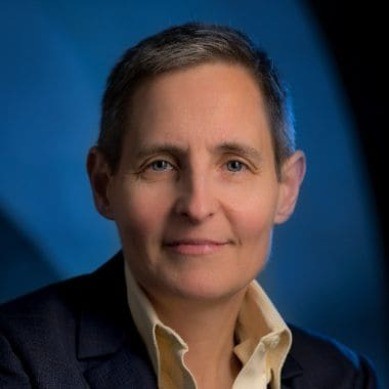
Ann Dunkin is a Distinguished Professor of the Practice at the Georgia Institute of Technology and CEO of Dunkin Global Advisors, where she provides strategic advice to organizations navigating complex technology decisions and evolving technology environments. She served as CIO of the U.S. Department of Energy under the Biden-Harris administration, managing a $5 billion IT portfolio, and as CIO of the U.S. Environmental Protection Agency under the Obama administration. Earlier in her career, she held leadership roles at Dell Technologies, the County of Santa Clara, and Hewlett-Packard. She is the author of Industrial Digital Transformation and a licensed professional engineer.

If this caught your attention, that’s not accidental.

The best editorial systems don’t happen by accident. Outlever builds them.