AI Adoption Gains Organic Traction When Leaders Cultivate Experimentation Over Enforcement
Julia Sears, CDTO at Altus Power, on how replacing AI mandates with peer-led experimentation and practitioner-driven proof build organic adoption across the organization.


The technology leader's role is expanding from systems builder to intelligence orchestrator, responsible for ensuring enterprise data is accurate, usable, and trusted across complex workflows. But redefining the role only matters if the rest of the organization follows. Enterprises pushing AI into every function are learning that the real adoption catalyst is influence: credible operators inside the business who demonstrate outcomes, build trust with peers, and generate bottom-up AI adoption that crosses organizational boundaries faster than any top-down directive.
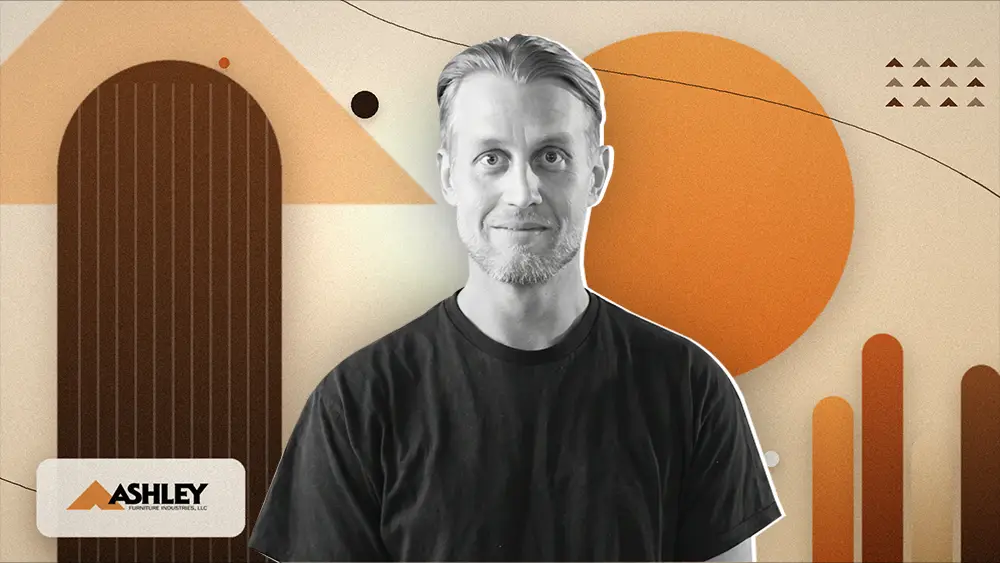
Julia Sears is the Chief Digital Technology Officer and Interim Marketing Officer at Altus Power, a PE-backed clean energy platform, and a board member at OTC Markets Group. Her career spans multi-year enterprise transformations across financial exchanges, institutional financial services, and energy infrastructure, including 15 years modernizing NASDAQ's trading and market data platforms and scaling a 300-person global technology team at TIAA that launched a $4 billion digitally enabled product with 94% adoption. As the state of enterprise AI adoption matures into 2026, Sears leans into employee-led experimentation and firm guardrails, letting adoption build from the ground up.
"You need the interest from the top, but the adoption doesn't happen top down. It's finding people with influence and natural curiosity and having them show it as opposed to me showing it," said Sears. Across Altus Power, that principle has played out in short monthly forums where practitioners demonstrate what they have built, and colleagues request access immediately afterward.
Mandates rarely drive lasting behavior change. Sears instead relies on human role models inside each business unit, practitioners she calls "mayors," to carry adoption forward through quick, monthly AI show-and-tells where she and her head of AI speak for only a few minutes before handing the floor to the actual users.
Sparking the fire: "It's not meant to be a top-down thing. You can't do it that way. You have to have the spark inside the organization," Sears said. "You definitely have to have the interest from the highest level of the organization to see the benefits. But it's not about tracking if people are doing it. It's about helping them, with real solutions." At Altus Power, the CEO endorsed AI experimentation early, but Sears found that executive sponsorship alone did not move adoption past initial pilots.
Meet the mayors: "I call them the mayors. I have a mayor in each division of the company that is the highest adopter," she said. "Having them occasionally spend just three minutes to show off what they did was way more powerful than I anticipated." After each session, her team tracked who requested access to AI tools, and the adoption curve spiked visibly every time a peer demonstrated real results.
That grassroots momentum sits on top of a highly disciplined technical foundation. At Altus Power, Sears' team manages over 5.5 million files tied to hundreds of solar initiatives. When they needed a document classification system that could serve as a trusted source of truth, no commercial product met their accuracy standards, a reality gap that forced the team to build a proprietary model from scratch and rethink how humans and AI systems partner on validation.
Seven strikes, you're out: The team tested seven commercial products before concluding that none could deliver the accuracy their workflows demanded. "We tested seven different products in the industry. They didn't have the necessary accuracy," said Sears. "Once the scoring hits that 90th percentile, we're good. Then it's better than just humans. It's significantly faster, and it gives you that confidence." That accuracy benchmark became the foundation for a broader trust model: once the system proved it could outperform manual classification at scale, the question shifted from whether to trust the AI to how fast the organization could absorb the change.
Pump the brakes: "I was surprised initially that I had to slow down a little bit for adoption, which is okay, and it worked. We've used that in other projects now as well to kind of give people some skin in the game as they're going through," said Sears. Rather than pushing the system out broadly, her team designated certified experts inside each business unit to review the AI's output firsthand in a human-in-the-loop process and put their name on the results. The process gave skeptics a direct role in validating accuracy, and the ownership it created made the difference between grudging compliance and genuine trust.
While the proprietary system demanded custom engineering and structured validation, Sears takes a different approach to how employees experiment with commercial AI tools. After securing C-suite buy-in, Altus Power piloted ten users with R&D licenses across major platforms, including ChatGPT, Claude, Gemini, and Copilot, to study where each added value. Concurrently, the company established a strong AI policy and standardized on enterprise versions so data stayed securely inside their environment.
Permission to play: That walled garden created a safe space for real-world testing. In one session, an employee connected a Claude extension to a live internal system and used it to filter, categorize, and act on operational data automatically. It was the kind of automation moment that would normally send IT into a panic. Instead of shutting it down on instinct, the leadership team evaluated whether the user had the right permissions to run the experiment. "As long as the human that's doing it was doing it in a tool that he had permissions for and was an expert in, good for you. We reviewed the results, and they were accurate and they were solid," said Sears. "It's teaching us all to learn that way, and it just takes a minute to be comfortable with it." The episode became a reference point across the company for how to evaluate new AI behavior without defaulting to restriction.
From code to no code: Sears' team put those guardrails to the test with an internal hackathon, a 28-hour sprint where cross-functional teams used Claude to build working prototypes for two real business needs. Rather than pulling subject matter experts into long working sessions, the teams used AI to ingest internal context and propose product logic, then had human experts review and adjust. "We verified our logic without needing to frankly bother people whose day-to-day job was to do this," said Sears. "They weren't there to give us help, they were there to solve the problem on their own." The hackathon also revealed the reach of vibe coding for non-technical staff: one marketing team member with no coding background produced a working interface by feeding Claude her requirements and a screenshot of an existing product. "She gave it a screenshot of another Altus Power product and thought it was wild that it produced an actual interface she could use," Sears recalled.
By the next day, the ripple effects reached well beyond the technology team. The CEO and Sears' C-suite peers attended the demos, and employees from across the company packed into a conference room late on a Friday to see what had been built. Accounting saw the hackathon and decided to host its own spin-off, a contrast to the forced adoption campaigns that many large enterprises still rely on. "The accounting team said they were going to create this GAAP-a-thon, and they're just going to go do it so that they can see what the options are," noted Sears. "Our controller built this debt financial analysis dashboard through a series of prompts. It's helping speed up what they need to build out new products to be more efficient because they're seeing the opportunity." Since then, a company-wide Slack channel where every new internal release is announced has seen a visible surge in engagement from non-technical teams.
"I think the company is more aligned," Sears reflected. "Parts of the business that were maybe not as engaged are now the first people to express excitement and ask how to use the new tools. So it's contagious, and I think that contagious on this one is key."

If this caught your attention, that’s not accidental.

The best editorial systems don’t happen by accident. Outlever builds them.