Why The Traditional CIO Job Is Becoming The Chief Integration Officer
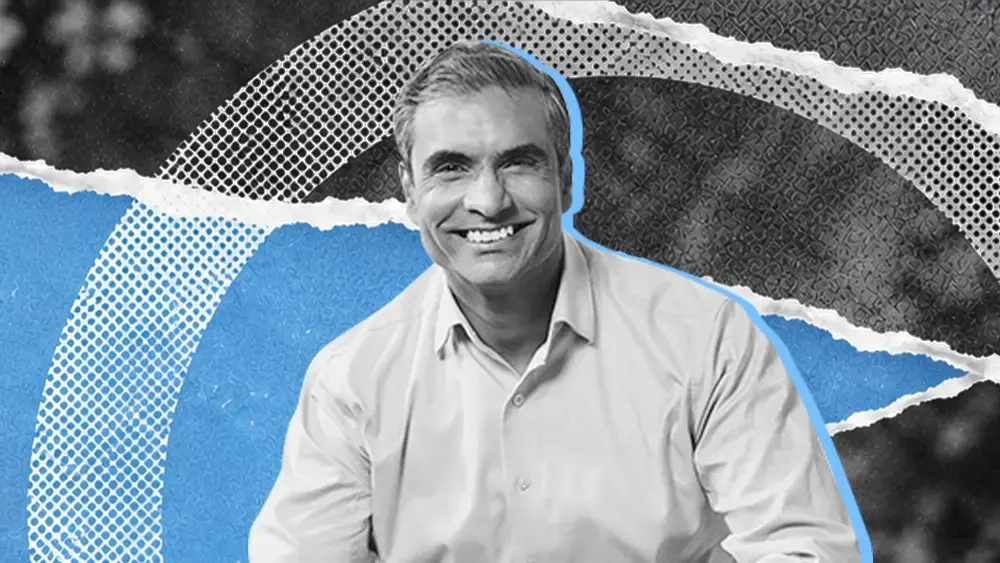
Jeff Brzycki, former CIO at Autodesk and VeriSign, on why the integration and control layer that IT has long owned by default is becoming the strategic foundation of the agentic enterprise.

"With many more agents interacting across the systems landscape, you have to manage what's happening at the integration level to ensure that core transactions are created, updated, and deleted securely and with integrity. Otherwise, it becomes very easy for things to get out of control across the company."

CIOs spent years inheriting the least visible part of enterprise technology: the integration, operations, and control layer that kept everything running safely and reliably while business units built their own stacks. As enterprise AI adoption accelerates system complexity and agent interactions multiply across distributed infrastructure, the integration and control layer has become the strategic foundation of the agentic business. For many technology leaders, the CIO role is evolving into something closer to Chief Integration Officer, and the organizations that master centralized orchestration now hold a decisive advantage in shaping enterprise AI strategy.
Jeff Brzycki is a retired CIO with 35 years' experience leading global IT organizations at companies including Autodesk and VeriSign. Over the course of his career, he led large-scale transformations of IT operating models, shifting from waterfall delivery to Agile/DevOps and building integration architectures that connect complex, distributed application environments. He maintained that the CIOs best positioned to lead in the AI era are those who never stepped away from the foundational work of integration, control and always-on operational excellence.
"With the unbundling of SaaS deployments, we’ll see a dramatic rise in the number and scale of distributed AI applications. With many more agents interacting across the systems landscape, you have to manage what's happening at the integration level to ensure that core transactions are created, updated, and deleted securely and with integrity. Otherwise, it becomes very easy for things to get out of control across the company," Brzycki said. For him, that ownership responsibility is not accidental. It follows directly from how enterprise technology work gets organized.
Brzycki framed enterprise technology work around three phases: plan, build, and run. Increasingly, business units want to own the first two stages so they can move quickly to create, and capitalize on, new business opportunities. The run side—production support, compliance, lifecycle management, and system retirement—lands with IT by default. It is unglamorous, non-negotiable, and permanent. It's a foundational principle for many tech leaders: building enterprise AI on weak foundations creates predictable failures. That long tail includes owning the integration layer that holds every distributed system in the enterprise together.
- A painful, impossible close: The fundamental challenge of data integration has persisted for decades, though the technical problem has grown. Brzycki traced a line from early master data management, through the rise of enterprise service bus technologies like Tibco and WebMethods, and now to the modern API layer with agentic endpoints. At each stage, the core challenge remained the same: how to let distributed systems communicate without sacrificing control. "If a company didn't maintain control over that integration layer, you could have real chaos," Brzycki said. "A marketing system could pull customer information from the ERP, make changes, and push them back, which might completely corrupt your billing and your general ledger, making the financial close process painful, if not impossible." The risk was not theoretical. Brzycki has seen it play out firsthand across production environments managing real financial closes.
The perception of value inside enterprise IT has long been uneven, and for many leaders, that imbalance created sustained tension. Brzycki recalled carrying enterprise-wide accountability for operations, compliance, and control, even as other functions took ownership of the more visible, build-focused initiatives that shaped business strategy. The pattern had structural roots: when business units felt central IT governance wasn't serving them, they purchased their own applications and recruited the strongest players from the CIO's team. The CIO's opportunity to shape business strategy narrowed with every departure. For Brzycki, the experience generated a set of principles he would carry into every role that followed.
- The ‘one throat to choke’: "I used to characterize it to my staff that we, as Enterprise IT, had the ultimate responsibility when it came to security, operations, compliance and IT strategy. We were the only organization taking on all the unsexy work people don't want to deal with and I was the one getting up in front of the board, accountable for SOX controls and enterprise compliance." The accountability without authority was the core tension: Brzycki was answerable to the board for compliance and controls while the systems generating the risk sat inside other people's organizations.
- The business-led IT challenge: At one enterprise, he put a number to it. "We used to call it 'business-led IT,' but the reality is that when I looked at the IT roles hired throughout the entire company, I found that the equivalent of 35% of my team’s headcount was replicated in other organizations," Brzycki said. The duplication was not accidental and most, if not all, of those roles were in ‘plan’ and ‘build’ phases of the IT lifecycle. It was the predictable outcome of governance that lacked executive enforcement.
- Got the t-shirt: For Brzycki, that experience forged a clear filter for evaluating future opportunities. He recounted being recruited for a CIO role by a former CMO colleague who had built his own systems at every company he'd worked for. After learning the CMO had recreated the same siloed structure at the new company, Brzycki turned the job down. "I told him I wasn't interested. It was a 'been there, done that' situation for me. It's extremely difficult to keep a team motivated and focused on its mission when you see that same mission being duplicated elsewhere in the company, completely unchecked," he said.
The rise of AI creates an opportunity to flip this power structure, though seizing the leadership role is a "jump ball," as Brzycki put it, a topic of frequent debate over who in the C-suite should own AI. He introduced a simple litmus test to gauge influence: a CIO reporting to the CEO is typically seen as a strategic partner. One reporting to the CFO is more likely to be viewed as a cost center. Winning that opportunity requires influence that is built over time, grounded in a clear agentic strategy from the CIO. This trend is often accelerated by the board's need for a single point of accountability, as directors will demand clarity on AI strategy.
- The price of admission: "The first thing is to make sure you have your operations together. If you can't close the books and keep the critical systems available in an ‘always on’ capacity, you're not going to be invited to the strategy table. That, in my opinion, is table stakes for being considered for this more important role," Brzycki said. The operations floor is not the destination. It is the credential that gets the CIO into the room where the real decisions are made.
- Who's wearing the sweatbands?: "The board doesn't want to talk to seven different people to get a perspective. They want to know who's wearing the sweatbands, the one person who is accountable and responsible for that function," he said. For Brzycki, that clarity of accountability is not a burden. It is the CIO's strongest argument for a seat at the strategy table.
When Brzycki arrived at Autodesk, he asked his functional peers for a frank assessment of IT's “brand attributes” and received an answer he has never forgotten: "You're slow, you're expensive, and your solutions don't scale." Rather than dispute it, he used it. His team moved from two waterfall releases a year to more than 20 Agile releases, entirely eliminated 72 hours of annual downtime, and drove the budget dedicated to run operations from 70% down to 57%. Those savings funded the ‘plan’ and ‘build’ activities in IT directly. The turnaround rebuilt trust that enabled innovation and gave Brzycki the credibility to influence decisions well beyond IT. Even then, he noted, the political game doesn't disappear. But that candid assessment was the starting point for all of it. It reveals more than perception, he said. It tells a new CIO what kind of role they were actually hired for: whether they are a caretaker or, as Brzycki discovered at Autodesk, a "turnaround CIO."
For CIOs looking to lead in the AI era, his advice is concrete. Partner with business leaders early. Bring a joint recommendation to the C-suite rather than letting functions arrive with competing agendas. "The alternative," Brzycki said, "is the CIO brings the IT perspective and each functional leader at the C-staff level brings their own perspective, seen through the lens of their responsibility; at best, it becomes a food fight and, at worst, a political nightmare."

If this caught your attention, that’s not accidental.

The best editorial systems don’t happen by accident. Outlever builds them.