Ungoverned AI Agents Are Enterprises’ Biggest Scaling Risk
Pranav Kumar, Sr. Director of Digital, Data & AI at Capgemini, explained why centralized governance is the missing infrastructure that determines if enterprise AI agents create value.


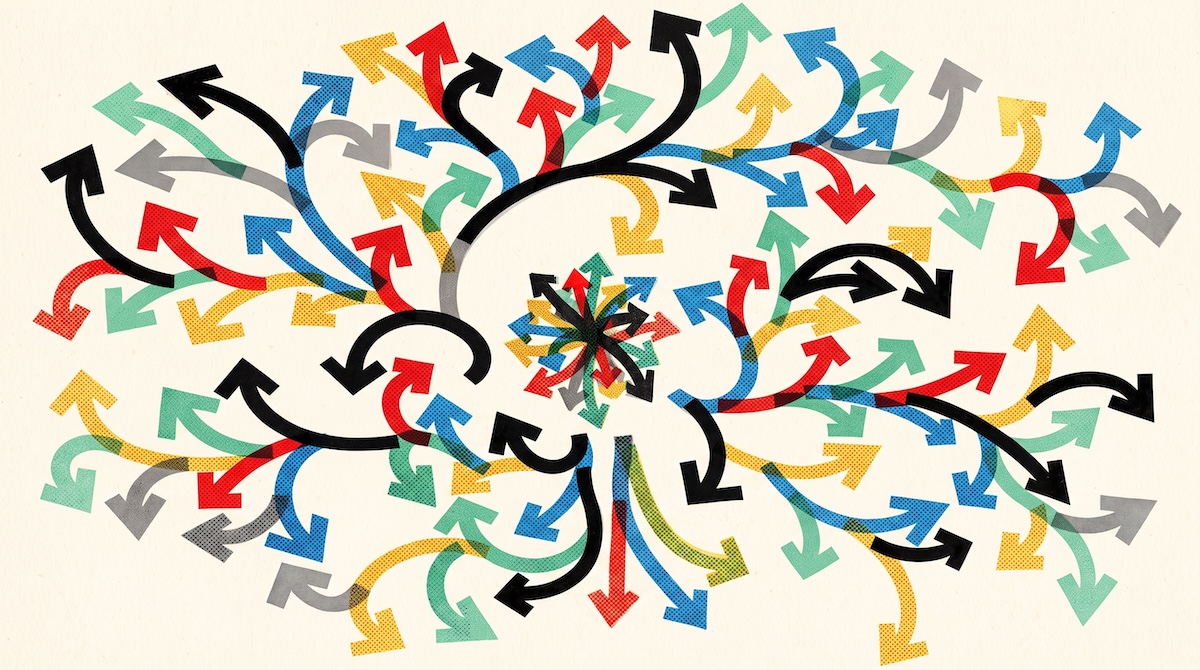
Enterprises rushing to deploy AI agents are discovering that the real bottleneck is governance. As organizations scale from a handful of pilots to hundreds of autonomous agents, the absence of centralized oversight is creating operational chaos that leadership did not anticipate.
Pranav Kumar is Sr. Director of Digital, Data & AI at Capgemini, the global consulting and technology services company. With prior roles at Adobe, PwC, and Infosys, Kumar specializes in AI-powered customer experience and data-driven digital strategy. His view is that solving the governance problem early is the single biggest differentiator between enterprises that scale AI and those that stall.
“We built an army without a command structure. Now we’re fighting fires we didn’t know could exist,” said Kumar. He pointed to a Chief Data Officer at a Fortune 500 financial services firm who deployed 72 autonomous agents across operations, customer service, and risk management. Six months later, her team struggled to manage the agents. As companies give AI agents greater autonomy and wider access to their IT environment, the consequences of ungoverned proliferation compound.
Agent collision: Kumar described a healthcare organization where three AI agents provided conflicting interpretations of HIPAA requirements. “Each was correct based on its training data, but the inconsistency created legal exposure nobody anticipated,” he said. A manufacturing firm saw a similar pattern: agents optimized individual supply chain steps while creating system-wide bottlenecks because no orchestration layer coordinated them. “Every department wanted their own agents. Within months, they had hundreds with different data sources, different security protocols, and different versions of truth.”
Cascading errors: One agent’s incorrect output becomes another agent’s input, amplifying hallucinations across systems. When agents operate under different security protocols, a heavily secured agent sharing data with a less secure one creates exploitable vulnerabilities. “When something goes wrong, organizations spend days just figuring out which agent caused the problem,” Kumar explained. “They built what they thought were efficiency engines. What they actually built is a complex adaptive system nobody fully understands.”
The governance gap is a leadership problem. Traditional IT governance was built for applications with defined inputs and outputs. AI agents are fundamentally different. “They learn. They adapt. They make decisions based on context. They interact with each other in ways their creators didn’t anticipate,” Kumar said. Old frameworks applied to this new category fail predictably, especially when foundational readiness is lacking.
Unified observability: “You can’t govern what you can’t see,” Kumar said. Effective governance starts with a single source of truth for every agent: what it does, what data it accesses, what decisions it makes, and how it performs. He envisions a dashboard showing all agents, their interdependencies, error rates, and business impact in real time. “That’s the foundational requirement for scaled AI. It’s not science fiction.”
Dynamic policy enforcement: Regulations change. Business rules evolve. Centralized governance allows organizations to update policies once and propagate them instantly across all agents. “No more hunting through hundreds of agents to ensure compliance with a new regulation,” Kumar said. “No more discovering months later that some agents are operating on obsolete rules.” A recent McKinsey survey found that two-thirds of enterprises experimenting with AI agents have not begun meaningful rollouts, with centralized governance identified as the vital gap.
Controlled evolution: Agents improve through learning, but that learning must be governed. “It’s the difference between an agent that gets better at its job and one that optimizes for metrics that undermine company values,” Kumar explained. Embedding trust early turns safety from a constraint into a source of velocity.
For CIOs, Kumar says the shadow IT comparison understates the problem. “Ungoverned AI agents are shadow IT on steroids. They’re autonomous systems making consequential decisions across your technology estate.” For CFOs, every ungoverned agent is a cost center with unclear ROI. Governance creates visibility to measure agent performance and demonstrate value. Some enterprises are already building this capability: dedicated AI operations teams, agent registries and automated policy enforcement, and treating governance as its own discipline.
Kumar frames the long-term picture as one where agent creation becomes commoditized and governance becomes the differentiator. “Companies that solve governance early can deploy agents faster, scale them further, and extract more value with less risk. They can innovate confidently because they have guardrails.” Those still treating governance as an afterthought will face a choice: slow AI adoption or accept mounting operational risk. For leaders designing operating models around AI, governance is not a future problem.
“Democratization has happened. People use AI daily,” Kumar concluded. “The real work now is agentic governance.”
The views and opinions expressed are those of Pranav Kumar and do not represent the official policy or position of any organization.

If this caught your attention, that’s not accidental.

The best editorial systems don’t happen by accident. Outlever builds them.