• AI is reshaping large-scale manufacturing operations, but the real barriers to value are infrastructural, organizational, and cultural rather than technological.

  • Nick Giannakakis, Group CIO at Motor Oil, drew on transformation experience across major global enterprises to explain how industrial leaders can navigate the journey from factory floor connectivity to board-level AI accountability.

  • Giannakakis identified the digital twin as the industry's defining target, and says true AI adoption requires hands-on programs, earned trust, and a CIO mandate that extends beyond deployment to ownership of operational outcomes.

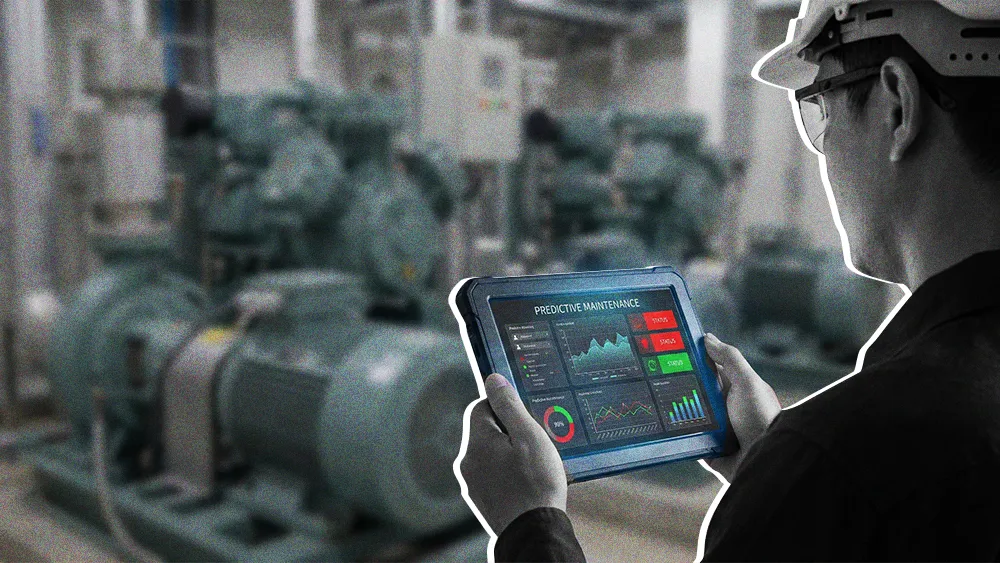
AI has arrived on the factory floor, and its nuts and bolts value is no longer theoretical. Falling compute costs and maturing data infrastructure are pushing large-scale manufacturing from reactive to predictive models, but the harder shift is organizational. Data governance, IT/OT convergence, and organizational trust now determine whether AI delivers or stalls.

Nick Giannakakis is the Group Chief Information Officer at Motor Oil and a board member at MORE Energy. He has led digital transformation at British American Tobacco and Coca-Cola Hellenic Bottling Company, and is a recognized Top 100 CIO and alumnus of executive programs at IMD, MIT Sloan, and London Business School. Giannakakis sees the industry undergoing a structural evolution, driven by durable economic and architectural changes.

"This is not hype or a bubble. We are seeing a true evolution," said Giannakakis. That foundation, however, doesn't build itself. Before any of those capabilities become operational, leaders in these environments face a connectivity and infrastructure challenge that is distinct from almost any other industry. In a manufacturing plant, that challenge starts at the most basic level: getting reliable data off the floor in the first place.

  • The need for speed: "In manufacturing, establishing the right infrastructure is a challenge in itself. You need a closed LTE network, for example, just to collect the data points," he said. "That foundation is what enables Edge AI for situations where decisions in microseconds are imperative. A natural gas pipeline is a prime example of this." It is precisely these high-stakes environments that make the case for getting the infrastructure right from the start.

  • Follow the star: With that groundwork in place, the destination becomes clearer. Giannakakis pointed to the digital twin as the industry's defining target, one that pulls together the key manufacturing trends now reshaping large-scale operations. "For us, the North Star is the digital twin. On top of a centralized information system, Generative AI now facilitates not just structural access to P&IDs, but also predictive risk modeling tied to our maintenance calendars. For the first time, we have these kinds of capabilities." Those capabilities, however, bring a new set of decisions about how much autonomy to hand over to the systems enabling them.

  • Recommend or command?: These new tools introduce a core operational dilemma: should AI merely suggest actions, or be empowered to automate them? In practice, trust is earned incrementally, often by layering AI-driven decision-making on top of existing control systems. The journey is made possible by modern data fabrics that provide the infrastructure for new AI workflows. "In our industry, Advanced Process Control optimizers have been in place for years. AI now stands on top of them, using time-series models to provide recommendations. That is the first step," he noted. "As trust builds, those recommendations can be associated with direct action, where the system doesn't just propose but takes direct control."

"Costs are falling, data infrastructure is maturing, and AI is now being built as a product on top of our operational data, enabling capabilities like predictive risk modeling and maintenance insights that were simply not possible before."

Nick Giannakakis

Group CIO
Motor Oil

Progress, however, collides with the entrenched realities of mature industrial environments. Giannakakis explained that leaders must navigate IoT data governance, legacy systems, strict regulatory environment, and the enduring divide between operational and information technology, even as external market forces and a new board-level mandate begin to reshape the landscape from the outside in.

  • Three persistent hurdles: "You face a perfect storm. First, the elephant in the room is the historical IT/OT separation. Second, you have the combination of an old plant with P&IDs on paper alongside a modern one," said Giannakakis. "Finally, we operate in a strong regulatory framework, like the NIS2 Directive in the EU. It's an old world wanting to become modern, under strict regulation, while needing to maintain operational resilience." The IT/OT divide, in particular, is no longer purely an internal struggle. The solution is increasingly coming from outside the organization.

  • An outside catalyst: Technology vendors are now accelerating from the outside what industrial teams have long tried to solve from within. "Technology platforms from vendors like AVEVA, GE, and AspenTech have evolved, and they are the enablers of this movement," Giannakakis noted. "These partners, often coming from the manufacturing space themselves, are bringing the IT and OT worlds together. For instance, when a company like Schneider Electric acquires AVEVA, they create a holistic offering that does just that."

  • A seat at the table: The scale of this shift is driving a fundamental change in leadership, pushing technology to the top of the corporate agenda as both a strategic priority and an organizational risk. "It is a game changer that technology is taking a prominent seat on every board. For the first time, technology is a top priority, and we are treating technology risk as one of the highest risks an organization faces," said Giannakakis. "That entire change has been facilitated by the board-level discussion around operational resilience and technology's role as its enabler."

That new mandate is reshaping the role of the CIO in many industrial firms. Giannakakis explained that the job's scope is expanding beyond deploying systems to include ownership of the business outcomes they produce. "The ultimate target is owning the operational outcomes. That is our lighthouse, our North Star. Are we there yet? No," he said, "but I am constantly evangelizing this. Getting there requires a lot of change in mentality, even within our own IT and technology teams."

For many organizations, the biggest barrier to AI adoption is no longer the technology. It is the organization itself. Giannakakis pointed to what he calls "true adoption" as the answer, moving past awareness into hands-on, top-down programs that bring AI concepts directly to the business. "I'm not just talking about awareness sessions. We're discussing true adoption. This requires an AI adoption program that goes top-down. For example, we have initiatives like an 'AI Garage,' an approach we use to bring AI concepts closer to the business through hands-on piloting and discussion," he concluded.