Leading CIOs Prioritize Cultural Readiness As AI Compounds Organizational Behavior
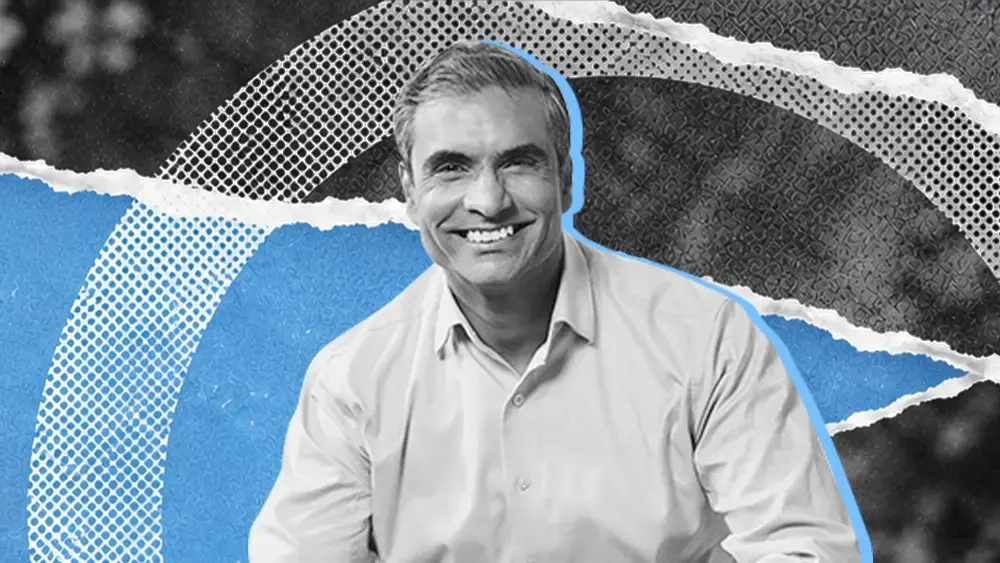
Eli Potter, VC/PE Executive Advisor and CIO, on why culture and accountability are hard systems inputs to AI transformation, not soft leadership considerations.

"Every AI system is a mirror. What goes in comes back out, amplified."

Most AI readiness assessments focus on data quality, tooling, and governance architecture. Fewer account for the behaviors those systems will absorb once they're running: the workarounds teams rely on, the hallway conversations where real decisions happen, and the middle managers whose daily habits shape what gets rewarded and what gets ignored. All of it becomes training data. AI learns those patterns, carries them forward, and amplifies them at scale.
I'm a VC/PE Executive Advisor and CIO who has worked across more than 150 early-growth, growth, and scale-stage companies. I previously held senior enterprise applications, architecture, and data leadership roles at Coinbase and Autodesk, where I helped guide large-scale business, data, and technology transformation. I'm also the author of Role Modelship: Multiply Your Impact To Influence AI, an Amazon bestseller. Her advisory work focuses on AI strategy, adoption, and the organizational dynamics that determine whether AI investments produce measurable returns.
"Every AI system is a mirror," said Potter. "What goes in comes back out, amplified." Potter's argument was that CIOs consistently underestimate how much organizational behavior shapes AI outcomes, and where they miss it most is in the layers governance frameworks do not reach.
- The middle layer problem: "C-suite behavior gets scrutinized. What the middle layer does daily, how they assign work, who they credit, how they respond to failure, that's the signal AI is learning," Potter said. "It's invisible to most governance frameworks." CIOs fix the data pipeline and assume the values problem is solved. It is not. When 29% of employees admit to actively undermining AI efforts by inputting poor data, using unapproved tools, or slow-rolling adoption, that resistance becomes training data too. "The dysfunction gets baked in," she said.
- Dysfunction scales: Potter pointed to a pattern visible across the companies she advises. "Every workaround your team uses, every time someone routes around a bad process, every meeting where the real decision happens in a hallway and the AI summary captures the fake one, that's the data," she said. "Dysfunction doesn't disappear in an AI implementation. It scales." Research from Bain found that 88% of business transformations fail to achieve their original ambitions. Potter argued the primary reason is not the technology. It is the human system around it. That finding tracks with broader research showing AI transformation is fundamentally a workforce transformation, not a technology deployment.
The second beat in Potter's argument moved from diagnosis to prescription. She introduced Role Modelship as a practice distinct from leadership and positioned it as a missing systems input in AI readiness.
- Training data, not direction-setting: "A leader sets direction. A role model generates training data," Potter said. Role Modelship combines five disciplines: stewardship, fellowship, mentorship, leadership, and sponsorship. Most AI roadmaps include one of these at best, usually leadership, and call it governance. Potter argued that it is not enough. Every decision made, every person credited or not credited, every story told about failure, that behavior becomes encapsulated in the systems built on top of it. A UNESCO study found that generative AI systems associate women with terms like "home" and "family" four times more frequently than men. "That's not a model problem," Potter said. "That's a behavior problem that became a model problem."
- A reasoning architecture: Potter argued the shift goes deeper than tooling. "Treat AI like an operating layer, not a simple tool. In the autonomous organization of the future, the org chart is becoming a reasoning architecture," she said. The question is no longer who reports to whom. It is who trains what, who approves what, who can stop what, and who governs what. That becomes the new normal.
- Governance is the new management: "The biggest enterprise risk is no longer software failure," Potter said. "It is autonomous decision drift." As systems take on more decisions, the work of management moves from directing people to governing the behavior that machines learn from.
- Culture readiness as a layer: "The CIOs I work with who are ahead of this are doing something specific," Potter said. "They're adding a culture readiness layer to their AI roadmaps alongside data readiness and governance." That layer asks what behaviors the organization rewards, what stories it tells about failure, and who sponsors whom. Without it, AI governance becomes a compliance exercise disconnected from the behavioral reality the system is absorbing.
Potter closed with a practical framework. For AI readiness assessments, she argued CIOs need to add three questions alongside the standard data and security audit. First: what behaviors does our performance management system actually reward? Second: how do our leaders respond publicly when AI surfaces an uncomfortable truth? Third: who has the psychological safety to flag a problem before it becomes a model problem?
Those questions do not sit in a governance document. They sit in how an organization actually operates, how it assigns credit, handles failure, and decides who gets heard. "Accountability has to precede automation," she concluded.

If this caught your attention, that’s not accidental.

The best editorial systems don’t happen by accident. Outlever builds them.