Texas A&M's CIO On Why Technology Leaders Are Becoming Investment Advisors
Inundated with AI marketing and anxious to keep a lid on IT spend, CEOs and other business leaders are increasingly looking to the CIO for guidance on which technology will help drive the most value.

You have to ask: Is this a virtuous spend or is it not a virtuous spend? And that’s a pretty self-evident answer most of the time.
.jpg)
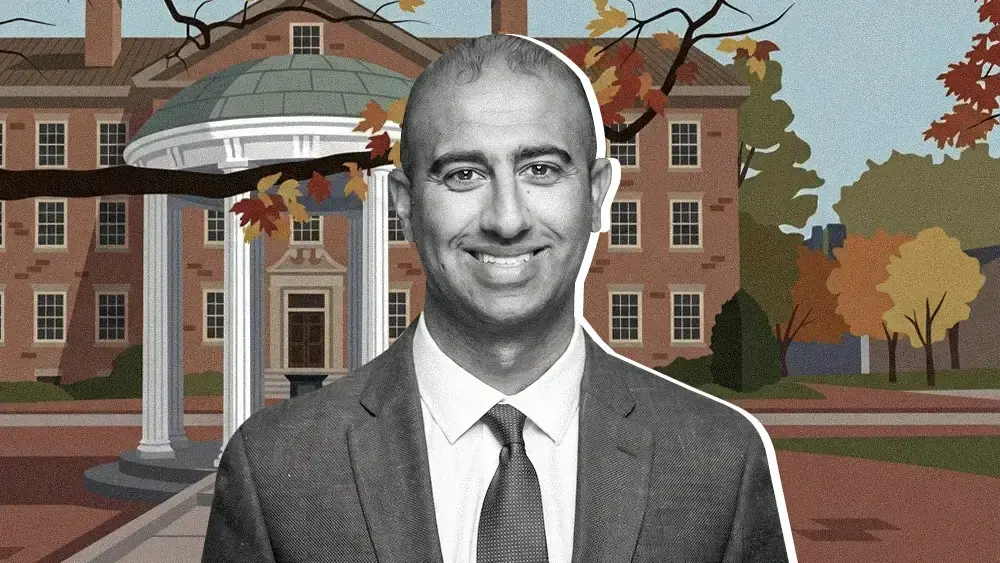
Inundated with AI marketing and anxious to keep a lid on IT spend, CEOs and other business leaders are increasingly looking to the CIO for guidance on which technology will help drive the most value. This is shifting the role from infrastructure and information manager to investment advisor, according to Texas A&M University System CIO Vince Kellen.
“CIOs have to care for the entire patient, in this case the whole organization, and most importantly its financial underpinnings, and be sure that the technology can be adopted, driven for value, and be the voice for truth and reason in that process,” Vince told CIOnews.
The challenge is meeting the demands of a diverse spectrum of stakeholders that all want to move as fast as possible to deploy AI within their operations. That’s the case across Vince’s sprawling purview, spanning rural and urban universities, research centers, and state agencies. Researchers want outcomes faster, faculty want help creating coursework, and students want to master the technology that is increasingly foundational to their professional and personal lives.
Whether consolidating enterprise systems or investing in shared AI infrastructure, the objective for Vince is the same: ensure technology investments create value across rather than duplicating capabilities. Within the Texas A&M network, for example, there are shared systems of record for human resources and finance. And new, ultra-powerful supercomputing infrastructure, dubbed Vision, is helping researchers employ AI to reach outcomes five times faster, as well as handling administrative use cases.
“While each campus agency has their own strategy, what I try to do is get synergy out of the whole. Where are we better together, what are the principles that can guide the system in the future, and where can we compete?” said Vince. “You have to ask: Is this a virtuous spend or is it not a virtuous spend? And that’s a pretty self-evident answer most of the time.”
Along with rationalizing IT environments, CIOs are also increasingly responsible for ballooning AI budgets. And Texas A&M’s investment in Vision reflects the push among universities and enterprises to control inference costs. Built around roughly 790 Nvidia H200 nodes, Vision allows use cases to shift between on-premises and cloud-based inference workloads to optimize spending, according to Vince.
“With agentic development, long-running AI, and now self-improving forms of AI, token budgets are getting blown,” Vince said. “I don’t see those prices compressing in any short-term horizon. So if we can run our own on-premises gear and use some clever engineering technique to drive the token price down, we can have a fraction of the cost for 90% of the quality.”
As technology investment advisors, CIOs also have to stay abreast of the latest across hardware, infrastructure, security and governance. While many are used to keeping an eye on where the IT market is heading, most technology leaders are accustomed to planning out across five-year horizons.
Now, CIOs must plan around more unknowns than ever before. They must deliver on the mandates of today, while still staying flexible to respond to the innovations of tomorrow. For example, the leading LLM can quickly become the runner-up, making it difficult for CIOs to commit to a single model or ecosystem.
Many institutions are applying the same philosophy to hardware and avoiding dependence on a single vendor. The Texas A&M Engineering Experiment Station is building a new AI and high-performance computing platform on AMD chips, for example, while the Vision supercomputer runs on Nvidia hardware.
“The big thing on my mind is: Where is this going to go, and what plans should we put in place now to not be bushwhacked by it?,” said Vince.
To further shield against future disruption, Vince and other CIOs are also embedding unified security and governance standards, along with other controls, within runtime and development environments — or what’s now called an AI harness. With a trusted foundation, IT leaders can more confidently release self-service AI tools to more users. For example, at Texas A&M, the Vision platform includes a chat interface and development tools for custom AI tools, among other features.
And ultimately, as investment advisors, CIOs are key to actually getting users to embed AI within their regular workflows. Without education around how to adopt the technology, users might only see surface-level productivity improvement. But beyond skillfully prompting the AI agent to act, Vince said users also need to get better at pressing the systems to improve their outputs.
“That’s really the ultimate skill with AI now: Knowing how to challenge it,” said Vince.
As AI spending accelerates, the metric of a CIO's success is no longer just uptime or infrastructure delivery, but how effectively investments translate into operational outcomes. For Vince, that starts with creating shared infrastructure and applications, building secure development and runtime environments, and upskilling users.

If this caught your attention, that’s not accidental.

The best editorial systems don’t happen by accident. Outlever builds them.