Capgemini's EVP On Multi-Cloud Strategy: Why Differentiated Capability Beats Single-Cloud Simplicity
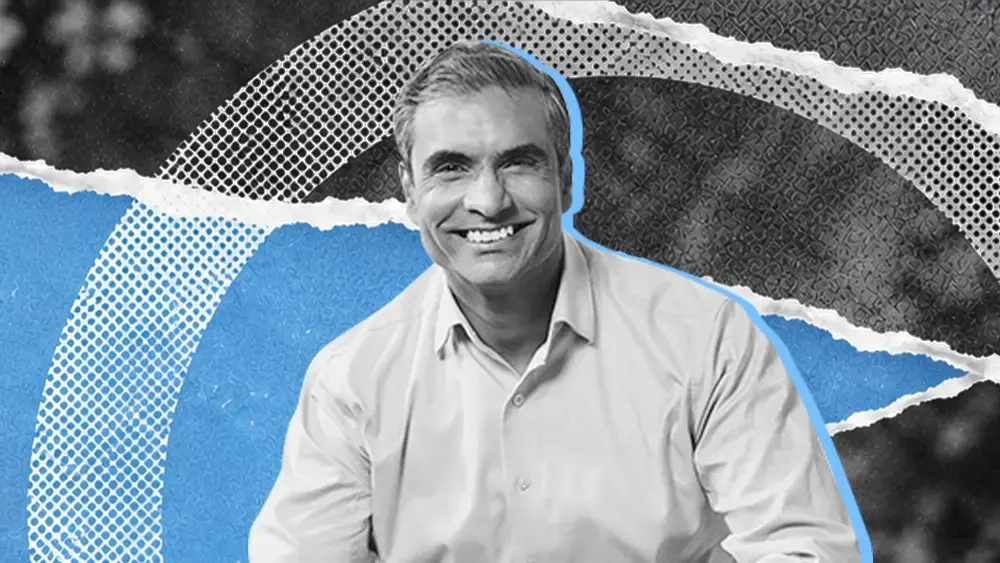
Michael Nieves, EVP and Head of Cloud at Capgemini, on why multi-cloud has evolved from accidental sprawl into a deliberate capability strategy driven by AI and business ambition.
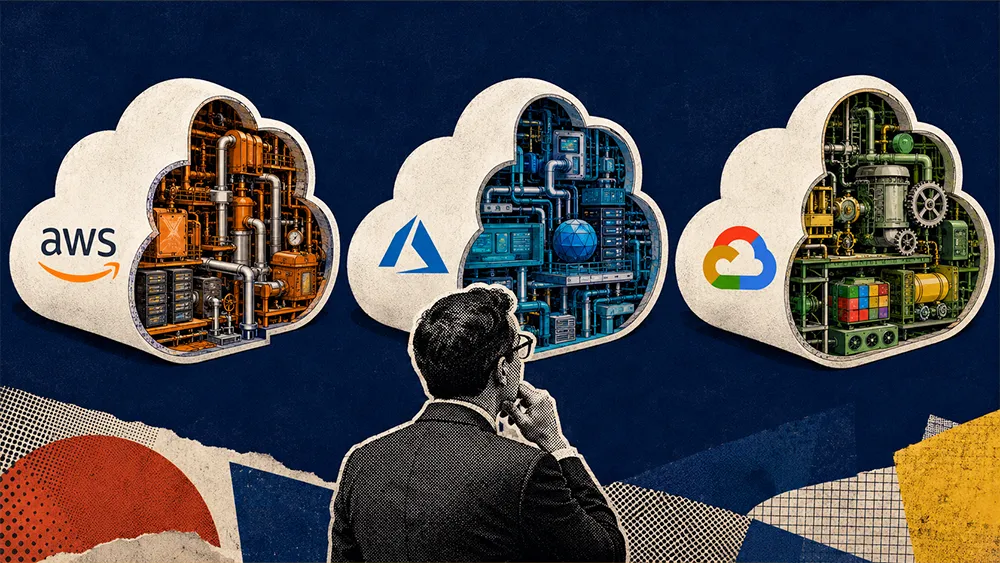
"Multi-cloud no longer means more than one provider. It means the intelligent distribution of capability. Wherever you find the one that meets your needs is where you acquire it. From the outside, clouds look similar. From the inside, they are nothing alike."

What became multi-cloud started as accidental coexistence. Enterprises wound up with multiple hyperscalers through organic decisions made at different times, then spent years trying to rationalize it down to one. The assumption was that clouds would converge into commodity infrastructure. AI proved otherwise. The capabilities hyperscalers are building in chips, platforms, edge infrastructure, and AI tooling are not interchangeable, and the CIOs who have accepted that are now facing a harder question: not whether to run multiple clouds, but how to govern, migrate, and orchestrate across them deliberately.
Michael Nieves is the Executive Vice President and Head of Cloud for Capgemini's Americas Strategic Business Unit, overseeing a $2 billion annual contract value cloud portfolio, and sitting on the firm's Americas Executive Committee. A co-author of ITILv3, he spent nearly two decades at Accenture as Global Lead for Cloud Growth and Strategy before moving to IBM Consulting as Managing Partner of Strategic Transformation. He said the industry's understanding of what cloud actually is has been quietly and fundamentally rewritten.
"Multi-cloud no longer means more than one provider. It means the intelligent distribution of capability," said Nieves. "Wherever you find the one that meets your needs is where you acquire it. From the outside, clouds look similar. From the inside, they are nothing alike." The distinction is not semantic. It reflects a fundamental shift in how the most consequential infrastructure decisions in enterprise IT are now being made.
The reason clouds can no longer be treated as interchangeable is rooted in what AI actually demands from infrastructure. Hyperscalers have responded by building AI factories and specialized chips purpose-built for parallel processing and tensor math, with no direct equivalent across providers. As those investments compound, the shift toward intent-driven multi-cloud architecture has made provider selection one of the most consequential decisions a CIO can make.
- Traffic control: "The nature of AI, the way AI uses compute, breaks classical cloud hosting because the architecture is different. It's east-west traffic instead of north-south because GPUs need to talk to each other," said Nieves. "AI data becomes a different citizen of the data center. The way it's handled and managed, especially regarding context windows and memory commitments, introduces problems at scale that are being addressed by these AI factories you see being produced by the hyperscalers." The software stack above those chips is evolving just as fast. Hyperscalers are investing heavily in tools that embed AI into workflows, moving intelligence from generating responses to driving action directly where practitioners make decisions.
- Different DNA: "While clouds still appear to be the same fungible services from the outside, they are very different on the inside. Everything from the products, the services, the behavior of these products, and even the culture is different," Nieves noted. "That includes the pace of innovation and the bulletproof nature of how they operate in the enterprise." Those internal differences have a direct consequence: moving workloads between clouds is nothing like the early days of cloud migration.
The draw of those differentiated capabilities is strong enough that more enterprises are now moving workloads not from on-prem to cloud, but from one hyperscaler to another. What they are discovering is that cloud-to-cloud migration is a different species of problem entirely.
- Ditching the U-Haul: "Fifteen years ago, cloud was a place to go to. The metaphor used at the time was putting your workloads in a U-Haul truck, driving across town, and unloading them into somebody else's infrastructure," said Nieves. That model assumed the destination was roughly equivalent to the origin. It is not.
- Open-heart surgery: The complexity is not just technical. Each hyperscaler's data models, APIs, and event structures behave differently enough that moving a workload between them requires careful architectural surgery. "Whether it is moving partially, or lock, stock, and barrel from one hyperscaler to another, it is no longer the U-Haul model. The metaphor I would use here is a heart transplant," Nieves said. "You have to carefully disentangle workloads that have dependencies on the platform, specific data flows, architectures, APIs, and event structures, then reinsert into the recipient and seek to duplicate the behavior it had in the past. That is not an easy thing to do." For CIOs pursuing differentiated cloud capabilities, it is increasingly the price of admission.
For most CIOs, the more immediate challenge is deciding how far to expand their cloud footprint and on what terms. Early multi-cloud adopters often let individual departments pick their preferred cloud, a loose approach known as functional segmentation. It was an easy model to implement, but the operational consequences surfaced fast. A growing number of organizations are now using that friction to move toward a more deliberate structure, one that designates a primary platform while carving out specific high-value jobs for a secondary cloud.
- Playing data ping-pong: "Functional segmentation is an easy model to adopt because you simply tell the enterprise to use the option that works best for them. Unfortunately, cascading problems surface very quickly when customer data resides on one cloud and sales data on another, forcing you to constantly build and rebuild pipelines," said Nieves. "That's just one example of the unintended consequences created by separating the work that way." That friction has driven many enterprises toward a more disciplined model.
- Anchors aweigh: "It's a very simple premise. You pick one environment to be your bulletproof enterprise platform, but perhaps there's something you see on another cloud, so you give it a job," Nieves explained. "For example, an organization might run its core enterprise on AWS or Azure, but specifically choose to run their AI workloads on Google. Anchor and augment basically gives strategic clarity without having full duplication." The model lets organizations start small and build governance, identity, and cost discipline incrementally, and vendors, partners, and integrators have converged around it with reference architectures and managed services built to match.
As anchor and augment becomes the dominant model, new overlays are adding complexity on top of it. Data sovereignty requirements aren't a separate architecture. They function as a compliance layer scoped to specific jurisdictions inside existing frameworks, a pattern becoming more common as local data laws expand globally. At the same time, the cloud itself is pushing out of centralized data centers and toward the edge.
- Catching the moment: "It's not about bringing the restaurant to the cloud. It's about bringing the cloud to the restaurant," said Nieves. "Anytime you interact with a customer, you have a moment. That moment can be a simple checkout, or it can be an opportunity to capture data that updates your inventory, analytics, and merchandising to apply a promotion in real time. To be able to do inferencing at the checkout counter, the airport kiosk, the energy grid, or the hospital suddenly opens up a world of possibilities." The deciding factor for any enterprise with physical locations is straightforward: does the value of that customer moment disappear if it has to wait for a round trip to a distant cloud?
As architectures stretch across multiple providers, sovereign environments, and edge locations, the operating model gets tangled. Operating federated models at this scale introduces real risks, including egress costs, skills fragmentation, and operational missteps. Hyperscalers are building abstraction platforms and cross-cloud data lakes to ease the friction, but a truly universal cross-cloud control plane remains a work in progress. Until it exists, Nieves said, the strongest enterprises are bridging the gap with strict decision gates. "Say yes to a second or third cloud only if there is a clear and measurable business outcome, material scale, executive sponsorship, and the other clouds are platforms of record, not just a copy," he said. Those gates are what separate deliberate multi-cloud strategy from accidental sprawl.
But the deeper argument, he said, is not about infrastructure at all. "This is a business story," Nieves said. "Everything we've talked about is bold and risky, but the appetite to do it is the pursuit of business aspirations." As the hyperscalers keep innovating, he concluded, that intelligent portfolio becomes more interesting to business leaders who are not beholden to previous contracts or ways of thinking. "They can be almost dismissive of that. And therein lies the opportunity."

If this caught your attention, that’s not accidental.

The best editorial systems don’t happen by accident. Outlever builds them.