How A Veteran CIO/CTO Finds The Line Where Data Systems Converge And Orchestration Takes Over
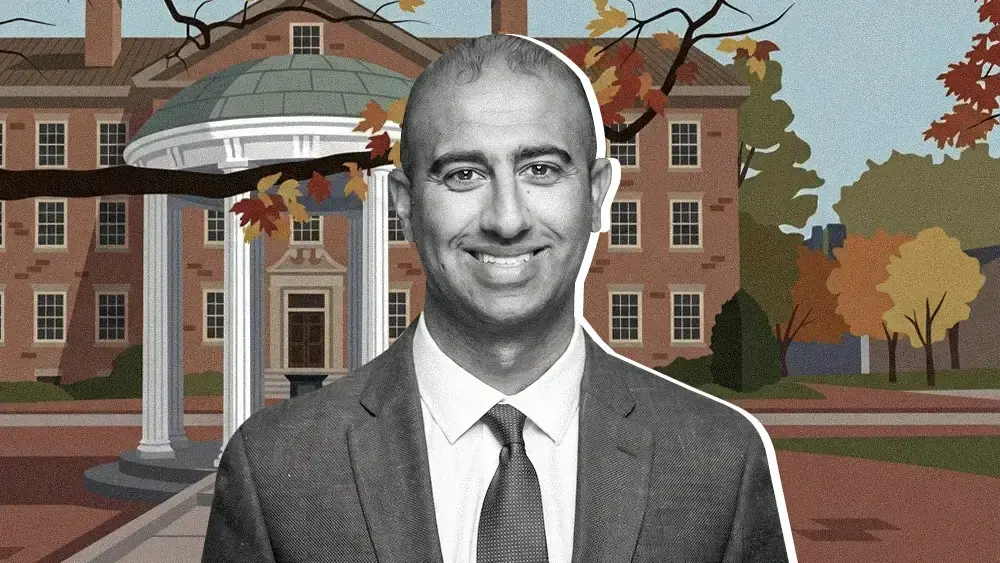
Amarish Pathak, CTO at AAFMAA Mortgage Services, joined CIO News to discuss how his three-layer "intelligence fabric" helps CIOs move beyond siloed AI and orchestrate proven business value.
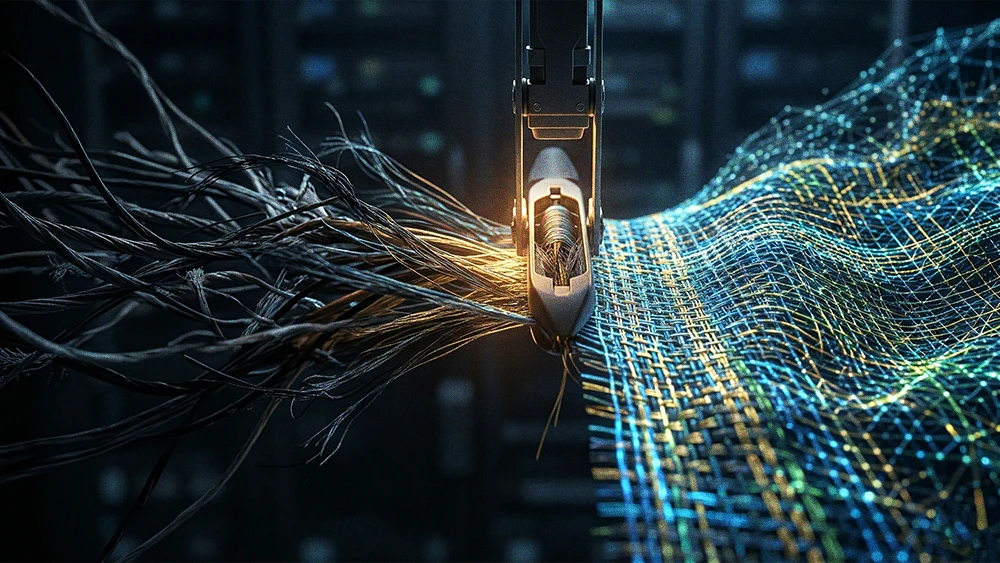

The modern CIO role has fundamentally changed, but most enterprise AI programs haven't caught up. Keeping systems running and costs down now accounts for less than a third of the job. The rest is orchestration: getting fragmented AI initiatives, siloed departments, and disconnected data systems to work as a single, unified intelligence. Deploying tools without that connective layer produces fragmented data, not business value. The pressure to make that shift is building, with CIOs naming orchestration as their defining mandate for 2026.
Amarish Pathak is the Chief Technology Officer at AAFMAA Mortgage Services LLC, a subsidiary of Armed Forces Mutual, a nonprofit serving the military community. He spent 15 years as CIO at Armed Forces Mutual before his current role, building enterprise technology and cybersecurity strategies across some of the most heavily regulated environments in the country. His work has included developing patented software for anomaly and fraud detection and establishing audit-ready governance frameworks for AI and data systems. He has developed a clear playbook for navigating the transition.
"Infrastructure used to be the end game. Now, it's the runway," Pathak said. "It has to support AI systems without being slowed down by technical debt. You have to prove that the AI brings value not just to the organization as a whole, but to each specific department." For Pathak, that proof runs deeper than organization-wide metrics. It requires every department to see the value directly, which is precisely where fragmented data pipelines break down.
Pathak's answer to that breakdown is a framework he calls an intelligence fabric, a three-layer model built to unify data, enforce governance, and prove value at every level of the organization. The first two layers handle data ingestion and decision-making with guardrails, and the third is where orchestration takes over. What separates a functioning fabric from a fragmented one comes down to three things: how the layers are built, how they are governed, and what problem they are solving.
Three layers, one system: "The third layer is really the intelligence and orchestration. That's where you fine-tune the LLMs for heavier reasoning tasks and specific execution workflows, and you have a trail of where those decisions happened and what the final result is," Pathak said. For him, that trail is ultimately how organizations prove where AI is delivering value and where it is not.
Trust but verify: Pathak's background in regulated industries shapes how he builds these systems. He insists on building trust before deploying any technology, a concern that many leaders are treating as a top priority. "To verify a model is behaving accordingly, we conduct audits and inspections. It's a process I call algorithm accountability, which means going into the model, examining the conditions and weights of its training, and determining precisely how much control our own environment has over the results," he explained. In regulated environments, that level of control is not optional.
Problem first, tech second: For Pathak, that last question is where most CIOs go wrong. With some feeling that the next AI breaking point is near, the instinct is to reach for better tools. His approach is the opposite. "Always start with the problem," he said. "First, identify the specific issue: is a manual process flawed? Are there high error rates? Is there a quantifiable business cost? Then, use the intelligence fabric to address that specific issue." Only once the problem is defined does the model selection, data pipeline, and governance architecture follow.
The ultimate competitive differentiator is how well an organization knows its own data and its own customer, not the model it deploys, Pathak said. Getting there requires identifying specific use cases for data unification, then testing assumptions against how decisions are actually made. For many CIOs now building a strategic playbook for agentic AI, that process starts with a direct comparison between human and machine judgment.
Bot vs. human: To identify where to focus, Pathak advised running "shadow trials," where an AI model makes decisions in parallel with a human expert. "The bot, in competing with the human, often identifies datasets that needed to be unified. These are datasets the person may not have even considered," he explained. In Pathak's own underwriting department, shadow trials revealed data sources the human team had never flagged.
The data differentiator: In financial services, Pathak frames this as knowing your customer at the model level. "You can't just take a canned model built for a general environment. You have to tune it for your specific audience and unique dataset," Pathak said. "That is what truly separates one company from another." A generic model, trained on someone else's data, cannot know your customer.
With a foundation of trust and unified data, organizations can begin deploying AI to augment their human teams and deliver measurable results. That's where the intelligence fabric shows its worth, connecting insights directly to business results. In the mortgage industry, that connection is already producing results. "A key use case is having conversational bots help loan officers close loans," he noted. "Whether it's a real-time conversation or a chatbot, we use that conversational data and apply AI to predict if a person is likely to get a loan."
Scaling that kind of result, Pathak said, requires a place where success can be studied and replicated. "It is important to have an AI Center of Excellence," Pathak said. "You need a place where you can really showcase how things are done correctly and show that to other organizations."

If this caught your attention, that’s not accidental.

The best editorial systems don’t happen by accident. Outlever builds them.