AI's Value Concentrates In The Orchestration Layer Linking People, Systems, And Daily Work
Michon Williams, CTIO of Mattamy Asset Management and Mattamy Homes, on why collapsing fragmented toolchains into a single AI-driven interface is where enterprise ROI actually emerges.
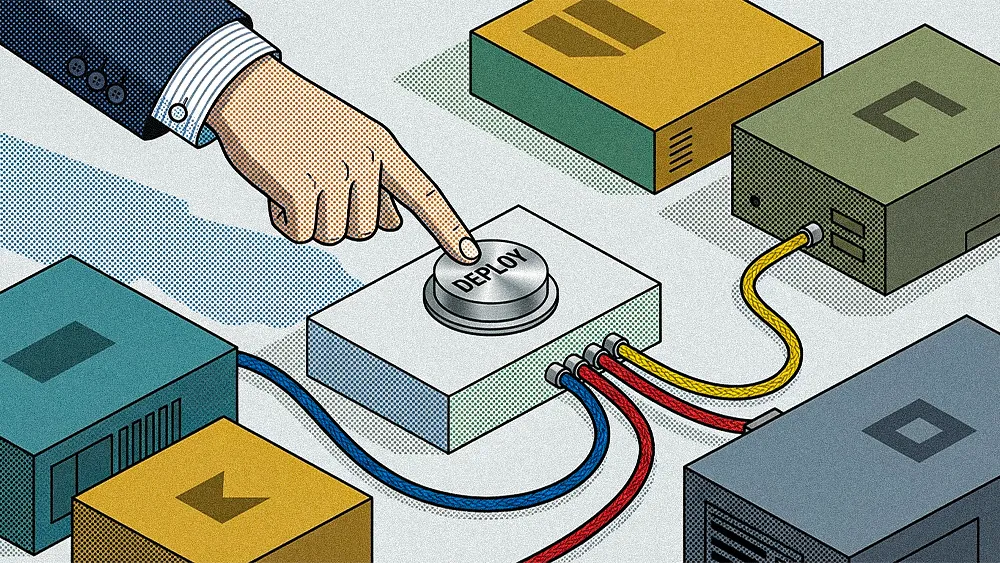

Most enterprise employees do not struggle with AI adoption. They struggle with managing the ten different tools they need open to complete a single workflow. AI becomes useful when it compresses that fragmented experience into one place where a worker can ask a question, retrieve a document summary, and update a record without switching screens.
Michon Williams is Chief Technology and Information Officer at Mattamy Asset Management and Mattamy Homes, North America’s largest privately owned homebuilder. Before joining Mattamy in late 2025, Williams spent four years as CTO at Walmart Canada, where she led the transformation of associate tools, built the supply chain technology team, and delivered the company's first GenAI capabilities. Her career spans two decades of technology leadership at TJX Canada, BMO, and RBC. She frames AI’s real value as the ability to collapse fragmented workflows into a single, usable interface.
"The real value of AI shows up at the handoffs, where humans, systems, and agents need to work together seamlessly," Williams said. "That’s where the disaggregated experience starts to turn into something much more powerful."
The single pane: At Mattamy, a sales consultant nurturing a lead currently touches multiple CRM modules, contract systems, reporting tools, and support channels. But task-based agents show great potential to enable, letting that same consultant query customer insights, update records, and get system help through one LLM-powered interface. "It helps moves the experience from really disaggregated tools to a single interface with which they can get insights, instruct the CRM, and get help."
Proof of concept: Williams pointed to area sales managers reviewing stacks of multi-page contracts each week. "Being able to say, 'Provide me a summary of all the contracts proposed this week,' enables them to do that task more quickly, with better insight than if they had to read all of the documents." The prerequisite is straightforward: permissions set correctly and documents accessible through the right channels.
Getting there requires task-based analysis, a discipline that shifts focus from abstract processes to what specific people are actually doing and which activities can be automated. But that efficiency introduces its own risks.
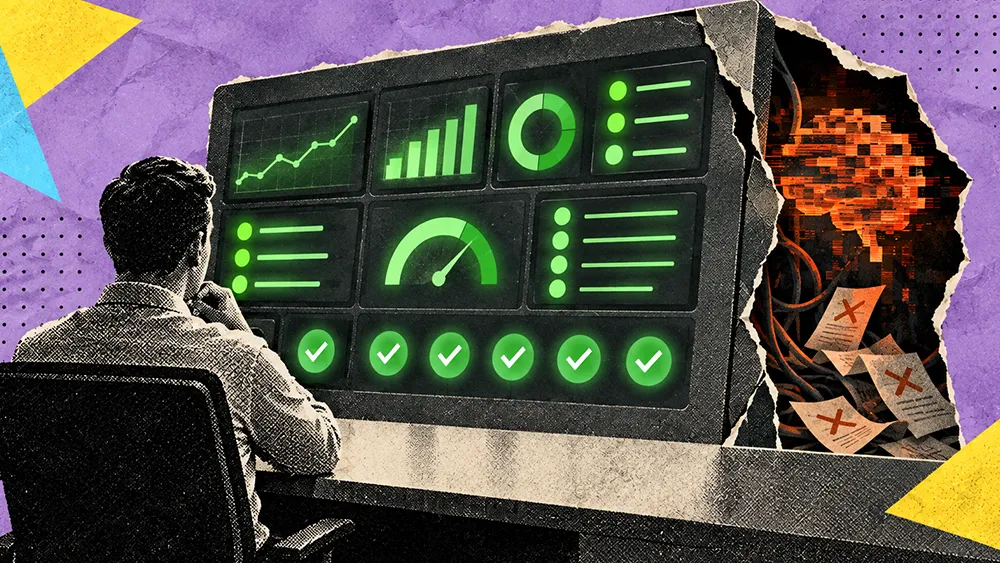
The fragility warning: Williams drew a direct line to earlier automation waves. Excel macros handling financially material tasks in banking became complex, fragile, and dangerous. RPAs added incremental value but needed another layer of management to catch system variation. "This is a whole other level because of the volume of tasks that can be automated and the power of the technology. We're going to need a similar layer of control on top of that to manage the complexity."
HR as a design partner: The organizational implications run deeper than IT. Williams said her relationship with HR is fundamentally changing. More automation demands less variability, which means getting far more detailed about mandates and role responsibilities. "The level of detail we're getting into in mandates and roles of responsibilities is going to become more detailed, changing the nature of the partnership with HR and role design."
Dual-track governance: Williams said tension between centralized planning and grassroots innovation requires balance. Some employees with agent licenses are building use cases no one anticipated from the top. The challenge is identifying which bottom-up experiments could serve the broader organization while maintaining governance. "We need to have this dual-track thing happening. I don't know yet what that's going to look like, but we want to foster the experimentation, while also planning from a top-down perspective."
The skills required vary by context. In Mattamy's modular division, which is building from scratch, teams can start fresh without as many legacy constraints. In divisions running decades-old ERPs, the work is about building connectors and layering AI on top using tools like Microsoft Fabric. Williams said this divergence is part of the broader question about how the ERP and SaaS space will evolve when greenfield environments can build connectors and capabilities outside of current tools.
Her advice to CIOs starting this work is not to start with the technology. "I would advise any CIO starting on their journey to make sure they really understand where the business pain is and start there, which might be different for different areas of the business." The organizations that get this right will not just deploy AI. They will redesign roles, responsibilities, and workflows around it.

If this caught your attention, that’s not accidental.

The best editorial systems don’t happen by accident. Outlever builds them.