
Health Systems Need An Enterprise AI Operating System To Run Models From Deployment To Retirement
As health systems head toward thousands of AI capabilities, Craig Richardville, Chief Digital and Information Officer at UF Health, on the discipline that matters most is knowing when to decommission a model, not just how to deploy one.
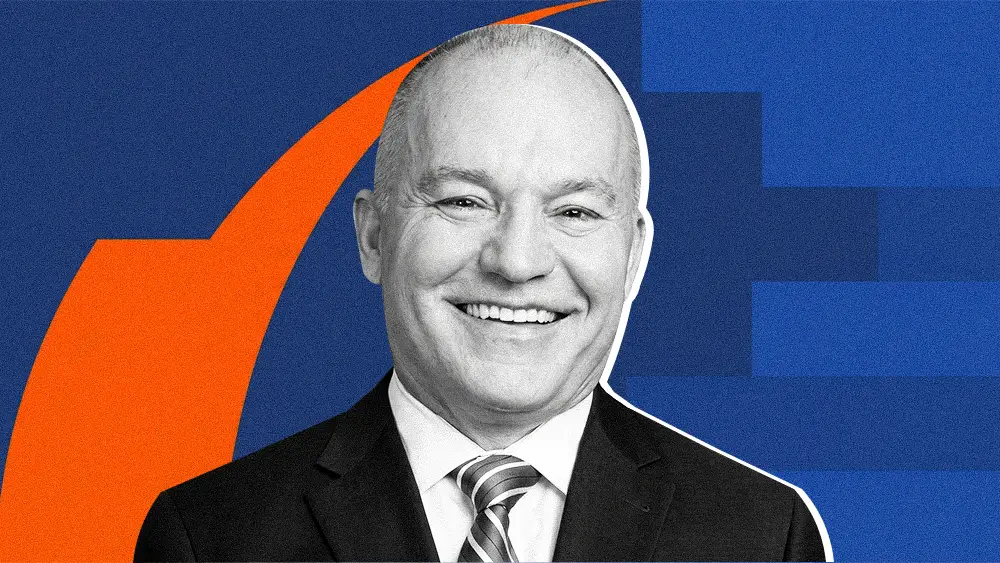
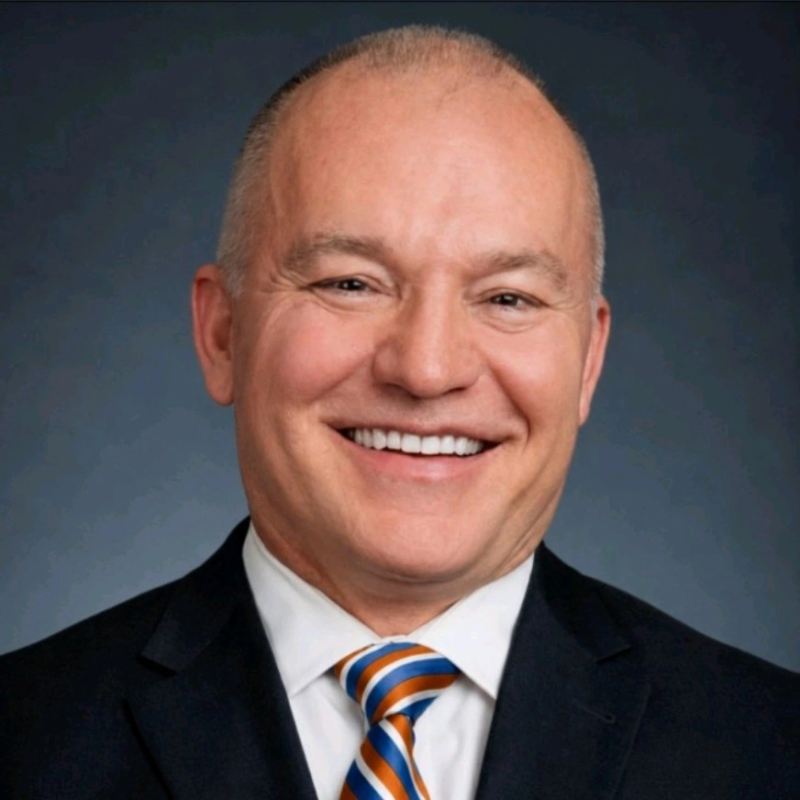
The views and opinions expressed are those of Craig Richardville and do not represent the official policy or position of any organization.
Health systems are on their way to running hundreds, and soon thousands, of AI-enabled capabilities across clinical care, operations, research, and administration. Governing that many models takes more than a policy library or a dashboard. A control plane can govern and orchestrate the assets, but keeping an estate that size healthy over time, deciding what to route where, what to monitor, what to evaluate, and what to shut off, is closer to running an operating system than enforcing a set of rules. That management layer is becoming its own strategic architecture, and standing it up early is what will let health systems scale AI safely instead of chaotically.
Craig Richardville is Chief Digital and Information Officer at UF Health, one of the country's largest academic health systems, where he's moving AI from the lab to the bedside. He previously served as Chief Digital and Information Officer at Intermountain Health and spent two decades as the top information executive at Atrium Health, and was named CIO of the Year by the College of Healthcare Information Management Executives in 2015. His argument now is that the discipline that carried healthcare through digitization has to evolve again for the AI estate taking shape on top of it.
"I believe the next evolution is moving beyond an AI control plane toward what I would describe as an Enterprise AI Operating System," Richardville said. "A control plane helps govern and orchestrate AI assets, but an operating system provides the lifecycle management needed to manage an entire AI estate at scale." He frames the shift as an answer to a scale problem healthcare is about to hit, one where the environment demands continuous operational management rather than one-time governance.
From control plane to operating system: The distinction is about what the layer is responsible for over time. A control plane governs and coordinates assets at a point in time; an operating system runs them across their whole life. "An Enterprise AI Operating System should provide capabilities such as model routing, version control, observability, performance monitoring, management, evaluation, and accountability," Richardville said. That framing lines up with where enterprise architecture is heading, toward governing enterprise intelligence as a coordinated layer rather than a scatter of point controls, and it treats model routing and lifecycle management as work that never really finishes.
Plan for retirement, not just deployment: The part of the lifecycle he keeps returning to is the one almost nobody plans for. Deploying a model responsibly is well-trodden ground; knowing when to take one out of service is not. "One of the least discussed challenges in AI today is knowing when to decommission a model that is no longer creating value, has become redundant, or presents unacceptable risk," Richardville said. "The future of AI governance is not simply deploying models responsibly, it is operating and retiring them responsibly." Treating decommissioning as an ongoing operational discipline rather than an afterthought is what keeps a stale or redundant model from making decisions long after it should have been pulled.
The reason retirement matters so much in this setting is that a health system can't treat a model the way it treats a feature. A wrong or outdated model doesn't just underperform; it can shape a clinical or operational decision with real consequences. That raises the deeper question underneath the whole operating-system idea, which is who answers for what a model does. For Richardville, that question has a fixed answer that the architecture has to be built to protect.
Accountability is the operating principle: Healthcare, in his framing, is an accountability business, and no amount of automation changes where responsibility sits. "AI can inform decisions, but humans remain accountable for decisions and outcomes," Richardville said. The workable model pairs automation with judgment: policy-as-code enforces the standardizable controls, security, access, data usage, auditability, model approvals, and regulatory compliance, while people govern the exceptions, the ethics, and anything touching patient safety. He operationalizes it through ownership, giving every model a business owner, a clinical sponsor where appropriate, an operational steward, and a technology custodian, an approach that mirrors the model registries and documented ownership emerging in healthcare AI governance frameworks and the model cards and registries that health-AI coalitions are now standardizing. "Governance is not about creating another committee," he said. "It is about creating clarity around responsibility."
From systems of record to systems of intelligence: Richardville places all of this inside a longer arc. The last decade of healthcare technology built systems of record, digitizing workflows and consolidating electronic health records into stronger data foundations. "The next decade will be defined by systems of intelligence," environments that predict, recommend, automate, and continuously improve rather than simply document what happened. Because those systems are far more dynamic, he argues, a health system has to be able to trace not just where data came from but how a piece of intelligence was generated, which models participated in a decision, and what controls governed it, the transparency that separates a defensible decision from a black box. Building that capacity to govern AI at scale is what he treats as long-term strategic architecture, not a technology project.
For all the architecture, Richardville lands on the people the system is meant to serve. Technology should be designed with clinicians and patients and used for them, he says, never imposed on them, and he describes UF Health's transformation as clinically and operationally led and technology enabled. "The real opportunity is not simply introducing artificial intelligence into healthcare," he said. "It is creating intelligent health systems where clinical, operational, research, and educational decisions are enhanced by trusted intelligence, governed consistently, and aligned with measurable outcomes." The health systems that get there, in his telling, will be the ones with the discipline to evaluate, rationalize, and retire what they run, not the ones with the largest pile of models.

If this caught your attention, that’s not accidental.

The best editorial systems don’t happen by accident. Outlever builds them.