Key Points

  • Most CIOs are under immense pressure to turn AI innovation into real business outcomes.

  • Janet Lin, Senior Vice President and Chief Information Officer at EQ Bank, explained how today's CIO is responsible for translating AI into clear business impact, guiding cultural change, and building inclusive teams that could adopt new tools with confidence.

  • The approach she outlined filters new technology through industry context, risk, and the needs of customers and colleagues.

The CIO's role is changing once again. Now that the early excitement around generative AI has settled, executives want proof that these tools can deliver real value. But that also puts CIOs in the position of interpreting both the value and the risks of new technology across every part of the business. It's a distinct shift in focus from the pandemic era, when stability took priority over strategy. Today, rather than simply managing technology, the CIO's job is to be a translator between AI innovation and real business outcomes.

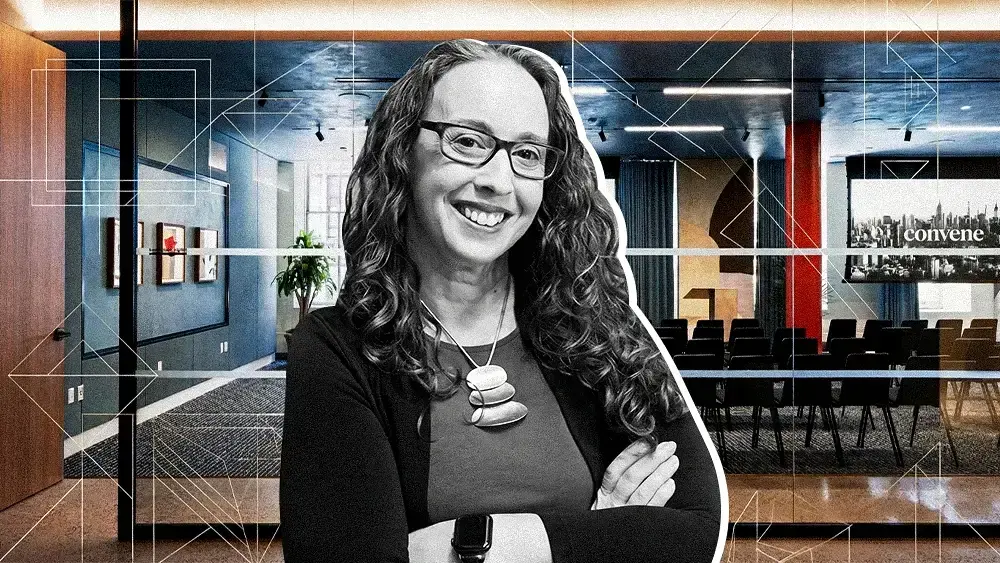
A clear example of how this role has evolved is in Janet Lin, Senior Vice President and Chief Information Officer at EQ Bank. With a perspective forged by over 20 years of experience in technology leadership, her track record, which includes being named one of Canada's Top 25 Women in Tech and leading the launch of the highly successful PC Optimum program at Loblaw, offers clear insight into how to drive innovation within large organizations.

For Lin, the first job of a CIO is to cut through the noise and distinguish hype from usable capability. "The first step is to understand the ‘art of the possible’ with any new technology," Lin said. "From there, you have to translate the high-level hype into what it actually means for your specific industry, your clients, your colleagues, and your internal teams."

  • Guard the goods: But in a highly regulated industry like banking, being a translator also means balancing the promise of innovation against the hard realities of risk and operational constraints. "A CIO’s job is to put controls in place to mitigate risk. This allows the business to capture the benefits of innovation while also protecting itself."

  • Context as currency: And yet, context is everything. Understanding AI is only half the job, Lin explained. The other half is knowing the realities of the sector you operate in. "To be a CIO, you need to connect the innovation happening in technology with where your industry is. I need to understand the broader macro of Canada, the banking industry, and the government direction to drive innovation," she said. "You have to link what the technology can do with where your industry is going so you can make the right decisions for your clients and your colleagues."

The first step is to understand the ‘art of the possible’ with any new technology. From there, you have to translate the high-level hype into what it actually means.

Janet Lin

Senior Vice President and Chief Information Officer
EQ Bank

The next challenge is making that context meaningful to the rest of the leadership team. Even the best strategy will stall if its value cannot be understood by those who are not steeped in technology, Lin said.

  • Lead with the outcome: As a result, Lin sees the CIO’s role as turning complex ideas into plain outcomes that help the organization move in the same direction. "With non-technical leaders, you must speak in terms of outcomes, not technology specifics. The key is to translate the technical details into quantifiable business impact by explaining that a new process can reduce work time by 50% or free up four hours of an employee's day. The focus should always be on the outcome and its impact, not the technique itself," said Lin.

But even the best strategy is useless if the company culture resists it. A truly successful innovation culture must also be fundamentally inclusive, Lin explained, built with and for people from all backgrounds from the very beginning.

  • Excel to excel: To address the natural uncertainty among employees, Lin reframed the conversation about augmentation by comparing it to previous technological changes. "A leader's role is to help the team think differently by explaining that jobs aren't going away, but how we do our jobs will be different. Just as people were concerned when Excel first came out, the reality is that tomorrow's better tools will simply help you do your job faster, creating more time for creative thinking and high-value human interactions. You will always need that human touch and creativity. Those are things AI cannot replace."

  • Inclusive by design: Lin also underscored that innovation culture only works when it reflects the full diversity of the people it serves, noting that every solution should be shaped by a wide range of backgrounds and perspectives from the start. "To me, it is very important that what we build incorporates all backgrounds and all types of colleagues and clients," she said. "Diversity has to be part of the culture if we want the technology to work for everyone."

Ultimately, Lin’s perspective provides a clear model for the future of the CIO role as a strategic partner deeply integrated with the business. For her, the modern CIO's role is one centered on synthesis, translation, and value creation. “As a CIO, you need to connect the innovation happening in technology with the direction of your industry and turn that into measurable results for customers and colleagues," she concluded. "That is the core of the role today."