
Platform Engineering Becomes The Enterprise Control Plane For Employee-Built Software
Surya Jayanti, Director of Software Engineering at Walmart Global Tech, on running separate delivery lanes for professional engineers and frontline vibe coders, and why the semantic layer will outlast any model.

The views and opinions expressed are those of Surya Jayanti and do not represent the official policy or position of any organization.
The customer list for platform engineering just blew up. The job used to mean provisioning systems for cart, checkout, search, and fulfillment teams. Now CIOs are handing AI coding tools to business users, and software is starting to ship from people who’ve never opened a terminal. Platform teams are becoming the control layer between that new development workforce and the production systems it wants to reach.
Surya Jayanti is Director of Software Engineering at Walmart Global Tech, where he leads the Walmart Cloud Native Platform team supporting more than 20,000 developers and 35,000 applications across 7,000-plus Kubernetes clusters. That scale gives him a direct view into how AI-driven development is expanding the platform team’s customer base and turning the discipline into an enterprise control plane.
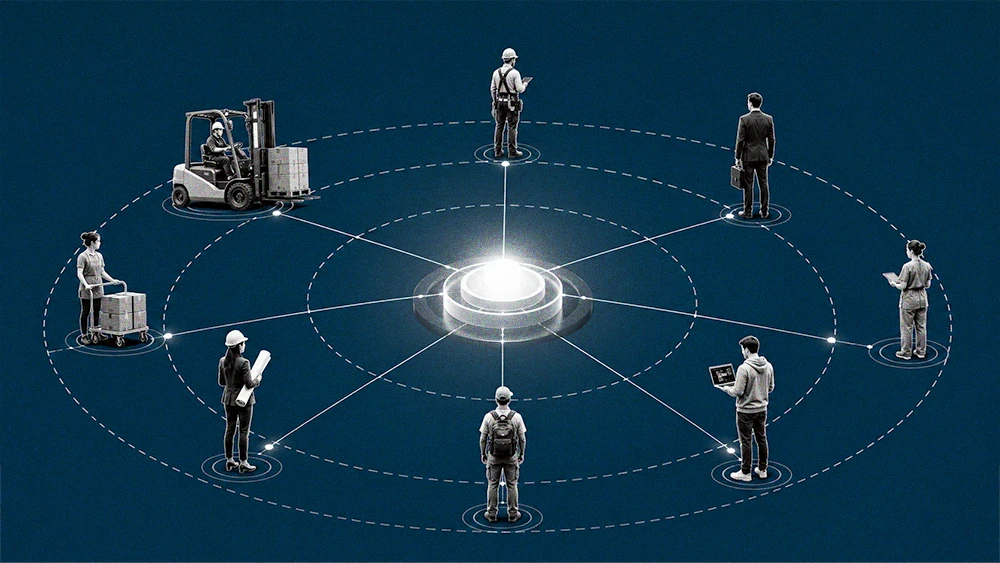
"Historically, a platform engineer was responsible for setting up systems for traditional engineering teams. Now our customers are no longer only engineers; they are vibe coders. The entire company has become our customer, with store managers, club managers, and forklift operators developing their own applications," said Jayanti, with Walmart having spent the past year putting AI tools in the hands of 1.5 million associates.
When operator becomes developer: "Previously, operators knew the problem and consulted the engineering team for a solution," Jayanti said. "Now operators know the problem and the solution. They just need a seamless way to deploy." Engineering value was already drifting toward problem definition. Generative development takes that shift further by allowing the person closest to the problem to build the first version of the solution.
Nobody's vetting the supply chain: But a store manager prompting an app into existence isn't reading dependency lists. "How do you secure the supply chain, that entire stream of packages? The person who is vibe coding may not know much about it," he said. "That's where the biggest challenge is right now." That transfers decisions about runtimes, dependencies, network access, and production data to employees who may not know they’re making those decisions. The platform has to enforce them by default.
His answer: two delivery lanes with risk-matched controls, built so faster experimentation doesn’t weaken the systems already running the business. One lane preserves the full production process for human-led engineering. The other gives business users and AI agents a faster route to deployment, with tighter limits on what their applications can access and affect.
Freedom with a fence: "One lane is where vibe coders have freedom to experiment, but we have governance to control the chaos," Jayanti said. "The second is the production pipeline, your standard, secure way of deploying and testing. We should have a bridge between these two." He pointed to the CNCF's Agent Sandbox as the fence. "I don't expect a forklift operator to know the Python version he should use. He should be free to build, but I should have control on the ingress and egress, in a secure environment where he can't do damage." The distinction becomes more complicated once employee-built applications need production data. Jayanti said both lanes may eventually support real business operations, but they shouldn’t carry the same deployment requirements or blast radius. The platform has to enforce those differences without expecting every new developer to understand the infrastructure underneath.
Ten times the volume: "As a human, you might be doing deployments at significant enterprise scale, but AI, with all these sample apps and pilot apps, might do 3 million," he said. "We have to make sure these two lanes are not interfering with each other." At that volume, governance can’t depend on a platform engineer reviewing every deployment. Controls over dependencies, network connections, and data access have to be embedded in the platform and applied automatically. That's what turns platform engineering from a service for development teams into an enterprise control plane.
The added overhead comes with a much larger prize. In Jayanti’s experience, an agent already handles first-line Kubernetes support across stores, clubs, and clouds, escalating what it can’t fix and using closed-loop validation on what it can. But the broader opportunity sits outside the technology organization. "No IT department in the world prioritizes more than 30 percent of the requirements from frontline operators. The remaining 70 percent gets deprioritized," Jayanti said. "Now imagine they get the power to do that remaining 70 percent. It increases ownership, job satisfaction, and the ability to move faster." In that model, generative development isn’t simply a faster way to build the applications already sitting on IT’s roadmap. It gives frontline employees a way to solve thousands of smaller operational problems that would never make it through central prioritization.
Lane three can wait: A third lane would remove the human from the process entirely. "AI picks the ticket, AI finds the source code, AI fixes it, AI deploys it, AI monitors it. There is no human in the loop," Jayanti said. "I don't think the world is ready for the third pipeline. Once you invest enough in the second pipeline, you are ready for the third." The sequence matters. Before enterprises hand the full development cycle to autonomous agents, they need the controls, evaluation systems, and operational knowledge required to manage the second lane safely. The restraint stands out as vendors put agents at the center of the enterprise pitch and buyers ask who orchestrates the orchestrators.
Model strategy may change much faster. Jayanti expects rising token costs to push more enterprises toward in-house models within 18 months, but the durable investment is the context any model will need. "Don't worry too much about models. Your focus should be knowledge graphs, ontology, semantics. Make it easy for AI to understand your domain, clean up the data, and have the semantic layer ready. Once you make the magic sauce ready, whether you use it in a frontier model or your own model, you will be successful." That semantic layer gives business-built applications a governed understanding of company data, systems, and terminology. It also transfers across models, protecting the enterprise from tying its development strategy to whichever provider leads the market today.
None of this makes the platform job calmer. Jayanti compared the destination to a phone that simply works without requiring its user to understand the chip or camera module underneath. Platform teams absorb that complexity so software creation can spread beyond engineering without spreading the same level of risk. "With the same platform, we're able to achieve more," he said. "More apps are getting created, more value is getting generated, and more success stories are coming out of the places you wouldn't expect."

If this caught your attention, that’s not accidental.

The best editorial systems don’t happen by accident. Outlever builds them.