
Healthcare CIOs Redefine Care Delivery By Aligning Technology With Clinical Workflows
Hallock Yost, Healthcare Technology Executive, on how aligning systems with clinical workflows is transforming care delivery and performance.
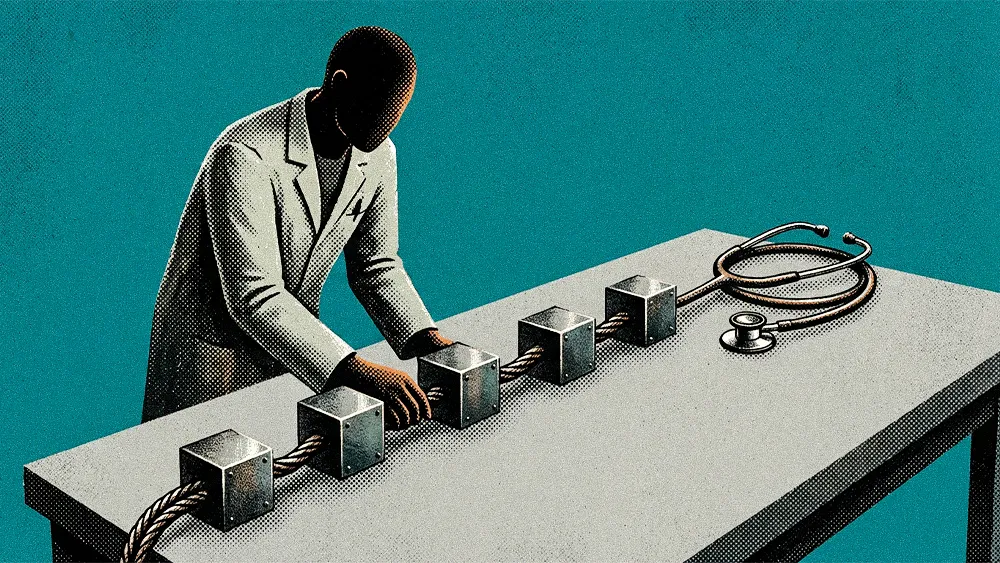

Healthcare CIOs are now directly responsible for how care is delivered, not just how systems run. Every platform decision shapes clinical workflows, determines how quickly patients are treated, and influences outcomes across the organization. In this role, there is little margin for error. Even minor technology missteps can slow care, introduce risk, and ripple from operations into patient safety.
Hallock Yost is a Healthcare Technology Executive who leads large-scale data, cloud, and infrastructure transformations in regulated environments. His work has improved system reliability, interoperability, and operational performance across complex care networks. He believes technology investment must be grounded in how care is actually delivered on the front lines.
"The healthcare CIO role has shifted from running systems to shaping outcomes. Technology now sits directly in the path of care delivery, which means the CIO is designing the digital backbone that determines how clinicians work and how quickly patients receive treatment," Yost said. CIOs have become business partners and even entrepreneurs within healthcare networks.
Boardroom to bedside: "CIOs have become the glue that holds the system together, with far greater responsibility in producing value for the business beyond keeping systems running. Viewed as entrepreneurs, they leverage data to generate revenue opportunities, improve interoperability, and drive enterprise outcomes," Yost explained. The stakes of their decisions extend from the boardroom to the bedside.
Steering the wheel: Understanding real-world workflows is essential. "You have to roll up your sleeves and spend time with clinicians, call centers, and operational teams. You need to understand how systems are operating, where the pain points are, and where improvement opportunities exist. Technology decisions look very different when you see them from the front line," he said.
Systems implemented without understanding frontline workflows can introduce delays in high-acuity situations where speed truly matters. "A lot of it is rolling up your sleeves and actually meeting with the people that are using the systems," Yost added.
In reality: Systems that work technically can still fail in practice. "Simpler implementations are easier to maintain and support, while poorly governed analytics can overwhelm clinicians and security controls that ignore clinical workflows can slow urgent care. Technology decisions in healthcare have clinical, operational, and financial consequences. That’s why testing systems in real-world conditions is critical before scaling," said Yost.
Little wins: "Many regional hospital systems lack the funding or manpower to keep up with current security and technology standards, straining interoperability and directly affecting patient care. Even small improvements in patient engagement, like making it easier to see a doctor or fill prescriptions, can significantly reduce long-term health risks and costs," he continued. Success in healthcare depends on connecting digital tools, integrating processes, and investing in the people who use them.
Healthcare technology succeeds only when it supports care delivery end-to-end. "At the end of the day, healthcare doesn't need more technology layered on top of it, it needs better alignment," Yost concluded. True progress in clinical care comes when technology integrates directly into care delivery, creating measurable improvements for patients and organizations.

If this caught your attention, that’s not accidental.

The best editorial systems don’t happen by accident. Outlever builds them.