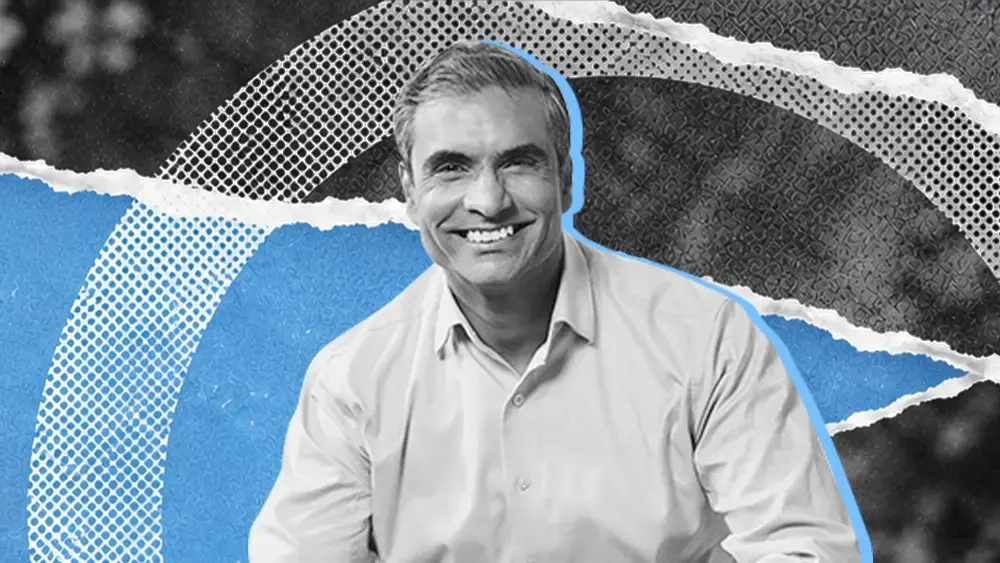
Safe, Measurable, And Sustainable: UF Health’s CDIO On The Importance Of An AI Control Plane
CIOnews talked to UF Health's Craig Richardville about the importance of a digital foundation in healthcare, deciding when to build and when to buy, and the new mandate for technology leaders.

"I increasingly think of AI less as a standalone application strategy and more as a foundational enterprise capability that needs governance and operational discipline, similar to cybersecurity or cloud architecture."

AI is proving once again that innovative technologies rarely seamlessly translate to transformational impact on their own.
AI isn’t just the interface or the underlying model, but a collection of components that must work together. Whether its data governance and access control, or API management and orchestration, each piece plays a critical role in ultimately delivering secure and trustworthy intelligence and automation.
But as organizations deepen their AI investments, the challenge is becoming coordinating across all the different layers. As a result, organizations are increasingly focused on building an “AI control plane” to unify all the previously siloed aspects of the AI lifecycle. While the concept is still emerging, these platforms should combine key elements of architecture, governance, security, observability, and operational management, according to University of Florida Health Chief Digital and Information Officer Craig Richardville.
“The reality is that most health systems will operate in a multi-model, multi-vendor AI environment. The challenge isn’t simply deploying models — it’s creating a trusted operational framework where AI can be introduced consistently, securely, and responsibly across the enterprise,” he told CIOnews. “That’s why I increasingly think of AI less as a standalone application strategy and more as a foundational enterprise capability that needs governance and operational discipline, similar to cybersecurity or cloud architecture.”
Appointed to the role in May after serving as deputy CIO, Craig’s early focus is on how AI can reduce administrative burden, improve clinician efficiency, optimize throughput, strengthen revenue cycle operations, and enhance workforce productivity. This includes initiatives like ambient documentation, AI-assisted clinical workflows, predictive analytics, and operational automation. And success in these internal use cases is vital to advancing to patient-facing use cases:
“Many organizations are still building the governance, trust models, and operational maturity required to scale those broadly,” said Craig. “The organizations that succeed with AI in healthcare will likely be the ones that first operationalize AI internally in a safe, measurable, and sustainable way.”
CIOnews talked to Craig to learn more about the importance of a digital foundation in healthcare, deciding when to build and when to buy, and the new mandate for technology leaders.
Technology as a catalyst for better patient care
The role of CDIO wasn’t necessarily on Craig’s vision board growing up. He was interested in solving complex problems and improving how organizations operate. And technology became the vehicle for that — particularly in healthcare, where tools like AI enable clinicians to deliver better care and help organizations function more effectively.
“I saw how powerful [technology] could be when aligned with people, workflows, and strategy,” he said. “Once I saw the direct connection between digital transformation and patient outcomes and experience, I knew this was where I wanted to focus my career.”
A veteran of the industry for the past 40 years, Craig has been fortunate to witness many of the industry’s biggest IT overhauls. Now, as CDIO of UF Health, Craig’s role reflects both the changing nature of healthcare organizations and the new mandate for technology leaders. It’s no longer just about managing infrastructure, but also shaping enterprise strategy, consumer experience, innovation, and transformation.
For Craig, the goal is to ultimately create alignment between foundational technology operations and forward-looking transformation initiatives.
“Every phase required leaders to evolve. I’ve been fortunate to work in organizations that pushed innovation aggressively while still maintaining operational discipline, and that balance has shaped how I lead today,” he said. “The “digital” component acknowledges that technology is no longer just a back-office utility. It’s central to how patients access care, how clinicians work, how operations scale, and how organizations compete and innovate.”
‘AI maturity depends directly on digital maturity’
The last decade in healthcare was all about digitization. Organizations like UF Health transitioned to digital EHRs, consolidated and integrated new cloud-based platforms, and created common processes. These overhauls often involved pain-staking work, and many organizations have the battle scars to prove it. But while important endeavors — like putting healthcare records online — may have felt like an uphill battle, the foundation is now critical for AI success.
“AI maturity depends directly on digital maturity. AI only becomes scalable when organizations have trusted data, standardized workflows, interoperable systems, strong governance, and modern infrastructure,” said Craig.
Similar to other organizations, the result of the digitization effort for many healthcare providers is data — and lots of it. UF Health is no different. But now armed with “enormous amounts” of clinical and operational data, the next phase is making that data more actionable, intelligent, and real time, Craig said.
“What excites me most is that we’re moving from systems of record toward systems of intelligence — environments where AI can help reduce friction, augment decision-making, improve operations, and personalize care in ways that weren’t previously possible,” he added.
Another major change: Healthcare organizations can start to think about building their own technology in-house, whether that’s proprietary data models or clinically-informed applications tailored to their environments.
“Many organizations are moving toward a hybrid strategy: buy commodity capabilities, partner aggressively where scale matters, and build selectively where the organization has unique expertise or strategic advantage,” said Craig.
From uptime to growth
Key to executing on these goals is partnering beyond just the IT ecosystem. Beyond just EHR vendors, hyperscalers, and cybersecurity partners, for example, technology chiefs also have to work more closely with academic collaborators, startups, and operational leaders, according to Craig. Ultimately, it’s pushing the role of CIO (or CDIO in Craig’s case) from IT stewards to managing enterprise-wide transformation efforts.
“In many ways, the role has become far more cross-functional. You’re sitting at the intersection of clinical operations, finance, strategy, workforce transformation, patient experience, cybersecurity, and innovation,” Craig said. “The conversations are no longer just about uptime or systems implementation — they’re about enterprise growth, operational sustainability, clinician burnout, digital consumerism, and now AI governance and ethics.”

If this caught your attention, that’s not accidental.

The best editorial systems don’t happen by accident. Outlever builds them.