
AI Has Collapsed Code Writing And Moved The Cost To Specification And Review
Kapil Viren Ahuja, Partner and CTO of Digital at Nagarro, explained how AI code generation pushed engineering into specification and review, and how a custom harness, and role-based agents rebuilt trust at enterprise scale.

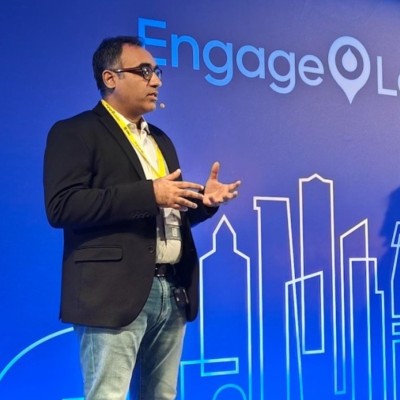
An agent can turn a Jira ticket into nine hundred lines of working code before an engineer finishes reading the requirements. What it can't do is convince anyone to ship it. Someone still has to read all that code, or decide not to, and comprehension debt is what the industry is starting to call the gap between how much software teams produce and how much of it they actually understand.
Kapil Viren Ahuja is a Partner and Director at Nagarro and the firm's CTO for Digital. Nagarro is a Munich-headquartered engineering company with over 18,000 people that builds software for clients in automotive, media, e-commerce, and consumer goods, and Ahuja also runs its Digital Experiences practice. He's been in tech for more than twenty years, and these days most of his attention goes to one question: whether an enterprise can trust what its agents build.
"The speed of writing code has basically collapsed. Engineers now have to spend their cognition either upfront getting the specifications right or afterwards in code review, where everything has to be validated," Ahuja said.
A canyon of cognition: Both ends are expensive. "It's a canyon of sorts. You have to spend a lot of cognition either before or after, and code review is where even more of it lands." Teams point agentic tools at review itself as the market crowds, but confidence lags," said Ahuja. Almost nobody trusts that system to be foolproof enough to say, we'll just let it run and deploy to production." Nagarro's answer is a harness over coding agents like Claude Code or Codex, with playbooks breaking epics into stories and tasks. "You choose the unit of work. A simple login epic, you build the entire epic. A complex supply chain workflow, or a new team member, one task at a time." Reviews shrunk to match, rewarding engineers with real discernment. A year in, he plays at the epic level himself.
Only touch these 20 files: Trust gets engineered through memory. The harness carves a short-term working set from project memory, then checks the boundary. "Short term memory can say only touch these 20 files, which means I can build an eval asking, was a 21st file touched? If it was, my agentic code review tells me the memory is not meeting the eval. We built these checks to increase human trust in agentic coding, so they can say yes, my rules are getting passed."
The design scales into a composable architecture across the SDLC. Role agents, a repository keeper, a project keeper, a scribe, work from shared memories; MCPs run governance and quality gates at the organization level, and skills execute, a pattern platforms now productize. "Everything sits at an organization level of context, and it becomes a hive mind," said Ahuja. "If I go from a Java project to a .NET project, I just point the memory at my .NET standards and the skill stays consistent."
Vibe coding comes back to bite: In Ahuja's view, adoption is harder because the undisciplined path is cheaper. "Most clients are still at, I'll give you Cursor with a budget limit. People get vibe coding really well, and it's light on token usage. The biggest challenge is helping people understand why it's going to come back and bite them in six months." Other CTOs built frameworks after the same lesson. The proof is a benchmark due within weeks, scored on the enterprise lifecycle over puzzles. "It's not like your SWE or terminal benchmark. With vibe coding, you get no connection to Jira for stories and traceability, so your bench goes low. With the right playbook and harness, that's when you see it go up."
Learning through the budget: Juniors get a budget instead of a lecture as the engineer's role shifted. Unlimited budget teaches prompting, while zero budget teaches nothing. "I give them a limited monthly budget. You've got to learn your ropes and learn to use the tool to augment your workflow. The real job is understanding the tool within the context of how they build code."
Production failures traced elsewhere: agents were a data problem before they were a model problem. "The challenge isn't really how you write code. It comes down to runtime, when the user is asking the question. Do you have the right level of methods to pull out the information you need?" asked Ahuja. His memory experiments predated the wave, a video game inspired engine modeling how a user thinks so context gets curated instead of dumped. Hallucination still leaked in. "You get two people with the same name, and there's a fifty percent chance it picks the wrong one. Guardrails become critical."
Regulated industries move slowest, questioning where every byte goes. "If they're working with SAP, Salesforce, or Adobe, they prefer whatever those platforms offer, because they trust them more than something completely custom," Ahuja concluded. "They're willing to pay more to get that level of security, versus another one who wants the quick release to try it out."

If this caught your attention, that’s not accidental.

The best editorial systems don’t happen by accident. Outlever builds them.