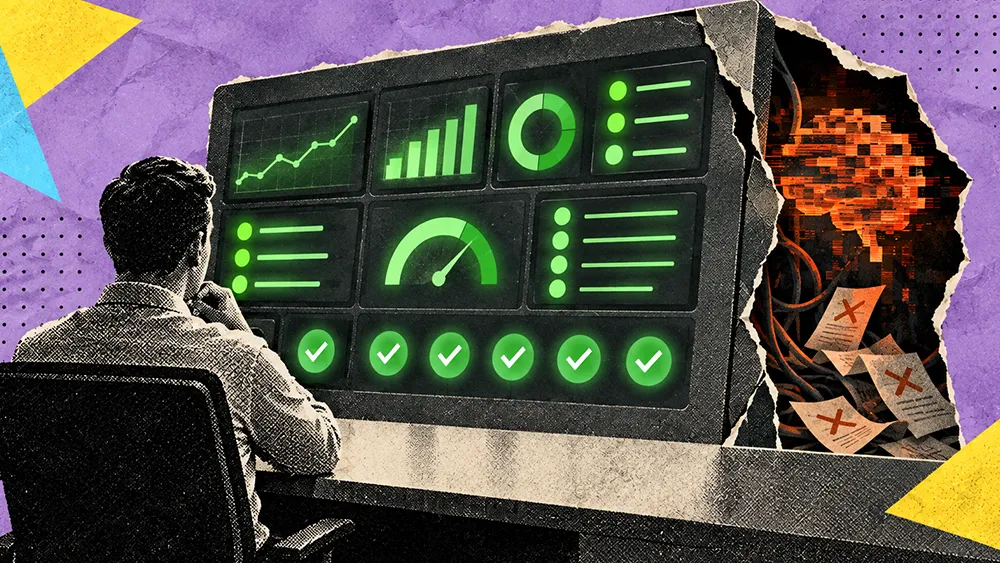
Here’s where we are today: 86% of companies plan to increase their AI investment over the next two years. Only 6% trust AI to handle core business processes. That gap is the CIO’s opportunity.

Three years ago, we were the team they called when the laptop broke. Now, we’re being asked to lead, not just support, our organizations. AI can be transformational for an organization, and you need to be the person who brings that transformation to your organization, not a vendor who met with your CMO, not an enterprising colleague who makes an influential pitch to your CEO. Gartner recently put it bluntly: by 2027, 75% of data and analytics leaders who haven’t established themselves as strategic collaborators in their organization's AI success will lose their C-Level position. This isn’t hypothetical, this isn’t scaremongering, these are the facts. 

I’m lucky to work at a company with a CEO who shares that vision and even pushes us in that direction. Not everyone has that sort of catalyst. But what I want my fellow CIOs to realize is, the longer you wait to lead AI within your organization the harder it will become.

“My fellow CIOs should realize that the longer we wait to lead AI within our organizations the harder it will become.”

Carter Busse

CIO
Workato

You have to get your hands dirty

I’m now a hands-on strategic leader on the use of AI at my company. I, a non-engineer, build agents myself, I’m in the tools, and I’m learning what is possible by doing. Yes, AI represents an opportunity for CIOs to become strategic leaders in our organizations, but, somewhat paradoxically, we must do so by getting hands-on. 

At an exec dinner in Austin, Texas recently, I watched a fellow CIO do a complete 180 mindset shift and build an AI agent in 15 minutes between the main course and dessert. No prep, no previous platform experience. A little friendly skepticism? Sure. But he did it. And this is how it has to be. We as CIOs need to seize this opportunity to lead from the front, get hands-on, and understand what is possible with this technology.

It’s not just CIOs who need this mindset shift. Recently I talked with a CFO who still uses spreadsheets. At his level, he said, he doesn’t need to get hands-on with AI. Nonsense. I told him: let’s get on a screenshare, open Claude, and start talking to it. He pushed back. I pushed back harder. This isn’t optional, I said. You need to get your hands dirty here too. He started listening after that. 

We need to change our own mindsets, those of our fellow c-suite, and most importantly the entire mindset of our organization. The time for AI is now and CIOs must be the ones to control this moment.

What worked for us

Gartner found that 30% of GenAI projects get abandoned after proof of concept due to poor data quality, inadequate risk controls, and unclear business value. The tools work fine but the connection to the real work doesn’t.
Back in April 2025, we gave every employee access to Claude. Usage stayed flat for six months at around 50 sessions a day. While our people had access to the tool, they didn’t seem to see much business value beyond a bit of help with writing.

Then we connected Claude to our systems through a governed MCP. Connecting Claude to Salesforce, Gong, Snowflake, and Slack. Suddenly people could query real customer data and automate their daily work. To support this adoption, we ran internal training sessions and even hosted an employee hackathon (mandatory for all employees) to build something new with enterprise MCP. 

Claude usage went from 50 sessions per day to over 1,000. An 11x increase in employee Claude adoption.

By connecting Claude to the tech and data that our teams need in order to do their jobs, the tool finally became useful. And because we led it, governance was built from the start. Now employees are using Claude (and ChatGPT) with enterprise MCP to do real complete workflows, accessing real data, updating records in core systems, and getting work done much more efficiently.

This is our moment

CIOs have a real opportunity right now. AI is new enough that there isn’t a playbook. Your CEO may not know who should own your company’s AI strategy. Maybe your board is asking questions nobody can answer yet. You can answer them. But you have to learn the tools yourself. I beg of you, do not delegate. Don’t wait for a consultant to tell you what to think. Roll up your sleeves and build something yourself. If you do, you become the person who makes AI work at your company. If you don’t, someone else will.