CIOs Deliver AI Returns Sooner By Modernizing One Workflow Module At A Time
Nithya Subramanian, an independent Chief Data, AI & Digital Transformation Executive, on how modular modernization delivers incremental returns while preparing enterprises for connected AI workflows.

Enterprise AI programs need a delivery plan that produces useful results while the data foundation is still being rebuilt. Breaking a business workflow into modules gives CIOs a way to improve the data and applications behind a priority use case, deliver a measurable benefit, and connect the next step. That approach keeps modernization moving without asking the business to wait years for its first return.
Nithya Subramanian is an independent Chief Data, AI & Digital Transformation Executive and Strategic AI Advisor. Previously, she served as Head of Data and Analytics for Asia, the Middle East, and Africa at Kellanova. Her approach to enterprise AI investment ties each stage of the technical roadmap to a benefit the business can use.
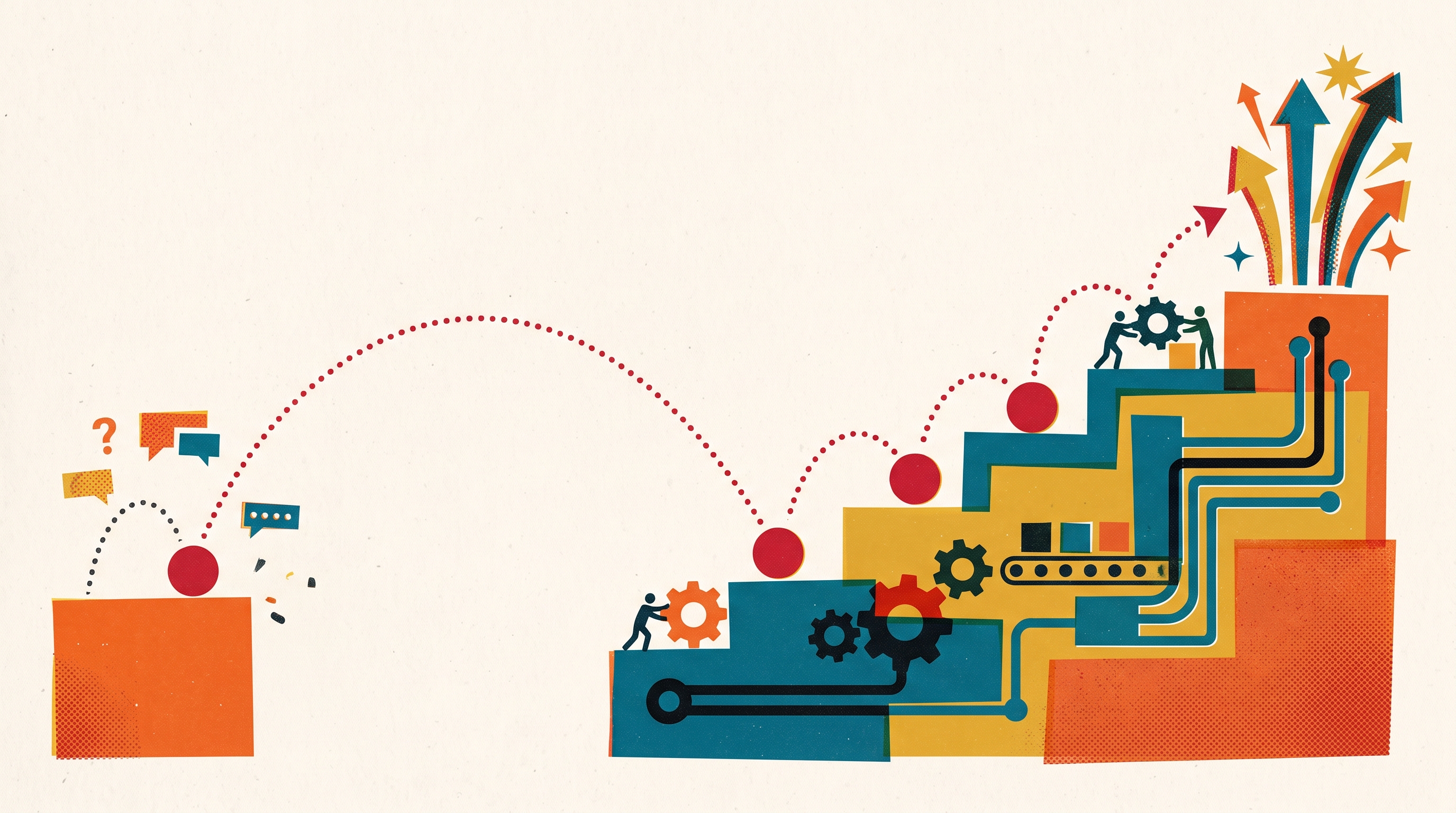
“Some of the high-value use cases don't have to wait until you solve your entire data universe. You can look at that in a highly modularized way,” Subramanian said. The unit of delivery becomes a functioning part of a business process, with its own data requirements and a clear connection to what follows. CIOs also need to make the business value argument specific enough for functional leaders to support the work.
Choose the learning ground: Early use cases shape employees' confidence in AI as well as the investment case. Subramanian recommended selecting problems with meaningful impact and a high probability of success, accounting for talent, storage, compute, and API costs. “Some of these initial use cases are going to be a learning ground for your broader enterprise to learn how to use AI, not only to develop solutions, but also to interact with AI solutions. These use cases should be a way for us to create that broader AI awareness and AI literacy across the organization.”
Follow the handoff: In Subramanian's illustrative retail example, an AI pricing tool still leaves work for a person if someone must copy its recommendation into another system. Connecting it to merchandising requires attention to the data and applications on the receiving side, too. “If you want to automate this further, you want to ensure that the data flows from the pricing tool to a merchandising tool where actual price allocations and decisions are made,” she said. “Since you have solved one module, which is pricing, now you move on to the other module where the pricing data is used and decisions are made.”
Measure each stage: “Rather than waiting for your entire ROI to materialize after five years, which could be the duration to automate your entire workflow, we can have ROI through milestones that you can realize at the end of every year by solving part of the workflows.” Subramanian described several possible forms of return: “You can have productivity savings, savings through more accurate decisions that can reflect on growth in sales, improved market share, or better customer satisfaction or retention.” The measures need to reflect the function being changed. A faster pricing recommendation, for example, needs to be assessed alongside how the business uses it.
Incremental delivery still needs an architecture for the complete workflow. Each module becomes part of a larger process as agents begin exchanging information across functions, so the data improvements made for one use case need to support those future connections. McKinsey's 2026 AI survey found that high performers distinguished themselves through fundamental workflow redesign, leadership commitment, and operational rigor. A modular roadmap gives CIOs a way to sequence that work while keeping the intended business outcome in view.
Keep returns accountable: Boards' questions extend from the financial result to information exposure, bias, factual accuracy, and model drift. Subramanian also described growing scrutiny of AI operating costs, including whether teams choose models suited to particular tasks. “Are we optimally utilizing the tokens? A lot of enterprises, without knowing, are burning a lot of money on tokens,” she said. Usage becomes another cost to evaluate as each module scales, alongside the outcome it delivers.
Build fluency alongside: A multiyear data modernization program also needs room for employees to learn through experimentation. “You need to build that muscle memory within your team while you're working on the long-term roadmap. Let the employees experiment with AI, let them build out some of those point solutions.” Subramanian described different learning needs across the organization: developers and data engineers building solutions, managers designing around them, and senior leaders becoming comfortable making decisions with AI.
That parallel effort gives CIOs two kinds of progress to assess: the business benefit from each working module and the organization's readiness to use what comes next. Experiments need a place in the broader roadmap so that useful early work has a route into the enterprise as the data and platform become ready.
“Some experimentation, some early wins or quick wins, which can later be integrated into your broader enterprise fabric, I think we need to do that as a parallel track,” Subramanian said.

If this caught your attention, that’s not accidental.

The best editorial systems don’t happen by accident. Outlever builds them.