AI data center construction timelines run eighteen months, but the transmission infrastructure needed to power them can take a decade or more to build, creating a structural mismatch that is reshaping enterprise AI strategy from the inside out.
Theodore Paradise, Chief Policy and Grid Strategy Officer at CTC Global, said the gap between digital ambition and physical infrastructure has reached a point where energy availability must be treated as a core business risk, not a background assumption.
He outlined a path forward requiring simultaneous action on three fronts: deploying grid technologies that unlock existing capacity, accelerating regulatory reform, and committing to infrastructure investment at a scale the U.S. has not previously attempted.
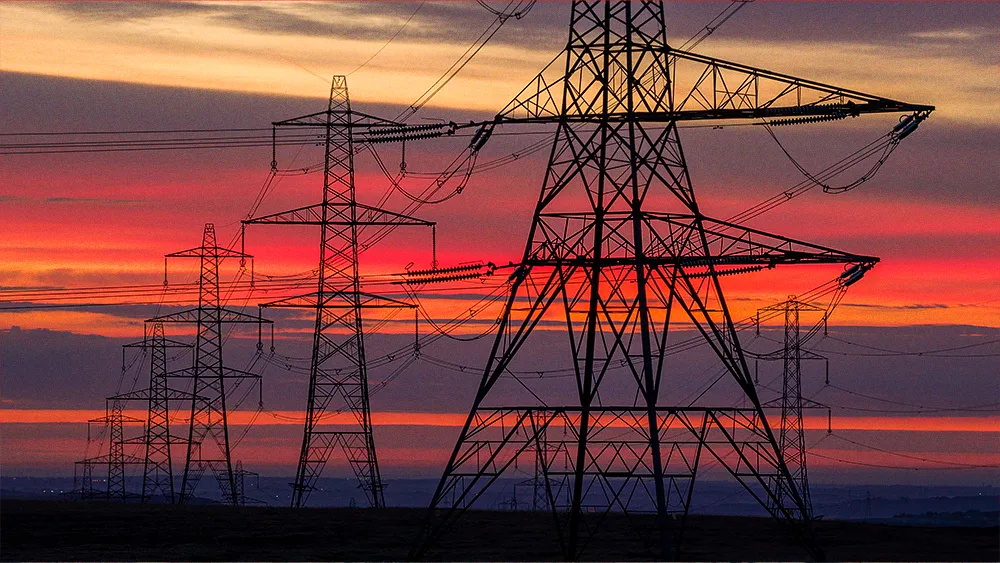
Artificial intelligence is running up against the physical limits of energy infrastructure. Hyperscalers have doubled capital plans to build AI capacity, but they are straining a North American power grid engineered for one percent annual load growth and decade-long planning cycles. The result is a defining bottleneck, a collision between digital ambition and analog reality that is reshaping enterprise AI strategy, national competitiveness, and economic development.
Theodore Paradise, Chief Policy and Grid Strategy Officer at CTC Global, spent 15 years with ISO New England, the region's independent grid operator, before moving into transmission strategy and regulatory advocacy across the private sector. That institutional grounding shapes how he reads the current moment. He said the industry is facing a fundamental reordering, one that forces a return to first principles.
"AI is compute, and compute is energy. For all the grand ambitions and notions, you need energy,” Paradise said. “There’s no version where we didn’t get the energy but we did the AI anyway. That’s just not how it works. We've seen from consumer electronics up to the data center scale that efficiency presses forward, and some of the gains are tremendous, but those are easily outstripped by the compute demands." This reframes a debate that has focused almost entirely on chips, models, and compute, redirecting it to the physical infrastructure technology depends on.
At the heart of the challenge are the mismatched timelines of digital speed and physical reality. The current grid, with many wires dating back to a "mid-1900s vintage," was built for a slow, predictable world. AI demand is anything but. This creates a difficult equation where nearly half of projects already face delays.
The physics of the problem: "You can build a new, very large data center in eighteen months and they're expecting power to be there. But the new transmission needed to interconnect that new power is on a seven- to ten-year-or-longer time frame, a timeline constrained by the physics of infrastructure," Paradise told CIO News. The mismatch is creating a disconnect between what corporations know internally and what they project publicly. While many executive teams understand the challenge, their announcements about multi-gigawatt data center plans can create a misleading perception that power and infrastructure are already secured, leaving core business risk underweighted in enterprise AI planning.
Highway to hardware: This pressure is prompting a radical rethinking of how infrastructure gets built. Where tech giants once signed Power Purchase Agreements to secure their energy source, the focus has shifted to securing delivery. Google's partnership with CTC Global is one example, funding advanced conductors that can double grid capacity in months instead of a decade. "The time needed to get upgrades on the existing grid is pushing large users of power to another set of off-grid resources," Paradise said. "Think of it as we have a highway system, but now we're going to build a whole parallel highway system just for the sports cars. The moment we're in has some of that." But building private infrastructure shifts the financial burden onto remaining ratepayers, impacting everything from manufacturing to consumer electric bills.
The infrastructure bottleneck extends beyond corporate strategy into geopolitical competition. Paradise framed winning the AI race in straightforward terms: having the most compute within your geographic borders, under your control. But that aspiration runs into the same physics constraining every other piece of this conversation, and the investment gap between the U.S. and other nations is becoming another 'have and have-not' scenario.
A $90 billion gap: The U.S. position in the AI race depends heavily on grid investment, but the numbers tell a sobering story. "When you look at what China's doing, investing $90-plus billion in their grid every year, we're not seeing anything like that in terms of U.S. grid investment," Paradise said. The ambition to dominate AI and building the infrastructure required to support it are, for now, moving at very different speeds in the U.S.
Compute flight risk: The consequences of that gap are already manifesting in where hyperscalers are looking to build. "If you can't get the power and resources you need in the United States, hyperscalers will look for where they can," Paradise noted. "This raises the national security issue again. Do you want all your data centers in the United Arab Emirates or in Asia? Or do you want them within your geographic borders?" It is no longer hypothetical, but a live calculation for every major hyperscaler planning its next build.
The infrastructure gap is reshaping economic competition inside the U.S. as much as between nations. States that move fast on permitting, incentives, and grid access are capturing the data center investment and the tax base and jobs that follow. Those that don't are watching opportunities land elsewhere.
State vs. State: "Some states work harder with tax incentives and a more welcoming pitch to get the economic development, while other states are looking at AI as largely a drain that's raising costs, and that is not where the data centers will go," Paradise said. "I think we'll see a 'have and have not' economy develop between states, like we've seen in the past with the change from steel to coal." The states that capture AI infrastructure now are likely to shape their economic trajectories for decades.
From nice to necessary: The same time pressure is changing how the industry thinks about the grid it already has. Paradise describes the existing network as "a tremendously huge and expensive machine," one that, until recently, nobody felt urgency to squeeze harder. "Technologies that get more out of our existing grid used to be a nice-to-have. When you have all the time in the world, you can just build new lines," Paradise explained. "But when you don't have any time, they become a must-have. I think that's one of the big changes we'll see: a real focus on how we rethink this and get more out of what we have already."
Technology alone isn't enough. Paradise said closing the gap on all three fronts simultaneously requires: deploying smarter grid technology, short-circuiting slow regulatory processes, and committing to infrastructure investment at a scale the U.S. hasn't seen before. A recent move from Washington suggests the administration grasps the scale of what's required.
"The Department of Energy's $26.5 billion loan package to Southern Company is an indication of the size, scope, and scale of things starting to change," Paradise said. "It strikes me that this is the kind of bold action that you need to see if we're going to start to make a meaningful dent in any of this." The largest energy loan in department history is a major step, but Paradise offered a pointed reminder of just how much pressure is already waiting on the other side of it. "There are users of that infrastructure already lined up around the block," he said.