Back To the Future: Hartsfield–Jackson Atlanta International Airport's CIO On Rebuilding Travel With AI
“We treat AI like any other technology. We have a process in which we vet any technology that comes to us, so AI goes through the same governance process."

The future of air travel looks a lot like its past.
Today, many passengers are accustomed to security checkpoints, liquid restrictions, and requirements to remove large electronic devices for screening. An entire industry has even emerged around helping travelers avoid some of these hassles.
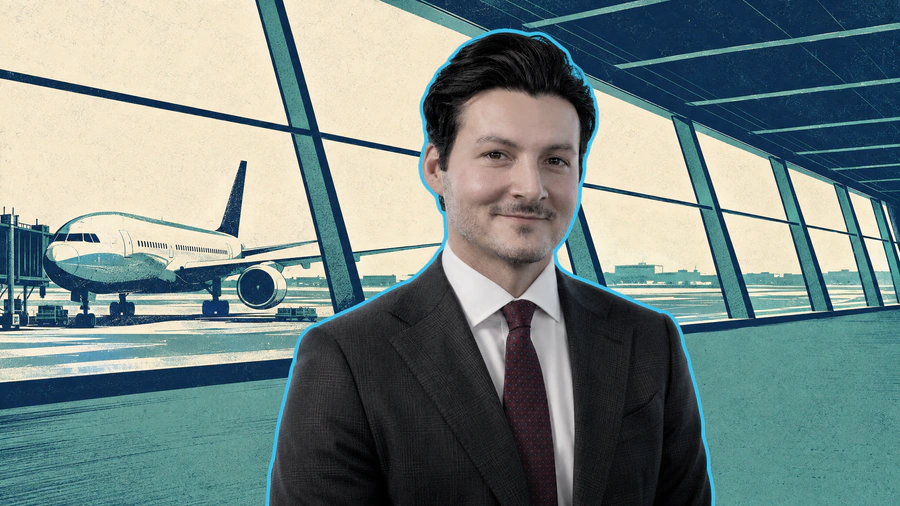
But 25 years after the September 11 terrorist attacks ushered in an era of heightened airport security, AI and other emerging technologies could make it possible for passengers to get from the curb to their gate without stopping, according to Hartsfield-Jackson Atlanta International Airport CIO Chris Crist.
“It’s going to allow us to get back to how things were pre-9/11,” Chris told CIOnews.
The world’s busiest airport, ATL accommodates over 300,000 travelers a day—as many as 110 million a year. And for a growing number, getting to their seat on the plane is becoming much easier. Instead of standard security checkpoints, ATL has incorporated “e-Gates” at certain lanes, allowing for eligible passengers to be automatically recognized. Once recognized, a gate automatically opens. No TSA agent interaction is required. The system handles identification and alerts TSA agents only when additional inspection is needed.
ATL is also using AI to empower security professionals to use natural-language prompts to analyze feeds and surface intelligence from thousands of cameras, such as finding specific individuals by describing physical characteristics or attire. The AI-enabled overlay helped improve response times by 75%, said Chris. Investments in AI and bio-recognition technology also reduced the screening timeline for international arrivals for U.S. citizens by 54%.
“Thankfully, we’ve been able to show a very obvious return on investment,” Chris said. “A lot of what we get to do with AI is very practical. It has a practical, tangible use case in our organization and impacts people in real time.”
A Problem Of Priority
These use cases didn’t reach scale overnight. Chris and his team faced technical, organizational, and cultural challenges they had to solve.
For example, inundated with proposals for new IT projects, it became difficult to know which to prioritize for maximum impact. To remedy the problem, Chris and his team brought all the necessary stakeholders together. After several hours of debate, everyone left with a deeper understanding of their colleagues’ IT priorities. Now, discussions over prioritization are based on need, not want.
“It taught the whole organization how tech influences all of the departments,” Chris said. “At first it was a bit contentious. But there is rarely any contention anymore these days.”
Those discussions formed the basis for the company’s governance committee. Composed of the CFO, CMO,head of human resources, and other executives, the group is tasked with approving and prioritizing IT investments. Every proposal goes through a rigorous process in which sponsors have to outline real-world impact, cost, and other important considerations. During this process, new applications or systems are also tested for safety and security.
“We treat AI like any other technology. We have a process in which we vet any technology that comes to us, so AI goes through the same governance process,” said Chris.
To spur more excitement and engagement, Chris’s team is also hosting listening sessions with employees across the business to understand how work gets done on a daily basis. Following these discussions, the team then surfaces potential opportunities for technology to improve or automate the processes.
Just The Beginning
ATL is both upgrading IT infrastructure and maximizing existing investments. For example, the new AI security overlay analyzes feeds from thousands of existing cameras. Working with the airport’s security chief, Chris’ team leveraged the existing infrastructure footprint to more quickly demonstrate a return on investment.
“I can’t stress how important it is to have a strong business advocate for your technology,” Chris said.
And to support the growing number of AI use cases, ATL built out its own on-premises digital infrastructure with GPUs—a growing trend for companies that need to protect sensitive proprietary information and prioritize low latency. But even with powerful AI hardware, performance issues kept occurring. Eventually, Chris’s team discovered the problem: GPUs use more power than traditional CPUs, and the machines were overheating in the enclosed room—a problem solved by distributing the hardware across several different points on the campus.
“We realized when one of our technicians went in and it was 110 degrees,” Chris said.
ATL’s journey to bring back flying’s past is evidence that successful AI transformation requires more than new IT purchases. Educating employees on best practices and creating a culture where business and IT teams collaborate on use cases makes sure AI is more than just a flashy new technology.
“This is just the beginning,” Chris said. “We’ve made a lot of mistakes. But we want to serve as an example for airports around the world.”

If this caught your attention, that’s not accidental.

The best editorial systems don’t happen by accident. Outlever builds them.