Orchestrated Within Policy, AI Agents Clear Bottlenecks Without Sacrificing Control
Vinod Kartha, Chief Operating Officer at CyberProof, on how policy-bound agents empty the queues that slow enterprise IT without widening the risk surface.

An agent can investigate a threat or clear a routine IT request faster than any human team. The friction shows up where that speed meets the parts of a company built to move slowly: approval queues, governance committees, and analysts who are still building trust in a model's verdict. Speed only converts into value when the workflow around the agent, and the people in it, get rebuilt so the agent does the work and a human keeps the decision.
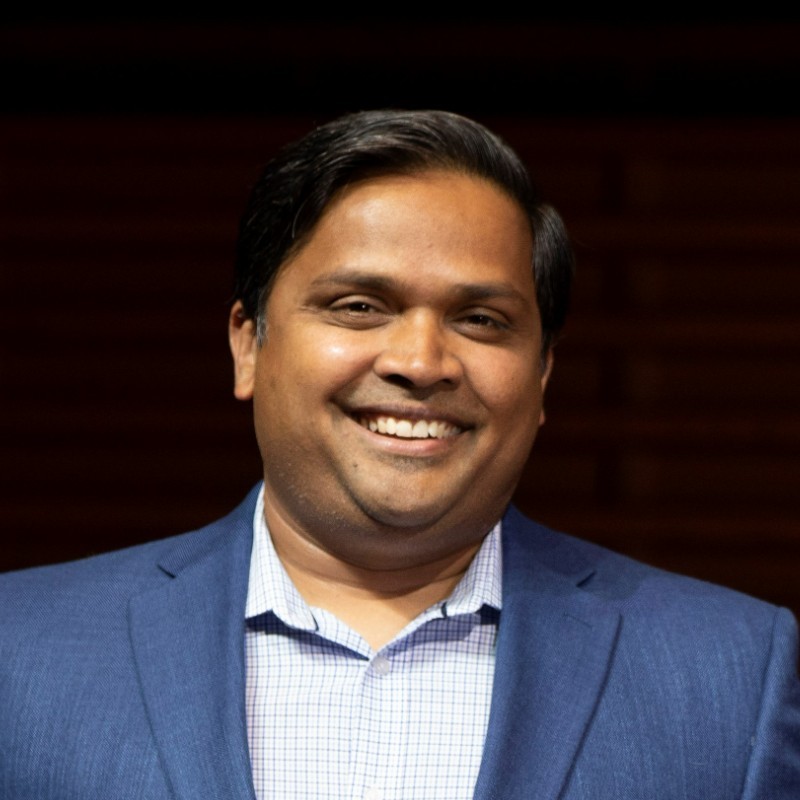
Vinod Kartha is Chief Operating Officer of CyberProof, UST's platform-enabled cybersecurity company, and also runs operations across UST's broader cloud and infrastructure services. He spent five years at Visa leading launch operations for its digital payments products before carrying transformation mandates through UST's growth to tens of thousands of people. That range, from a global security operations center to internal IT plumbing, shapes how he reads agentic AI.
"The agent's ability to take a decision has to be a journey," Kartha said. "It cannot be that on day one it has full autonomy." Two years of pushing agents into CyberProof's own operations and its customers' have turned on that one idea: widen what an agent is trusted to decide slowly, and only once the evidence backs it.
People before platforms: The hardest part is behavioral. "The most difficult piece is people changing behaviors," Kartha said. He runs CyberProof's own SOC as customer zero, unwilling to ask a client to adopt agentic operations without proving it on his own floor first, and the resistance he met there was human rather than architectural. Analysts measured their worth in ticket volume, and a system that changed the scorecard, and raised the fear of being automated away, made the work feel harder before it felt easier. Up to 70% of change programs fail on exactly that kind of resistance. CyberProof's sharpest move was structural. It deliberately restricted analyst visibility so analysts couldn't independently validate an AI decision.
Open by design: The orchestration layer was built to sit on top of any customer's stack, not a single vendor's. "The moment I'm limited by a certain stack, it limits my use cases," Kartha said. For regulated customers, the architecture has to respect where data is permitted to reside and how it may be accessed. That means agents need to operate within the customer's approved security and data boundaries rather than forcing the customer into a particular technology stack. Securing how those agents reach the tools they need (the SIEMs, the EDR systems, the ticketing platforms) is its own layer: a dedicated security partner builds the guardrails around agent-to-tool communication so each agent does only what it's scoped to do. Turning policy into an enforced architecture is increasingly where agent governance is won or lost.
Decisions stay human: "Attackers are increasingly using AI to operate at a speed and scale that human-only defenses can't match," Kartha said. "You can't defend against machine-speed attacks with human-speed operations." So CyberProof's threat-hunting agent identifies the relevant actors, runs the hunts, and opens a ticket for a human, without validating or fixing anything itself. "A manual threat hunter would take three to four weeks to produce that report. We close the whole loop in under 15 minutes." High-impact changes initially stay behind human approval. As the evidence establishes reliability, specific low-risk actions can progressively move into controlled autonomy. That progression is what keeps agents from stalling between demo and production.
Deciding how much an agent may decide isn't only a technical judgment. It's an organizational one, and that's where the harder negotiation happens. "The buyer is the CISO, but the moment you go internal, the CIO comes in, legal comes in, HR comes in," Kartha said. The AI policy often sits with the CIO or a chief AI officer rather than the security leader who wanted the capability, and the consortium that forms around responsible use can cap autonomous servicing well below what the technology would allow.
Autonomy is earned: The technical side of earning that trust is gradual. CyberProof starts risk-averse, with the agent investigating while a human submits every action, then lets the data make its own case. "Nine out of ten times, what the agent recommends is exactly what the analyst decides," Kartha said. "That's when it becomes a candidate to automate." A spike in overrides sends the question back to governance, because it means one of two things: the agent is hallucinating, or the process has a gap that needs a wider boundary. Human checkpoints over delegated decisions are what let that confidence grow instead of curdling into blind trust.
The drag isn't unique to the SOC. Kartha wears a second hat across UST's cloud and infrastructure services, and from there the same bottleneck looks plainer. The slow part of enterprise IT is almost never the decision itself but the wait in front of it, and most of what clogs a queue is already governed by a policy someone wrote down. That's the part an agent can take.
Collapsing the queue: A storage or budget request can sit for a week or two because it waits on someone whose day job isn't tickets. "The actual action takes five minutes," Kartha said. If the request already carries a manager's approval and falls within policy, an agent can clear it on behalf of IT governance with a clean audit trail of why, work he puts at roughly 50% to 70% governed by existing rules. The queue empties, the service desk never touches it, and the same cost and control discipline that governs a SOC carries over to routine IT.
What keeps all of it honest is constant checking. "No matter the stage of AI, we need to check the checker," Kartha said, pointing to at least 10% sampling and a security layer that flags any agent reaching past its boundary. The value, in the end, was never the tool. It was redrawing the work around it.
"Every role spends its time on Excel and follow-ups," he said. "AI is what lets you do what you were hired to do in the first place."

If this caught your attention, that’s not accidental.

The best editorial systems don’t happen by accident. Outlever builds them.