


2026 CIO
Benchmark Report

Sponsor's perspective
This is the moment CIOs have been asking for. We're no longer the team people call when their laptop breaks. We're in the room where strategy gets made, budgets get allocated, and the future of our companies gets decided.
The data in this report confirms what many of us are living: we feel that our role as CIO has grown in the last year. And that we have gained influence as AI investment increased.
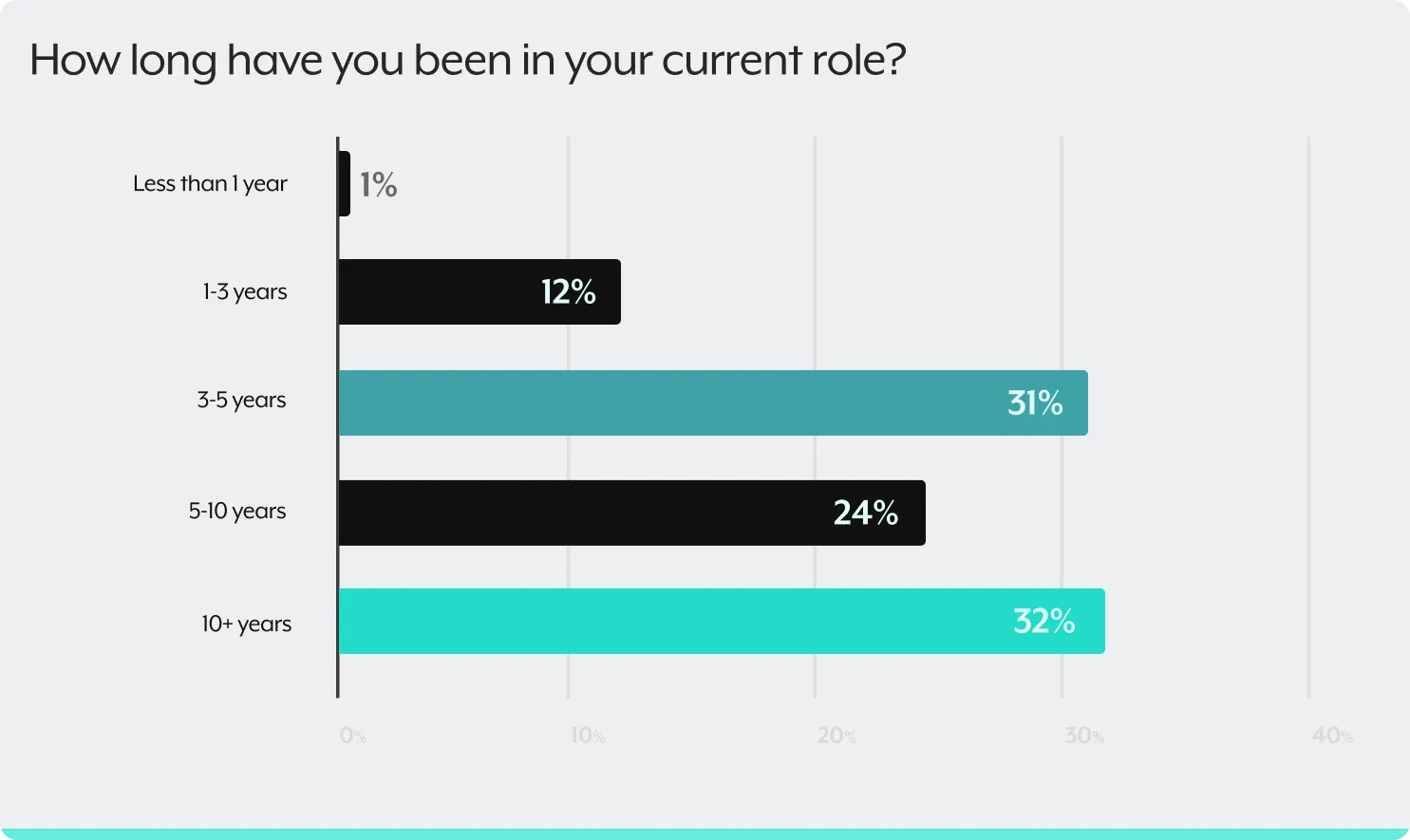
This research surveyed 182 IT leaders at companies with 1,000+ employees, including 150 CIOs. These aren't new voices either, nearly two-thirds have been in their roles for over three years, with a third holding their positions for more than a decade. This is an experienced group with deep organizational knowledge.
But here's what the numbers also show: we're at risk of squandering this opportunity. This research shows we have the mandate and the budget. What we don't have is time. The window to establish ourselves as strategic leaders won't stay open forever. If we can’t consolidate the chaos, unify orchestration, and build the foundation that lets AI actually work, someone else will figure it out.
This is our moment. Let's not waste it.

Carter Busse
Chief Information Officer, Workato

Introduction:
The CIO’s defining moment
As AI transforms every industry and function, and IT budgets continue to grow, technology leadership has moved from the periphery to the center of business strategy.
A recent survey of CIOs found:
78%
Say their role as a leader has grown in the last year.
58%
Expect their budget to increase by 5%+ in 2026.
Business and technology have always evolved in tandem, but AI has made technology inseparable from strategy. It has elevated the CIO from back-office IT steward to executive leader with growing influence over their company’s trajectory. CIOs are not only in the room where it happens, they have a seat at the table that didn’t exist for them five years ago.
To be a CIO, you need to connect the innovation happening in technology with where your industry is going.

Janet Lin
Senior Vice President and Chief Information Officer, EQ Bank
The CIO role has become so indispensable that organizations can’t afford to scale it back: only 2% of CIOs say their role as a leader reduced slightly in the last year and none—not a single person—said their role reduced significantly.
64%
Report to the CEO.
79%
Gained influence as AI investment rose.
76%
Meet with their boards at least quarterly.
45%
CIOs are meeting with the board more often than they did two years ago.
This is the seat at the table CIOs have always asked for. You either champion this, or you get out of the way.

Stacey Moore
CIO, Flock Safety
But this authority comes with its own challenges. CIOs risk squandering their moment if unresolved IT issues derail their progress. Technical debt, skills shortages, and siloed integration systems are creating barriers that could undermine their newfound influence.
While one side sees limitless potential, the other is grounded in the complex realities of execution. This creates a natural and dangerous friction.

Sangita Tripathi
AVP and Head of Integration for the Americas, L’Oréal
68%
say technical debt from past integrations is keeping them from successfully scaling AI.
85%
say that data complexity and silos are a barrier to delivering AI impact.
Drawing on independent survey data, this report charts the transformation underway in the CIO role, the obstacles threatening it, and what it will take to cement their place as strategic leaders.
Everything’s coming up CIO
Momentum is building for the CIO
As the race to integrate AI intensifies, CIOs have moved to the center of their organizations.
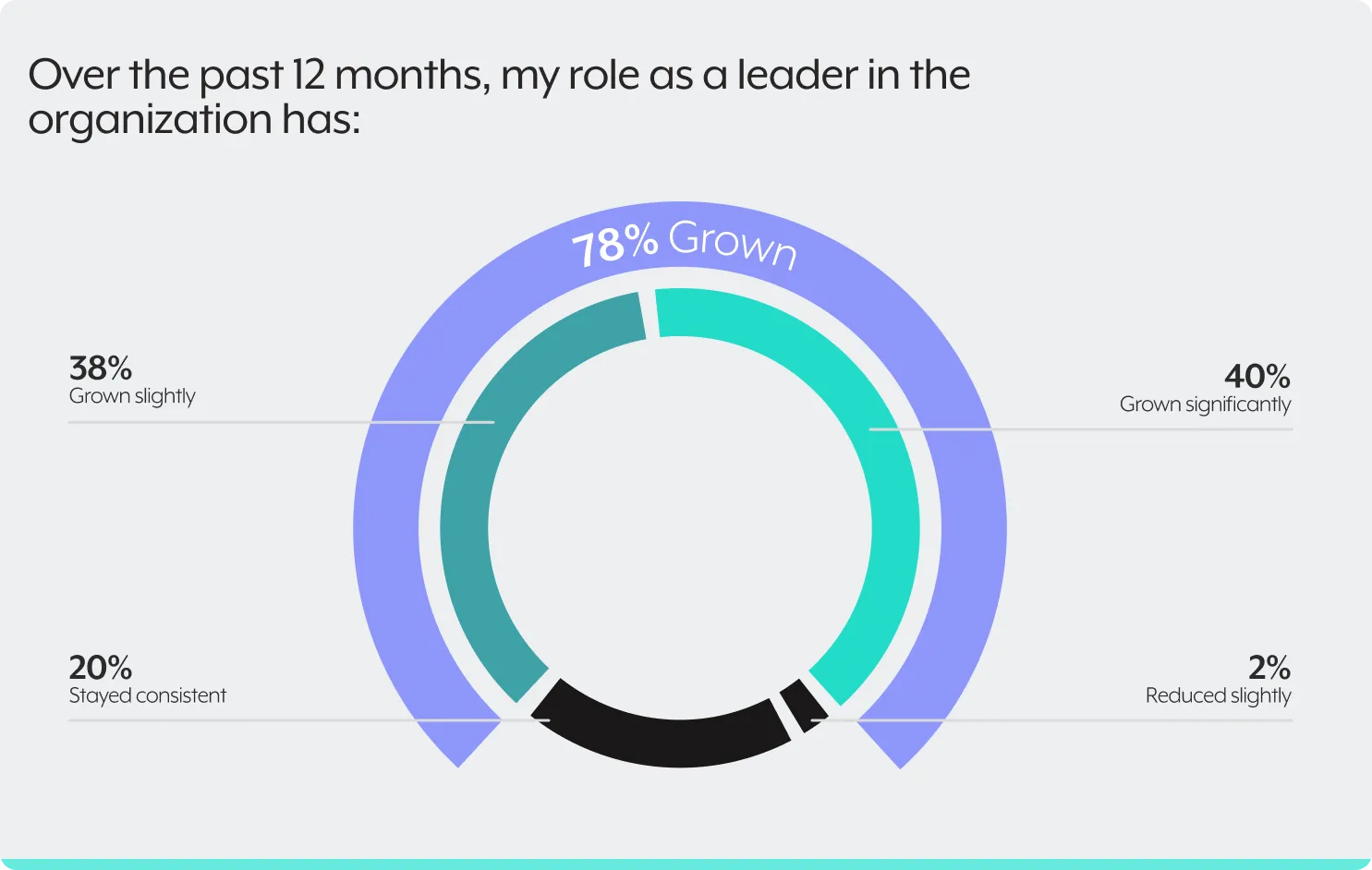
More than three-quarters of CIOs (78%) saw their role as a leader in their organization grow. Only 2% saw it reduced slightly, and none saw it reduced significantly. Momentum for the CIO is building fast, and their influence is only growing. The trend is unmistakable.

CIOs are strategic partners
CIOs are redefining their identity as they move into leadership roles. No longer confined to IT management, the majority (53%) see themselves as strategic advisors, trusted business partners, or change agents.
Most telling is how AI has reshaped the CIO identity.

One in five CIOs identify primarily as AI leaders.
CIOs have a seat at the leadership table
Today’s CIOs operate in the inner circle, working alongside senior leadership to set company direction.
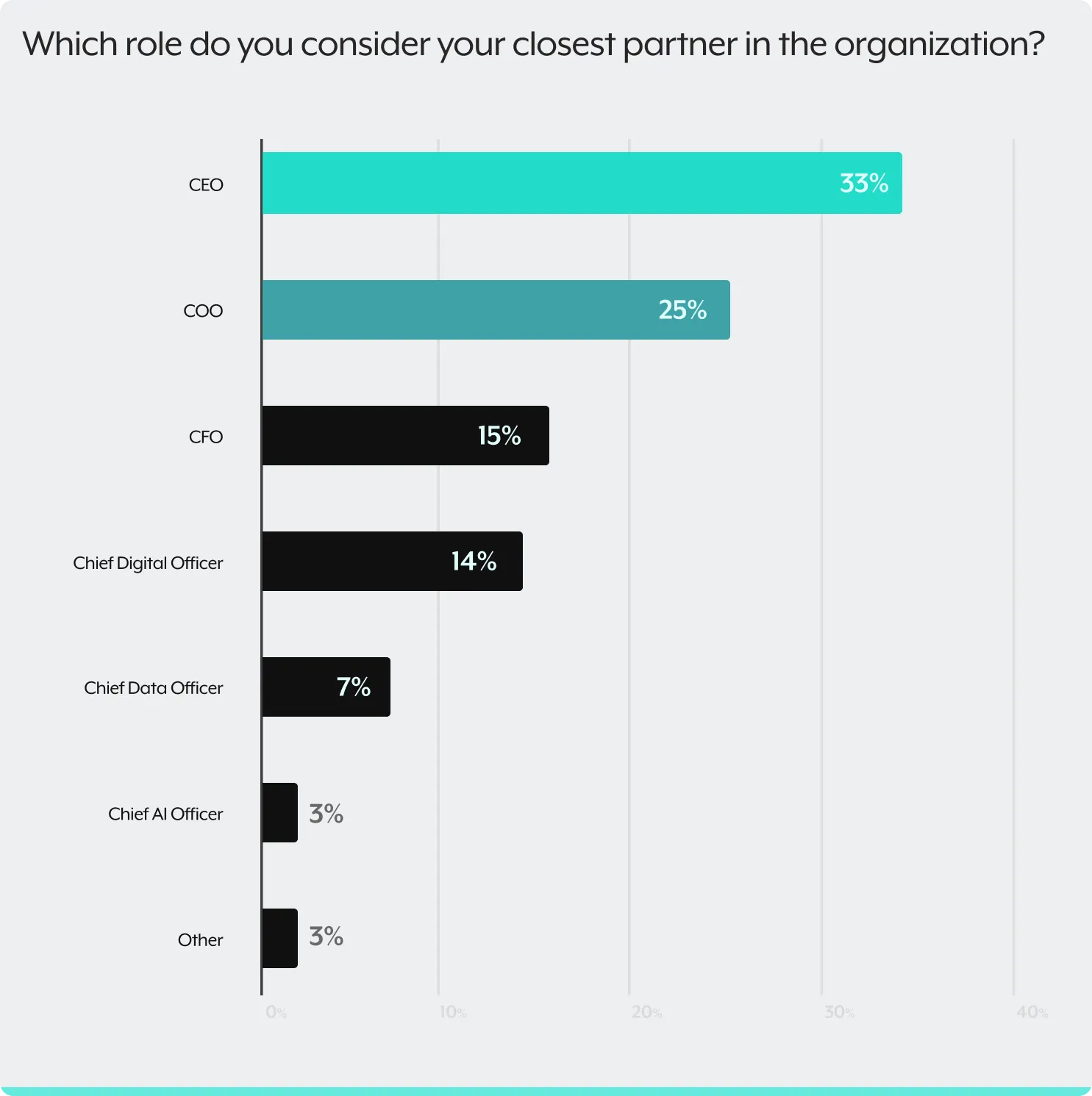
One-third of CIOs consider the CEO as their closest partner in the organization, while another quarter align most closely with the COO. Their board access tells a similar story, reflecting their proximity to decision-making: 76% of CIOs meet with their boards at least quarterly.
45% of CIOs are attending more board meetings than two years ago.
Only 2% reported less facetime with the board.

Budgets reflect the CIO’s rising influence
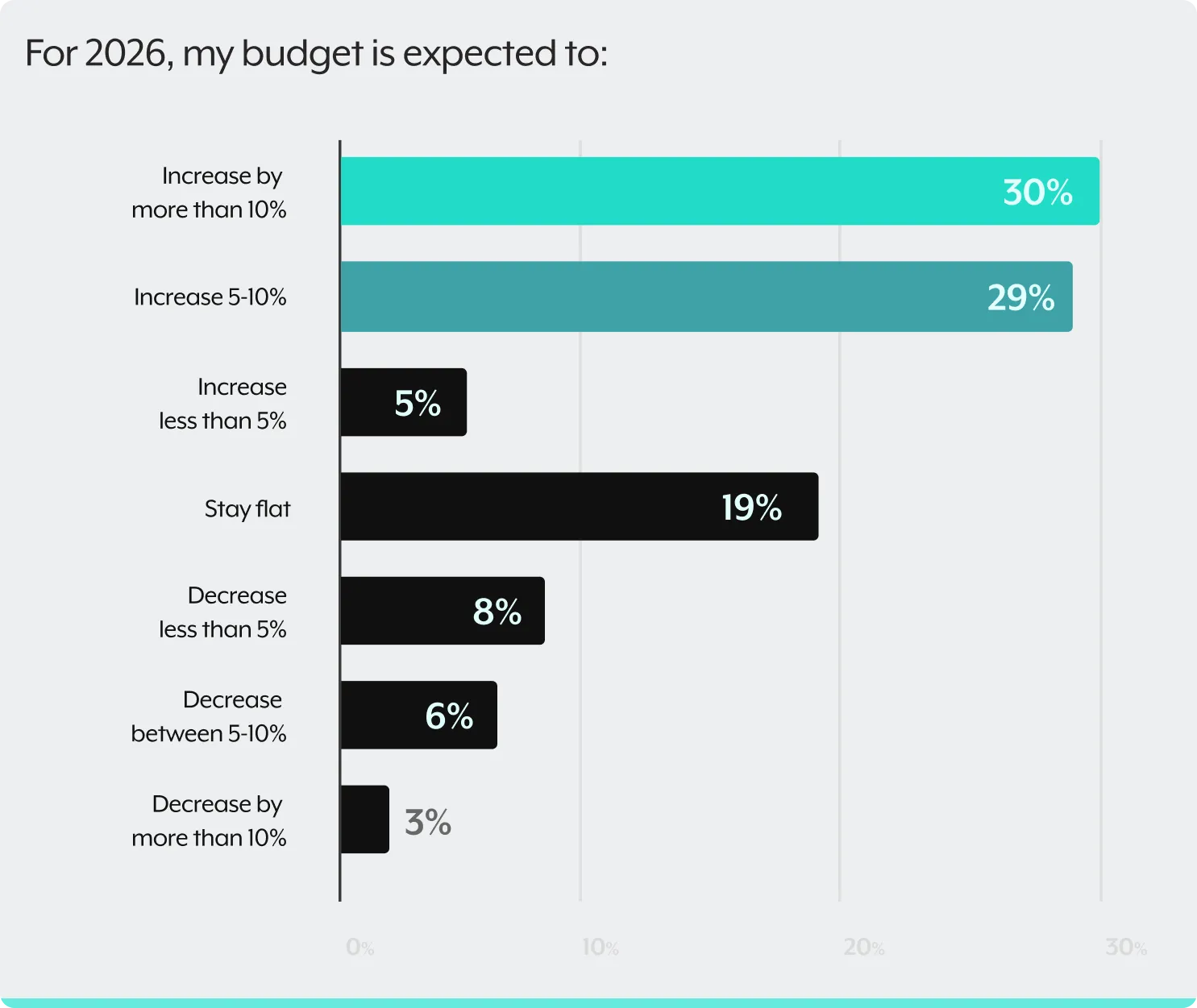
Despite belt-tightening across the tech sector, the majority of CIOs (63%) expect their budget to increase in the coming year.
And budget growth (specifically for AI) directly translates into more authority for CIOs.
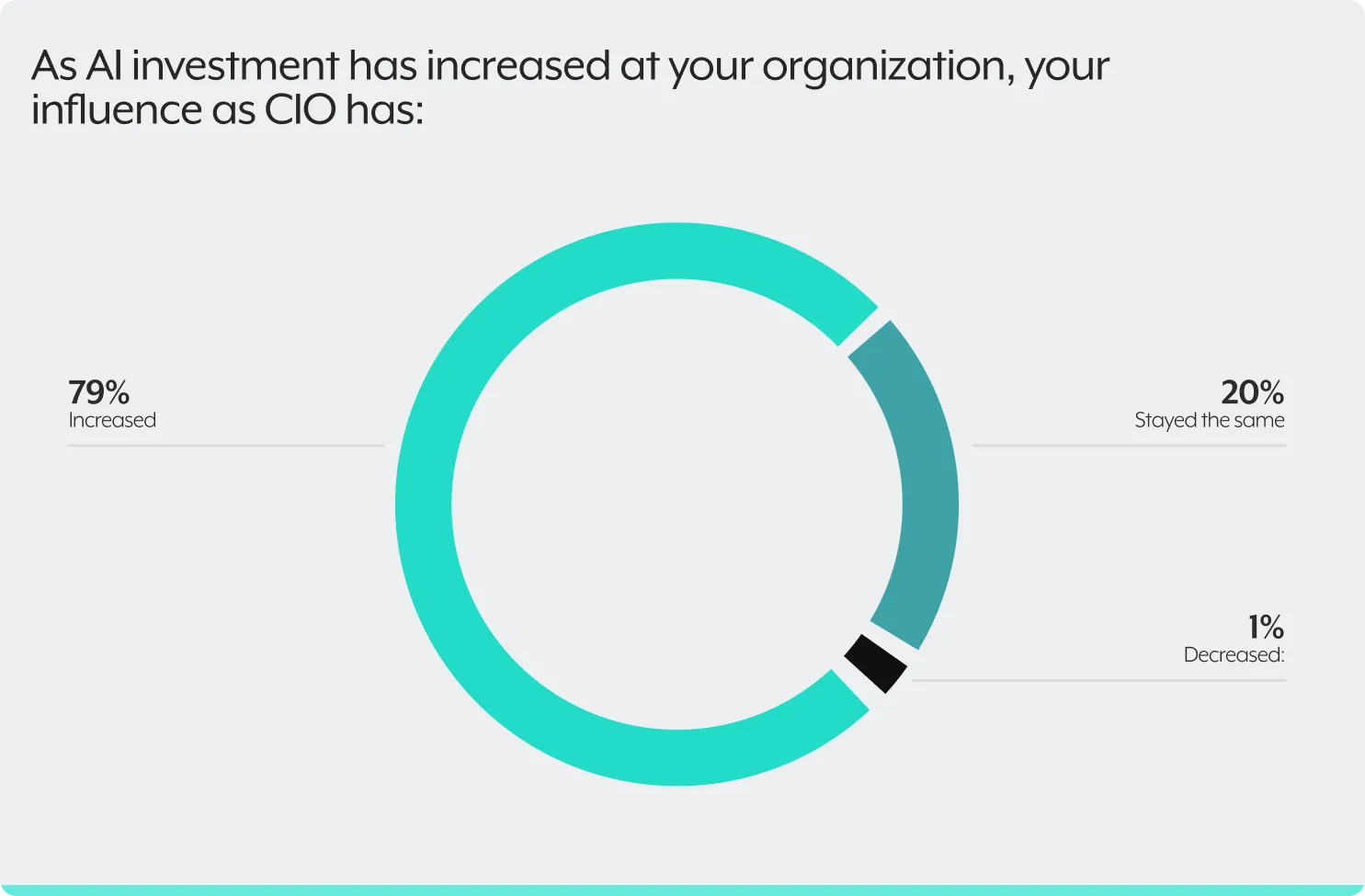
CIOs own the AI mandate, and it’s reshaping how their organizations see them.
But delivering on AI requires first addressing the fragmented infrastructure standing in the way.
The best advice I give to everybody, and what we've tried to do at Yum!, is really start with the business problems first, not the technology. Try to understand what the opportunities are, what the payback is, how hard they are to achieve, and then apply the right technology.

Cameron Davies
Chief Data Officer, Yum! Brands
5 benchmarks on challenges facing CIOs in 2026
Technical debt threatens to undermine the gains CIOs have seen. They’re constrained by too many tools, too much complexity, and too many silos to implement the unified AI solutions their organizations demand.
Extracting value from data
Few CIOs describe their data capabilities as excellent:
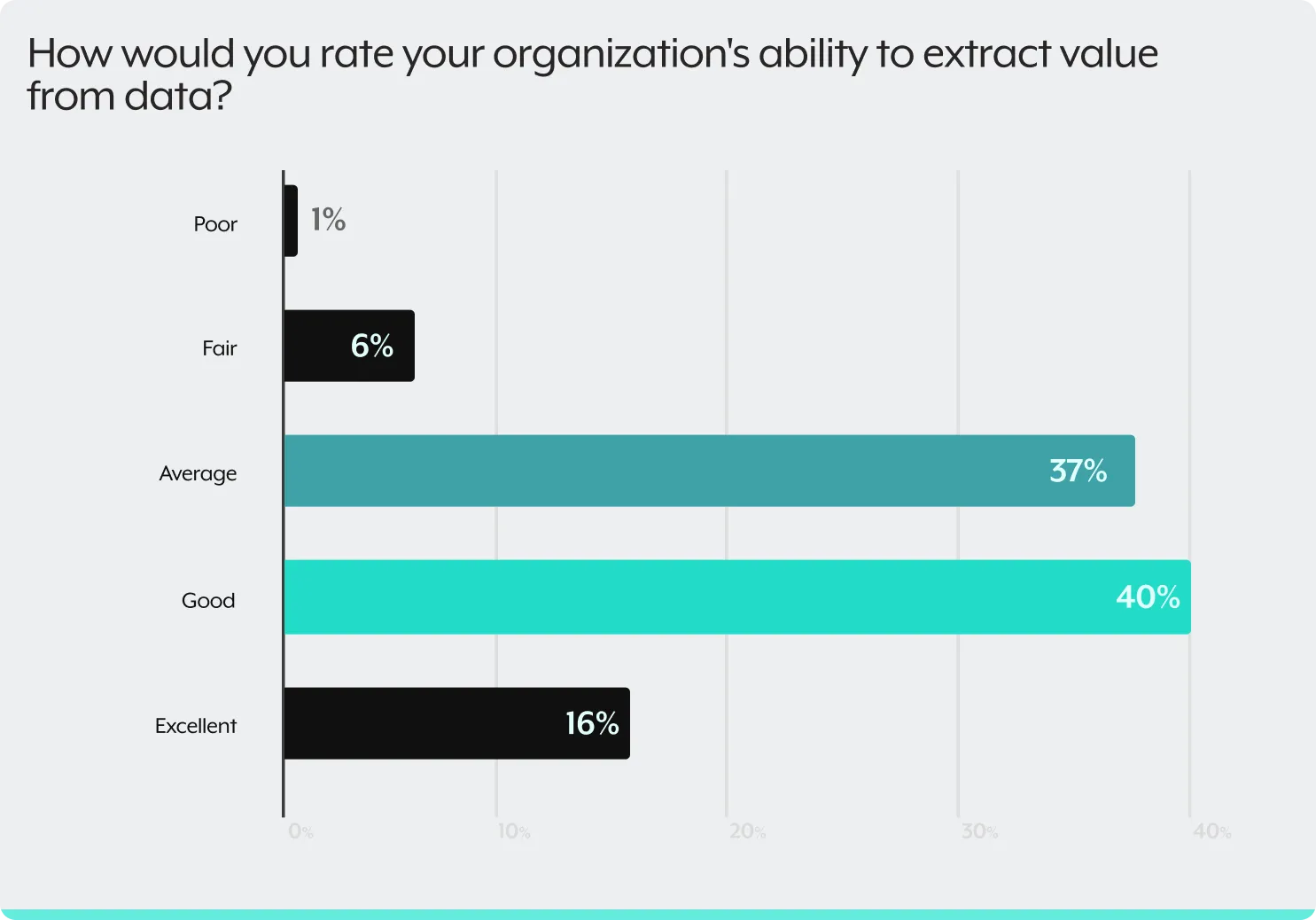
More data hasn’t translated into more insight for CIOs. Only 16% rate their ability to extract value from data as excellent, and 44% rate their ability as average or below. CIOs can only realize the opportunities of AI if they have the data foundation to support it.
Taming app sprawl
Application sprawl shows no signs of slowing.
Sixty-nine percent of organizations added 10% or more SaaS applications in the last year. With large organizations using up to 625 applications, the integration burden compounds quickly, pulling CIOs away from pivotal AI initiatives and back into tactical IT work.

Tackling integration fragmentation
To keep up with application sprawl, organizations have amassed a disconnected collection of integration platforms.
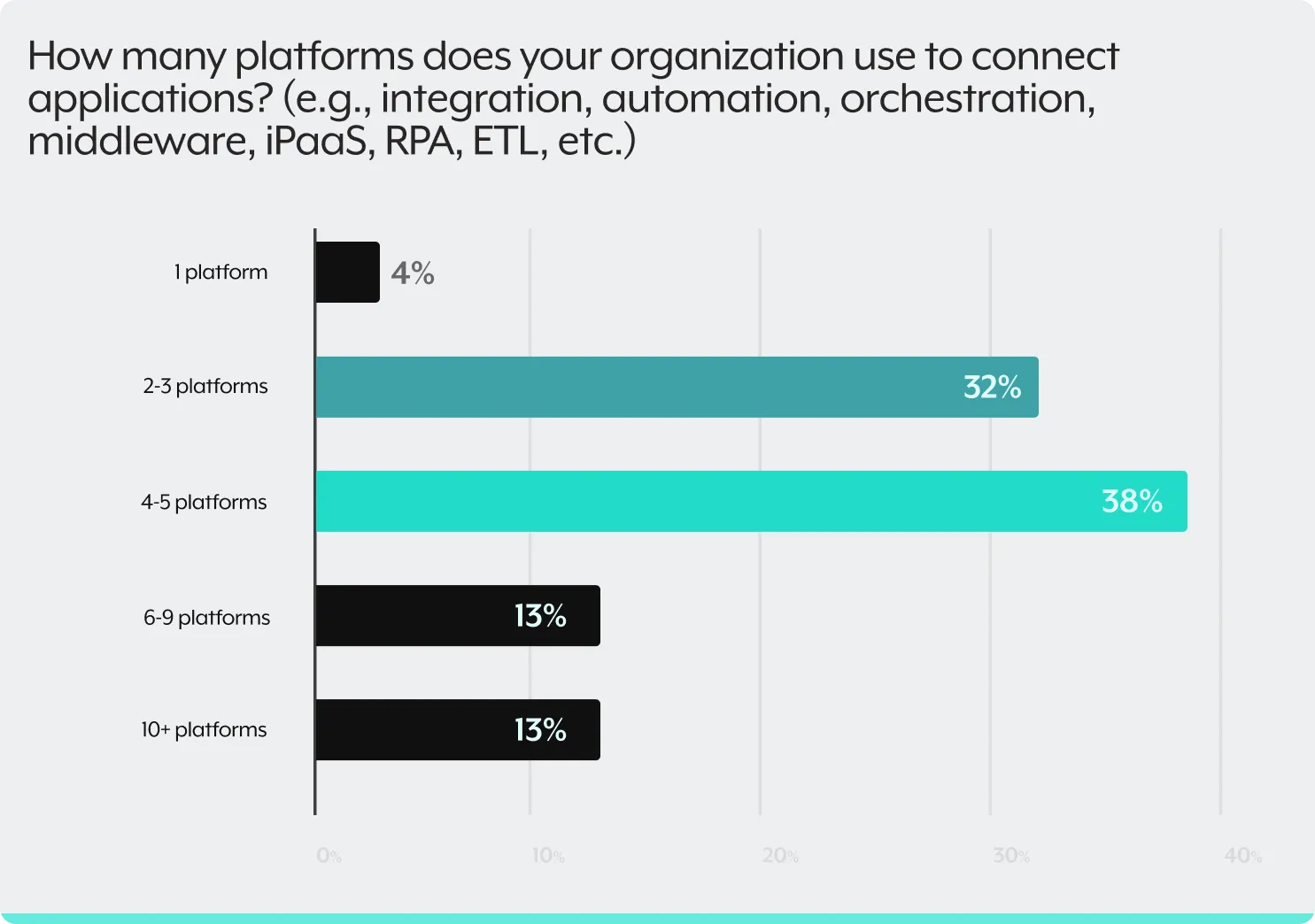
Nearly two-thirds (64%) of CIOs juggle four or more platforms just to connect their applications, and each one demands specialized expertise to manage.
Every disconnected integration platform pulls us back into tactical IT work when we should be leading transformation. We can't build the agentic enterprise on fragmented infrastructure.
Carter Busse
CIO, Workato
Upskilling
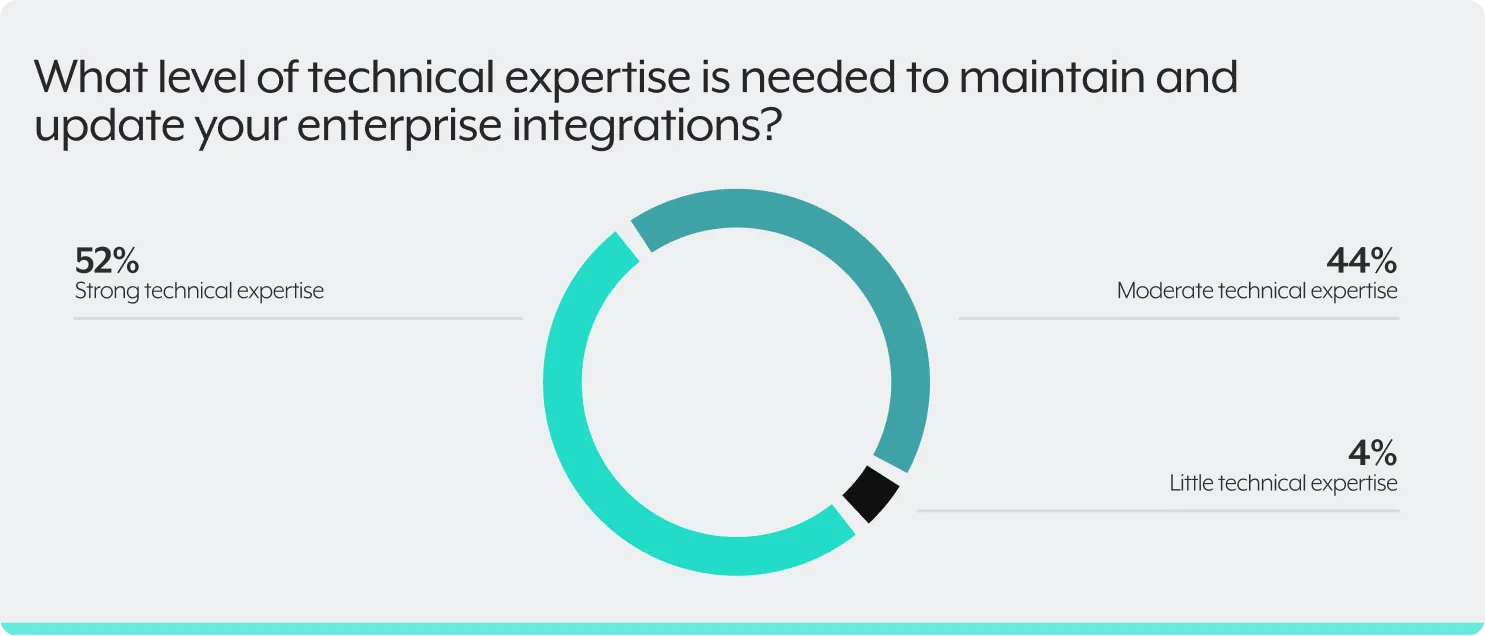
That expertise is hard to come by. Nearly all (96%) organizations require at least moderate technical expertise to maintain their integrations, creating a tenuous reliance on scarce and expensive talent.
Integrating AI
CIOs recognize the stakes and realize their fragmented infrastructures cannot handle the seamless integration agentic AI requires.
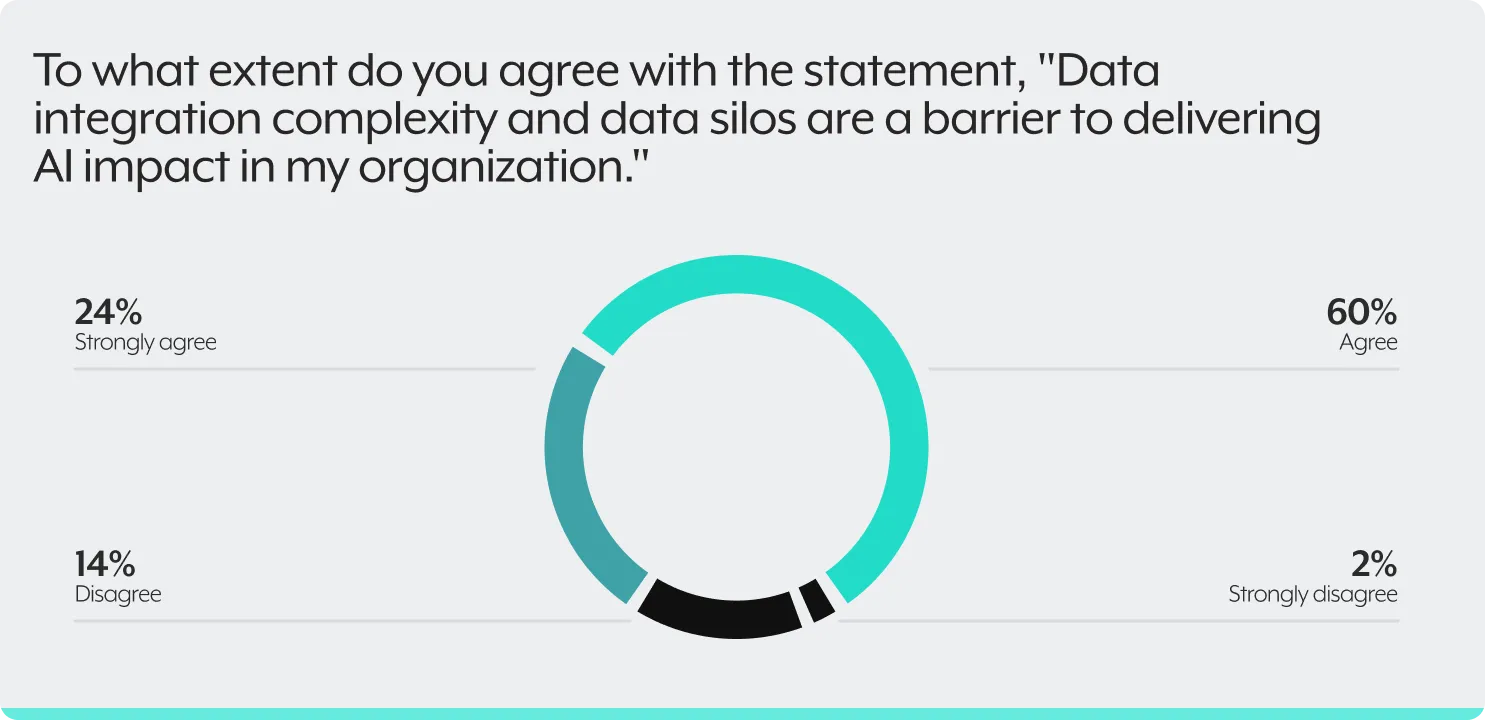
For 85% of CIOs, data integration complexity and silos are blocking AI impact and undermining the biggest initiatives in their organizations.
Technical debt isn’t just an IT problem anymore; it’s now blocking the foundational AI work that defines today’s modern CIO role. But the path forward exists, and it starts with simplification.

The opportunity is clear, the path forward is not
CIOs have gained unprecedented influence. Seventy-eight percent report their role has grown, 79% gained authority as AI investment increased, and 64% now report directly to the CEO.
Integration fragmentation is the barrier to delivering AI transformation and cementing the strategic role of the CIO.
Sixty-eight percent also say that technical debt from past integrations is blocking AI scaling. Eighty-five percent cite data complexity and silos as barriers. And 64% are managing four or more integration platforms just to keep their apps connected.
CIOs have earned their seat at the table. Now they need to secure it by solving the infrastructure crisis blocking their path. How organizations approach this challenge in the coming year will determine whether CIOs maintain their seat or lose it.
Demographics and methodology
To complete this research, independent research firm User Evidence interviewed 182 CIOs (or equivalent title) from companies with more than 1000 employees.
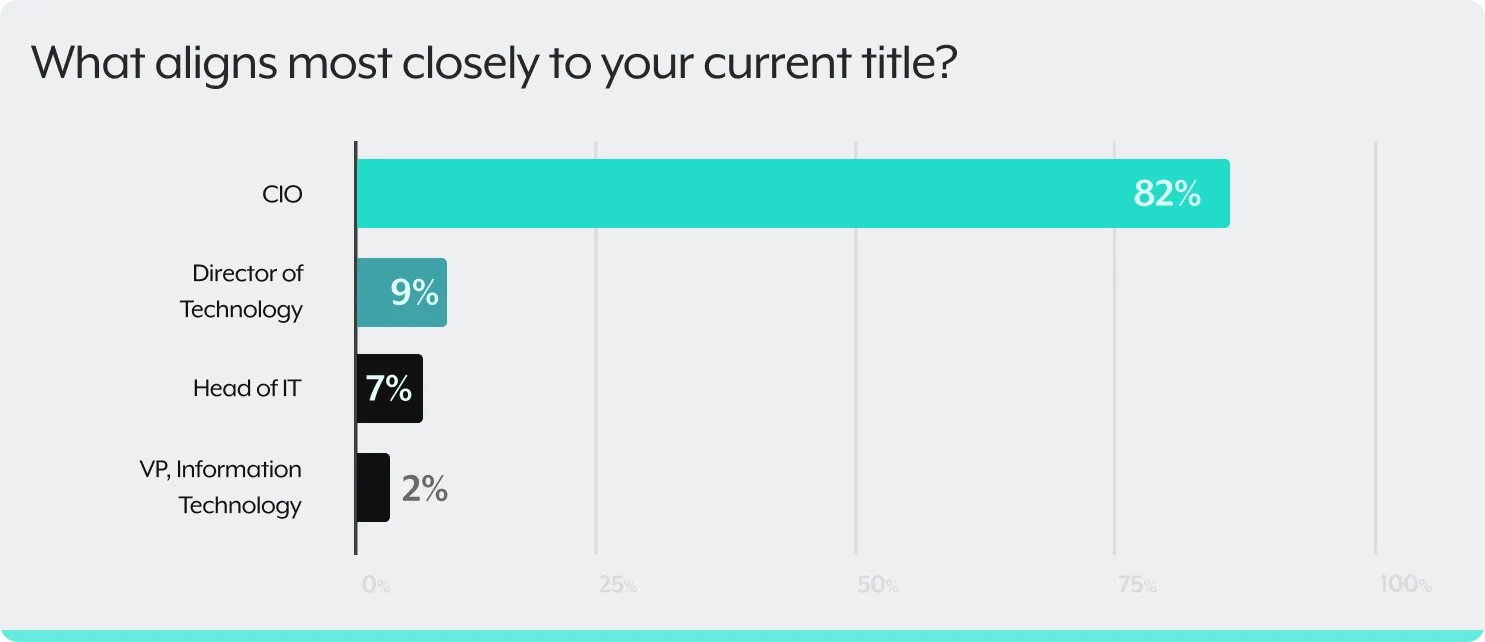
Respondents’ job titles were overwhelmingly CIO, but there were some other comparable titles.
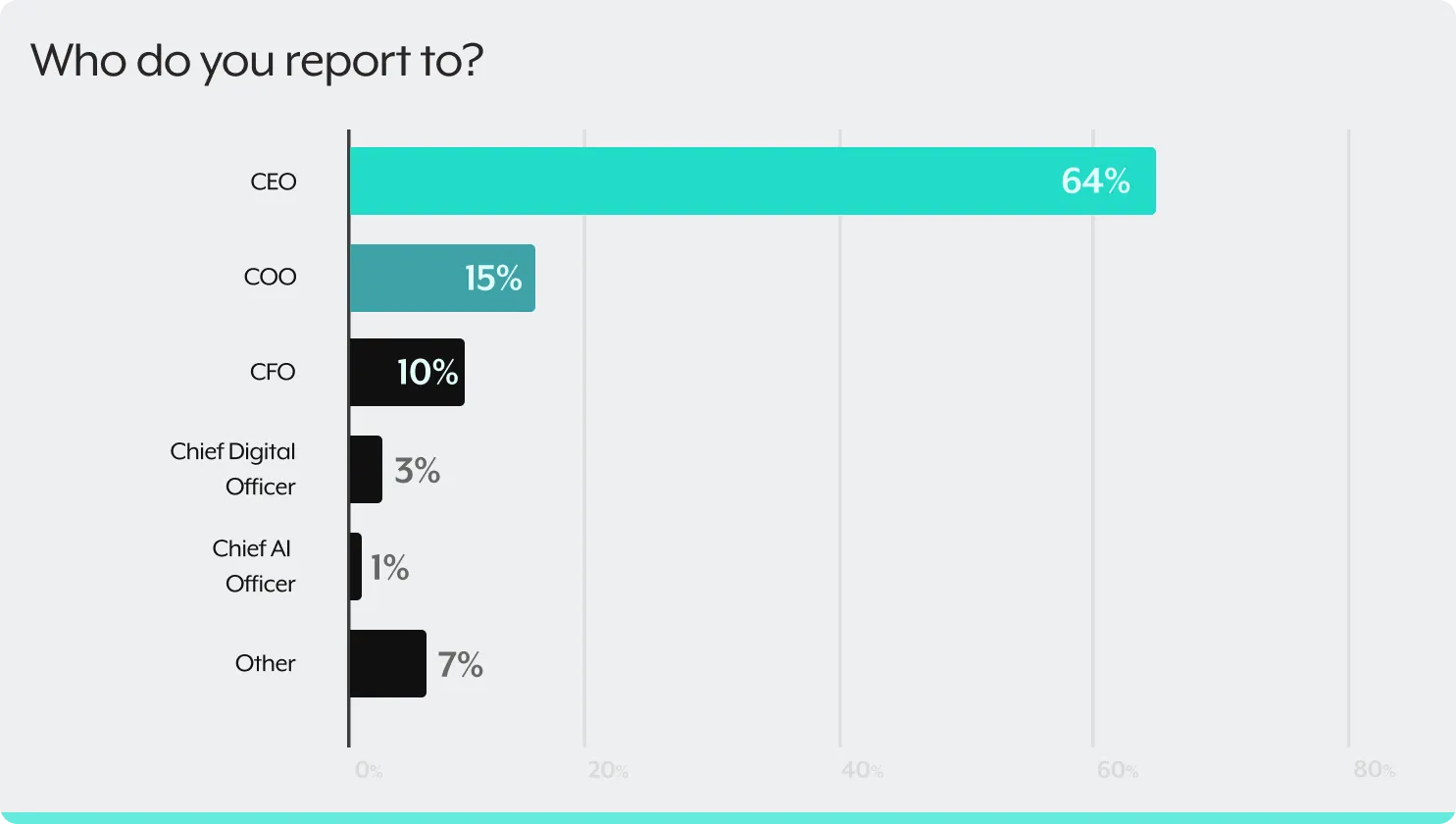
Respondents all hold senior roles in their organizations, most commonly reporting to the CEO.
This sample shows that the industry average tenure is increasing for CIOs, possibly correlated with the increase in leadership influence measured in this report.
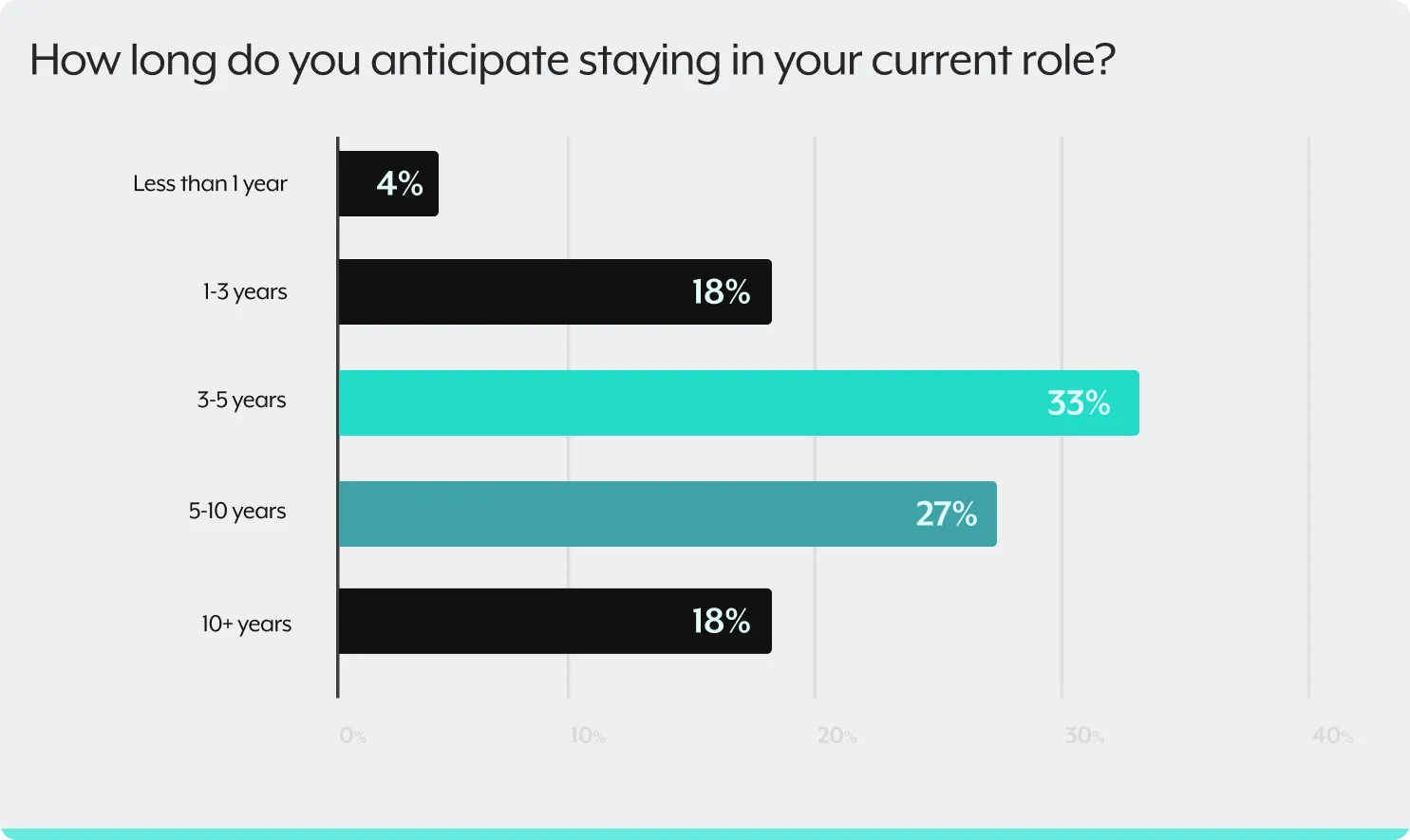
CIOs are now aspiring to stay in their roles longer than in the past.
About CIOnews
CIOnews (cionews.com) is the modern publication for technology executives shaping the future of the enterprise. As AI transforms industries, technology leaders have become the most critical executives in their organizations—responsible not just for systems and infrastructure, but for defining strategy, driving growth, and leading change.
CIOnews is an independent news organization funded by Workato because the CIO role has become one of the most consequential in the enterprise and the content available to these leaders has not kept up.
CIOs and senior IT executives need insight that reflects the realities they face now, delivered at the speed their roles demand. That's why CIOnews focuses on peer-driven insights, firsthand experiences, and strategies being executed by practitioners in the field, delivering an authentic view of how technology leaders are actually navigating transformation.
About Workato
Workato delivers enterprise infrastructure for the agentic era, redefining iPaaS and helping enterprises unify data, applications, processes, and AI into a single, governed platform.
A leader in Enterprise MCP and trusted by half of the Fortune 500, Workato’s cloud-native architecture connects every application, data source, and process to power real-time orchestration at scale.
With enterprise-grade security and continuous innovation at its core, Workato provides the trusted foundation for organizations to automate with confidence and operationalize AI across the business. To learn more, visit www.workato.com.
About UserEvidence
UserEvidence is a software company and independent research partner that helps B2B technology companies produce original research content from practitioners in their industry. All research completed by UserEvidence is verified and authentic according to their research principles: Identity verification, significance and representation, quality and independence, and transparency. All UserEvidence research is based on real user feedback without interference, bias, or spin from our clients.
UserEvidence Research Principles
These principles guide all research efforts at UserEvidence—whether working with a vendor’s users for our Customer Evidence offering, or industry practitioners in a specific field for our Research Content offering. The goal of these principles is to give buyers trust and confidence that you are viewing authentic and verified research based on real user feedback, without interference, bias, and spin from the vendor.
1. Identity Verification
In every study we conduct, UserEvidence independently verifies that a participant in our research study is a real user of a vendor (in the case of Customer Evidence) or an industry practitioner (in the case of Research Content). We use a variety of human and algorithmic verification mechanisms, including corporate email domain verification (i.e., so a vendor can’t just create 17 Gmail addresses that all give positive reviews), and pattern-based bot and AI deflection.
2. Significance and Representation
UserEvidence believes trust is built by showing an honest and complete representation of the success (or lack thereof) of users. We pursue statistical significance in our research, and substantiate our findings with a large and representative set of user responses to create more confidence in our analysis. We aim to canvas a diverse swatch of users across industries, seniorities, personas—to provide the whole picture of usage, and allow buyers to find relevant data from other users in their segment, not just a handful of vendor-curated happy customers.
3. Quality and Independence
UserEvidence is committed to producing quality and independent research at all times. This starts at the beginning of the research process with survey and questionnaire design to drive accurate and substantive responses. We aim to reduce bias in our study design, and use large sample sizes of respondents where possible. While UserEvidence is compensated by the vendor for conducting the research, trust is our business and our priority, and we do not allow vendors to change, influence, or misrepresent the results (even if they are unfavorable) at any time.
4. Transparency
We believe research should not be done in a black box. For transparency, all UserEvidence research includes the statistical N (number of respondents), and buyers can explore the underlying blinded (de-identified) raw data and responses associated with any statistic, chart, or study. UserEvidence provides clear citation guidelines for clients when leveraging research that includes guidelines on sharing research methodology and sample size.